

Curb property taxes by knowing the rules that matter most in California. The base rate sits at about 1 percent of assessed value, plus any voter approved bonds. Your assessed value usually equals your purchase price with small yearly increases. You lower tax by cutting assessed value, getting exemptions, or moving a lower base to a new home when you qualify.
How California property taxes work and where savings hide
Start with the math so you know where to aim. California sets a base property tax near 1 percent of your assessed value, then adds local voter approved debt. Your assessed value begins at your purchase price or new construction cost and usually increases by no more than 2 percent each year. Because the tax rate stays about the same, real savings come from reducing the assessed value or qualifying for exclusions and exemptions. Plan around these levers before you buy, sell, remodel, or move.
Key terms you will see
- Assessed value: The taxable value on the county roll.
- Base year value: The value set at purchase or new construction.
- Factored base: Base year value after annual inflation adjustments up to 2 percent.
- Supplemental assessment: A midyear change after a sale or completion of construction.
- Lien date: Jan. 1, the date assessors measure value for the coming year.
How Tax Hardship Center can help you plan and save

Clear rules do not always feel simple when bills and deadlines stack up. At Tax Hardship Center, we help you map filing windows, organize proof, and time moves so property tax savings stick without last minute scrambles. If broader tax pressure makes payments tight, our free consultation gives you a fast plan with next steps and dates. Keep records clean with our bookkeeping support so your appeal and exemption files line up with what assessors expect. We focus on practical relief that protects cash flow while you keep your home plans on track.
Claim exemptions that cut your bill right away
Exemptions subtract value before the tax rate applies, which lowers the bill without a fight. The Homeowners’ Exemption knocks $7,000 off the assessed value of your primary home. You can review the state overview and forms on the California Board of Equalization’s Homeowners’ Exemption page. File once with your county, ideally by Feb. 15 for the full benefit that year. If you miss the date, many counties still grant a partial exemption when you file by Dec. 10. If you want help gathering ownership and occupancy proof, start with a free consultation. If you buy midyear, watch for your supplemental notice and file within 30 days. Review other exemptions you qualify for and submit forms early to lock in savings.
Common exemptions to consider
- Homeowners’ Exemption on your primary residence.
- Disabled Veterans’ Exemption for qualified veterans or their surviving spouses.
- Welfare and institutional exemptions for qualifying nonprofit use.
- Church and religious exemptions for eligible properties.
Reduce your assessed value when markets dip
You can find the state’s plain language explanation of this temporary relief on the BOE’s “Decline in Value” resource. For owners who also manage rental income and federal filings, our quick read on relief options can help you align cash flow and tax choices. See our blog on IRS tax debt forgiveness for context that pairs with property planning.
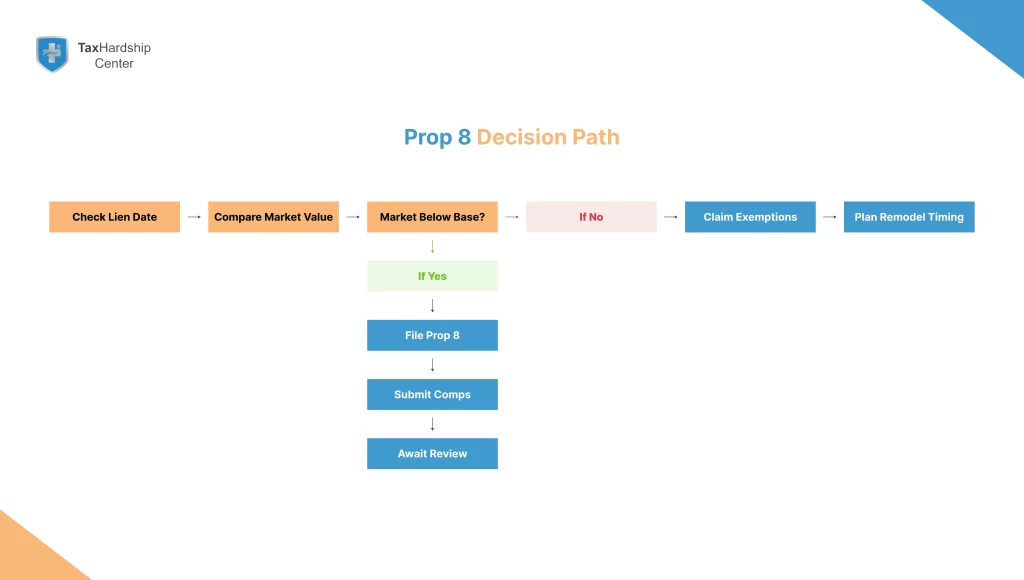
When market value falls below your factored base, you can get a temporary reduction. This relief, often called Prop 8 decline in value, lowers the taxable value to current market levels for that year. The assessor reviews it annually and may adjust it up or down until market value again exceeds the factored base. You improve your odds by submitting recent comparable sales, time adjusted, near the Jan. 1 lien date. If your area softened, check the comps and file early so the lower value shows on the next bill.
How to show a decline in value
- Pull three to five comparable sales that closed near Jan. 1.
- Adjust for bed count, square footage, lot size, condition, and location.
- Explain any external issues that hurt value, like traffic, noise, or deferred repairs.
- Include photos and contractor quotes for major defects.
- Keep your package short, numbered, and easy to verify.
Move and keep a lower tax base under Prop 19
If you need help modeling sale and purchase dates or reading county forms, book a free consultation. Our team will outline documents to collect and the order to file them.
California lets many owners move without starting over on taxes. Under Prop 19, owners who are 55 or older, severely disabled, or disaster victims may transfer a lower base year value to a replacement home anywhere in the state, up to three times for age 55 and disability moves. If you buy a more expensive home, the law adds the price difference to your transferred base. Plan your purchase timing and price so the math still saves you money. File the claim with both counties to secure the transfer.
Tips for a smooth base transfer
- Confirm eligibility before you list or write an offer.
- Track purchase and sale closing dates to meet filing timelines.
- Model scenarios for equal, lesser, and greater priced replacements.
- Keep escrow statements and closing disclosures handy for the claim.
- Coordinate with the assessor on both sides if you move across counties.
Inherit a home without a full reassessment
Estate timing and occupancy proof matter. Review how federal tax debts can affect budgets during transitions in our post on negotiating with the IRS, then set a plan for county deadlines.
Prop 19 changed parent child transfers. Today, children can keep a lower base year value on a family home if they move in and claim the Homeowners’ Exemption within the required time. Transfers of other property usually trigger reassessment. If you plan an inheritance or trust change, review occupancy plans and filing steps with the family. File the claim forms on time to keep the exclusion, and update your mailing address so you do not miss notices.
What families should prepare
- Confirm that the home will be a child’s primary residence.
- File for the Homeowners’ Exemption promptly after the transfer.
- Keep records that prove occupancy, like DMV and voter registration.
- Use a trust or deed that clearly shows transfer dates and ownership.
- Check county specific forms and deadlines before you record.
Use disaster and construction relief the right way
If disaster costs push other taxes behind, our penalty abatement service can help reduce IRS penalties tied to late federal payments while you rebuild. We coordinate documentation so your county claim and federal relief story match.
Calamity relief and construction exclusions reduce tax when damage or certain work occurs. If a fire, flood, or other disaster damages your property, apply for reassessment to the lower post damage value and a tax proration for the year. Some new construction can qualify for exclusions, such as work that corrects damage or adds accessibility. Always ask your assessor about forms before you start a major project so you do not lose savings by filing late.
Paperwork to keep after a loss or project
- Insurance adjuster reports and contractor estimates.
- Photos before and after the event or project.
- Building permits with issue and final dates.
- Invoices that separate repair from new improvement costs.
- Letters from the assessor confirming any exclusion or relief.
Special programs for veterans, seniors, farms, and historic homes
Cash flow gets easier when records stay accurate across properties and entities. Our bookkeeping team sets up clean categories for preservation work, farm operations, and household expenses so exemption files stay consistent.
Targeted programs can shrink your bill if you qualify and apply. Disabled veterans may claim sizable exemptions that increase each year with inflation. Owners of historic properties under Mills Act contracts can receive reduced assessments in exchange for preservation. Working farms and ranches inside Williamson Act contracts may also receive reduced tax values. Seniors and disabled owners may qualify for the State Controller’s Property Tax Postponement, which defers payment and improves cash flow. Check county availability and program rules before you count the savings.
Where these programs make sense
- Disabled veteran households with a primary residence.
- Historic homes where you will follow a preservation plan.
- Active agricultural operations under long term contracts.
- Seniors on fixed income who need payment relief, not a permanent cut.
- Nonprofits that use property for eligible charitable purposes.
How to challenge your assessment and win
If tax pressure spans more than property, consider whether a broader resolution plan helps. An Offer in Compromise or other relief can free room in your budget while you pursue an appeal. We build evidence packets that match county expectations and keep hearing calendars straight.
An appeal can lock in meaningful savings when informal reviews do not fix errors. Counties accept assessment appeals each year beginning July 2 and ending in mid September or early December, depending on local notice rules. Build a case that shows market value near Jan. 1, then file before the deadline with clear evidence and a concise narrative. Bring organized comps, photos, and any appraisal pages that support your number. If the board agrees, your lower value reduces the bill and may create a refund.
Appeal checklist
- Confirm your county’s filing window and final date.
- Complete the application and pay any required fee.
- Attach a one page summary and labeled exhibits.
- Attend the hearing or allow a written submission when allowed.
- Track the refund timeline if the board lowers your value.
What to watch before you remodel, add an ADU, or sell

Good planning avoids surprise assessments. Major remodels and new ADUs can trigger supplemental assessments on the new work, even if you keep your old base for the rest of the property. Permits create a paper trail, so budget for added value when you design and pull plans. If you plan to sell and buy again, map out your Prop 19 options and closing dates. For rentals, keep records to support condition and income when you claim a decline in value.
Planning moves that protect your tax base
- Ask the assessor early about how a project will be valued.
- Separate repair from improvement costs on invoices and scopes.
- Keep before and after photos of each room you touch.
- Price an ADU project with the likely added assessed value in mind.
- Time your sale and purchase to use base transfer rules.
Talk to Tax Hardship Center before you appeal or remodel
A short call can prevent costly mistakes. We help you separate repair from improvement invoices, line up before and after photos, and forecast how new work affects assessed value. If federal balances also need attention, we can pair your property plan with penalty abatement or a targeted Offer in Compromise. When filings stack up, start with a free consultation so you move in the right order and avoid missed deadlines.
In summary…
A quick plan lowers California property taxes without drama. Focus on exemptions, lower assessed values in weak markets, base transfers when you move, and targeted programs you qualify for. File early, organize your proof, and meet deadlines so savings stick.
- Exemptions that reduce value immediately
- Claim the Homeowners’ Exemption on your primary home.
- Check for Disabled Veterans’, Mills Act, and other local programs.
- Claim the Homeowners’ Exemption on your primary home.
- Temporary reductions when markets soften
- Use Prop 8 to lower assessed value to the current market when it drops below your factored base.
- Refresh evidence each year until values recover.
- Use Prop 8 to lower assessed value to the current market when it drops below your factored base.
- Moving or inheriting without losing the base
- Use Prop 19 base transfers if you qualify by age, disability, or disaster.
- Keep a family home exclusion only when a child moves in and files on time.
- Use Prop 19 base transfers if you qualify by age, disability, or disaster.
- Relief after damage and during projects
- Seek calamity reassessment and construction exclusions where eligible.
- Track permits and invoices to protect savings.
- Seek calamity reassessment and construction exclusions where eligible.
Close the loop by setting calendar reminders for exemption filings and appeal deadlines. Small steps on time create real tax savings year after year.
FAQs
How can I lower my California property taxes fast?
You get the quickest cut by claiming the Homeowners’ Exemption on your primary home and filing a Prop 8 decline in value when market prices drop below your factored base. Both reduce assessed value, which lowers the bill.
What is the Homeowners’ Exemption amount and deadline?
It reduces assessed value by $7,000. File by Feb. 15 for the full year. Many counties allow a partial reduction if you file by Dec. 10.
Can I move and keep my low tax base?
Yes, if you are 55 or older, severely disabled, or a disaster victim. Under Prop 19 you can transfer your base to a replacement home anywhere in the state, up to three times for age and disability moves.
Do children inherit my low tax base?
They can for a family home when a child moves in and files for the Homeowners’ Exemption on time. Other property usually reassesses to market value.
When can I appeal my assessment?
Counties open appeals on July 2 and close in mid September or early December. Check your county’s exact deadline and file before it passes.