
You can pay tax debt with a bank account, debit card, credit card, or an IRS payment plan. Most people who owe less than six figures qualify for a short-term plan that gives up to a few months to pay. If you need longer, you can set a long-term installment agreement and make automatic monthly payments from your checking account. The IRS keeps interest and penalties running until you zero the balance, so filing all missing tax returns and paying what you can up front saves real money. Set up a plan online through your IRS account in minutes or mail Form 9465 if you prefer paper. Keep current on this year’s taxes while you pay the old balance so your plan stays in good standing.
What if I can’t pay my federal tax in full?
When a bill hits and cash runs tight, the IRS gives clear options to keep you on track and out of trouble. This section explains immediate steps you can take today, why quick action protects your paycheck and assets, and how filing missing returns first sets you up for a smoother payment plan. You will learn the basic guardrails, what balances qualify for fast approval, and how interest and penalties work while you pay. For official guidance, see the IRS overview on what to do if you cannot pay your taxes.
Steps to assess your tax debt
Start by opening or signing in to your IRS online account to see exact balances by tax year, recent payments, and any active notices. Pull your wage and income transcripts to confirm the IRS records match your filings. Gather all IRS letters so you know deadlines and notice types. Check your cash on hand and monthly budget to see how much you can pay right now and how much you can afford each month. Note whether any returns remain unfiled because missing filings can block a payment plan. Check data accuracy before you commit. Compare the numbers in your IRS online account with your filed returns and payment confirmations. Use the IRS tax website to verify balances by year, then cross-check notices against your budget so you know your real tax liability. If you moved, update your address and set notification preferences. A clean file beats surprises.
Why going proactive on tax debt matters (avoid liens, garnishment)
Move first and you keep control. When you set a payment plan or pay down the balance, you cut the chance of a Notice of Federal Tax Lien and avoid bank or wage levies. Proactive payments also reduce penalties and the interest that compounds daily. If you act before the IRS escalates, you keep more options open, including streamlined approval and lower setup fees. Quick action can also help protect access to credit and travel by keeping your account out of serious delinquency.
Filing missing returns before planning to pay
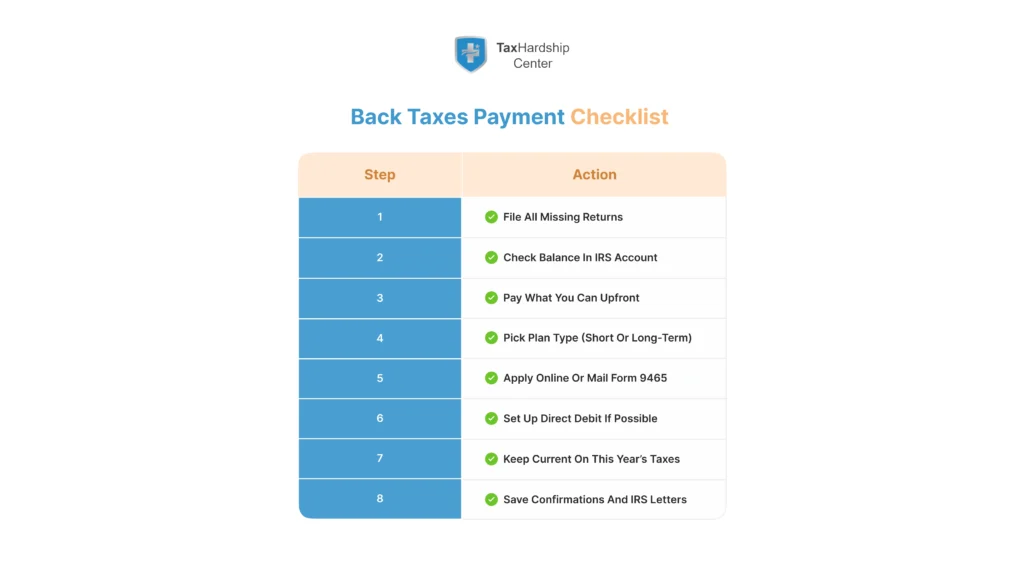
File every missing return before you request a plan. The IRS requires full filing compliance for most agreements. Filing lets the system calculate the true balance and stops the larger failure-to-file penalty from racking up. If you lack documents, request wage and income transcripts and reconstruct deductions with bank statements and receipts. File accurate returns first, then apply for a plan so payments go to the right year and the right tax. If you need a roadmap, use our step-by-step guide on filing after five years.
Steps to pay back taxes: filing and preparing
You need a simple checklist that gets your file clean and your payment plan approved on the first try. This section walks through documents to gather, how to file late returns the right way, and how to confirm your compliance status before you hit submit on a payment request.
Gather past-due tax documents and transcripts
Collect W‑2s, 1099s, K‑1s, and any records for business income, credits, and deductions. Download tax return and account transcripts for each year you owe. Save every IRS notice and confirm the amounts line up with your records. Set a folder per year so you can track what you filed and what you still owe. If a third party did not send a form, recreate the income with bank deposits and invoices. Measure data accuracy as you go. Reconcile totals to the dollar and mark any mismatch for follow-up. Accurate data speeds approval and keeps penalties tied to the right year. If a state notice sits in the stack, add it to the folder so you handle state taxes along with your federal balance.
File any missing or late returns
File accurate returns for every year with a balance. E‑file current-year returns and mail prior-year paper returns if software no longer supports e‑file for that year. Include all schedules and signatures. If you need to fix a filed return, send Form 1040‑X with support. Filing first unlocks access to payment plans and reduces penalties tied to failure to file. Keep proof of mailing or e‑file acceptance with your records.
Check your total tax debt and compliance status
After you file, verify your updated balance in your IRS online account. Confirm that all required returns show on file and that no compliance holds exist. If a levy notice arrived, call the number on the notice and request time to set a plan while you submit your application. Estimate a monthly payment you can afford that clears the balance within the allowed term so your request gets quick approval.
Our services at Tax Hardship Center: clear, compliant relief
At Tax Hardship Center, we help you pick the right IRS path after we verify your balances and budget. Our services at Tax Hardship Center include Installment Agreement setup, Offer in Compromise evaluations, and Penalty Abatement requests. We also prepare and file Unfiled Tax Returns so your plan gets approved without delays. If you want a quick start, book a free consultation and we will outline the best payment plan and next steps the same day. You get one point of contact and plain-English updates that keep you in control.
Different ways you can pay back taxes
You can pay in one shot or spread payments out. This section covers everyday payment methods that work for individuals and small businesses, including bank transfers, card payments, EFTPS for scheduled payments, and the old‑school check or money order route.
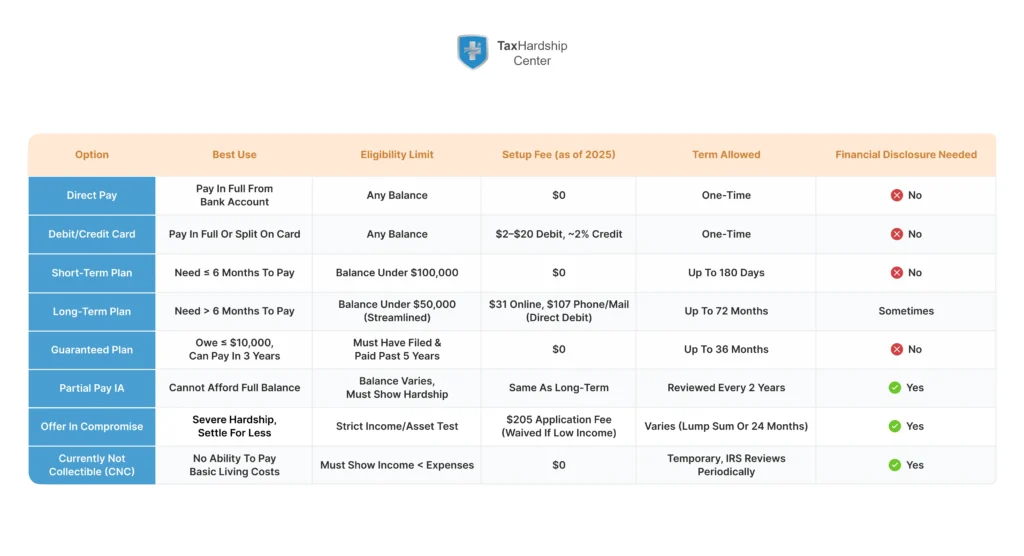
Pay directly use bank account or credit/debit card
The simplest move is to pay from a checking or savings account with no processing fee. If you use a debit or credit card, a third‑party processor charges a small flat fee for debit or a percentage for credit. Card payments post fast and can help when you need to split a large balance over available credit. Track confirmation numbers and keep receipts with your tax records. Avoid cash unless you use the IRS retail partner option. Ask your bank about the timing of each withdrawal (often typed as withdrawl) so cash stays in your wallet when rent and utilities hit. Flag the draft date on your calendar and fund the account at least one business day early. If you use a card, compare the processor fee against any rewards value and avoid short-term debt that costs more than the tax interest. Some banks place temporary holds after large debits, so keep a cushion.
IRS Direct Pay and Electronic Federal Tax Payment System (EFTPS)
Direct Pay lets you make a one‑time or scheduled payment straight from your bank account without registration. EFTPS is the Treasury’s system that allows you to schedule payments up to a year in advance and track 15 months of history. Businesses use EFTPS for payroll and excise taxes, and individuals can use it for income tax and estimated tax. Both options give immediate confirmations and reduce mailing risks. You can also use IRS Direct Pay to send a secure bank transfer and get a confirmation code instantly. Turn on payment notification by email or text in EFTPS and in your bank app. Schedule a small test payment first to confirm routing and account numbers. Keep your confirmation numbers inside a secure notes app on your phone or your desktop website bookmarks so you can reach them fast.
Mail a check or money order with payment voucher
If you prefer paper, mail a check or money order payable to the U.S. Treasury with a payment voucher. Write your SSN or EIN, the tax year, and the form number on the memo line. Use the address on your IRS notice or the address list for your state if you pay a 1040 balance. Do not send cash. Keep proof of mailing to show timely payment if the IRS posts it later.
Short-term payment plan options
A short‑term plan gives you breathing room when you can pay in a few months. This section defines who qualifies, how to apply online or by phone, and what costs to expect while interest and penalties continue until you zero the debt.

What qualifies for a short-term IRS payment plan
Individuals often qualify for a short‑term plan when total tax, penalties, and interest stay under the six‑figure range and you can pay in a matter of months. The IRS publishes time limits, and online applications use a fixed window measured in days. If your balance fits and you can clear it quickly, a short‑term plan avoids a setup fee and keeps paperwork light. You still need all returns filed to qualify.
How to apply (online, phone, mail)
Apply online through your IRS account or the Online Payment Agreement tool and choose the short‑term option. You can also call the number on your notice and request a short‑term arrangement if you prefer to speak with an agent. Keep your bank info ready if you want to schedule an automatic payoff on a set date. If you receive a bill with a pay‑by date, you can send a lump sum now and then apply for a short‑term plan for the remainder. If you are weighing this route, our quick explainer on what to do if you can’t pay right now breaks down choices and timelines.
Pros and cons: no setup fee, penalties and interest still grow
A short‑term plan carries no setup fee, which saves money. It gives quick relief and keeps enforced collection at bay while you pay. Interest and penalties continue, so pay as much as you can up front to cut the cost. Because the window ends fast, confirm your cash flow before you pick this route so you do not miss the end date and slip into default.
Long-term installment agreement options
When you need more time, a long‑term installment agreement spreads payments over months or years. This section explains what an IRS installment agreement is, the fees by payment method, and how direct debit from a bank account often costs less and works better for approval.
What is an IRS installment agreement (IRS payment plan)?
An installment agreement is a monthly plan to pay your federal tax over time. You pick a draft date, set an amount that fits your budget, and make consistent payments until the balance is paid. Most individuals who owe a moderate balance and filed all returns can qualify without a detailed financial review. The IRS expects you to stay current on this year’s taxes while you pay the old debt. If you want help selecting the right structure and amount, see our Installment Agreement service. Most individuals who owe a moderate balance and filed all returns can qualify without a detailed financial review. The IRS expects you to stay current on this year’s taxes while you pay the old debt.
Fees and setup: direct debit vs other methods
Setup fees vary by how you apply and how you pay. Online direct debit from a bank account carries the lowest user fee. Mailed or phone applications and non‑direct debit methods cost more. Low‑income taxpayers may pay a reduced fee or get a fee waiver when they agree to direct debit. Factor the fee into your plan and choose the cheapest path that fits your situation. Pick direct debit when you can because it lowers the user fee and can improve approval odds for some balances. Keep your data accurate in the application. A mistyped routing number or income figure can stall a decision and push out your draft date.
Monthly bank account payments vs card payments
Direct debit from your bank keeps payments on time and reduces the setup fee. It also helps you avoid a possible lien review in some streamlined cases. Card payments cost more due to processor fees and require you to initiate each payment. If you use a card, set calendar reminders and watch your utilization so you do not inflate interest costs on the card while you pay tax debt.
How low-income status affects setup fee
If your adjusted gross income sits at or below 250 percent of the federal poverty level, ask for the low‑income reduction or waiver. The IRS may waive the fee for direct debit agreements or reimburse a reduced fee when you complete the plan if you cannot use direct debit. File Form 13844 within the deadline on your acceptance letter if the system did not flag your status automatically.
Other IRS payment plan types beyond basic options
Not every balance or budget fits the basic plan. This section covers streamlined deals that cut paperwork, a guaranteed plan for small balances, partial‑payment agreements when you cannot full pay, and the Offer in Compromise path for severe hardship.
Streamlined installment agreements for moderate tax debt
Streamlined agreements cover assessed balances in the mid‑range and keep the process simple. You usually skip a full financial statement if you agree to a payment that clears the balance within a set number of months or before the collection statute runs out. Direct debit often comes with the deal and can limit lien filings. Streamlined rules change by balance size and entity type, so check the current thresholds before you apply.
Guaranteed installment agreement for small debt, quick payoff
If you owe a small balance and filed and paid on time for the past five years, you may qualify for a guaranteed plan. You agree to pay in full within three years and to stay compliant going forward. This route works well when withholding or estimated taxes fix the core issue and you can budget a quick payoff without a deep financial review.
Partial-payment installment agreements when you can’t pay full debt
When your budget cannot support full payoff before the collection clock runs out, a partial‑payment plan may fit. You must provide a full financial statement and back up income, expenses, and assets. The IRS reviews these agreements regularly and can adjust the payment if your ability to pay changes. This option keeps collection off your back while you pay what you can afford.
Offer in Compromise for those in severe tax debt hardship
If you cannot pay the balance in full and cannot afford a partial‑payment plan that clears the debt, consider an Offer in Compromise. You submit financials and a proposal that reflects your reasonable collection potential. If the IRS agrees, it settles the debt for less than you owe. Few people qualify, so use the IRS pre‑qualifier and read the booklet before you apply, and stay wary of anyone who promises acceptance.
How to apply and manage your IRS payment plan
You can apply online, by mail, or by phone. This section shows you the tools and forms involved, when the IRS will ask for a financial statement, and how to keep your plan healthy once it starts.
Applying online using your IRS Online Account
Create or sign in to your IRS online account. Use the Online Payment Agreement tool to pick short‑term or long‑term and enter payment details. Have your bank routing and account numbers ready if you choose direct debit. The system confirms approval in most clean cases and shows your payment schedule. Save the confirmation for your records.
Filing IRS Form 9465 and when Form 433‑F is needed

If you prefer paper or your case needs added review, file Form 9465 to request an installment agreement. For larger or complex balances, attach Form 433‑F to list income, expenses, and assets. Mail the package to the address on your notice. Keep copies of everything you send. If the IRS needs more detail, respond fast and completely to keep approval on track.
Modifying an existing plan if your finances change
Life happens. If income drops or expenses rise, log in to your IRS account and request a change to your monthly amount or draft date. You can also call the number on your notice to adjust the plan. If you miss a payment, catch up as soon as you can and contact the IRS to avoid default and reinstatement fees. Document the reason for the change in your records.
Staying tax compliant while on a plan
File returns on time and make this year’s estimated tax payments or fix your withholding so you do not add new debt. If you expect a refund, the IRS will apply it to your balance. Keep your address, phone, and bank info current in your online account. Save every payment confirmation and read each IRS letter so you never miss a required action.
Mind your state taxes while you pay the IRS
Federal plans do not cover state taxes. Check your state tax website for its payment plan and hardship program rules. States like New York run separate portals, notices, and timelines, so you must set those payments up as well. Ask whether your state files liens faster than the IRS and plan your cash so both payments clear. Keep both accounts current to avoid levies from either side.
Tips to avoid IRS collection actions on back taxes
Good habits keep liens, levies, and refund offsets off your back. This section explains how these actions work, how a payment plan can pause or prevent them, and which penalty relief programs can soften the hit when you clean up fast.
How liens, levies, and refund offsets work
A federal tax lien secures the government’s claim to your property when you owe and do not resolve the balance. A levy is a legal seizure, such as a wage or bank levy, used to collect when a taxpayer ignores notices. The Bureau of the Fiscal Service can offset your federal tax refund for unpaid taxes and other debts. Read every notice and act before deadlines to protect your cash and credit. For timelines, see our primer on how long the IRS can collect back taxes.
Setting up payment plan to stop collection enforcement
When you apply for an installment agreement, levy action generally pauses while the request is pending and while the plan stays active. A short‑term plan or approved long‑term plan shows good‑faith action and can reduce the chance of a lien filing, especially with direct debit in streamlined cases. If a levy already hit, call the IRS after you apply and ask for a release once you make your first payment.
Penalty relief programs: first‑time abatement, currently not collectible
If this is your first penalty in three years and you filed and paid on time before, ask for first‑time penalty abatement. If a serious hardship leaves no room to pay, ask the IRS to mark your account currently not collectible. Interest continues in both cases, but these tools can give breathing room while you stabilize your finances and set a realistic plan. For scripts and examples, read our walkthrough on how to ask the IRS to waive penalties.
Use IRS-approved options: steer clear of scams
The safest path runs through official IRS channels and reputable nonprofit help. This section flags red‑flag sales pitches, points you to IRS tools that help you check eligibility, and shows where low‑income taxpayers can get real representation.
Why avoid third-party tax relief companies
Be cautious of sales promises that sound too easy. No one can guarantee an Offer in Compromise or make penalties vanish for a fee. High‑pressure pitches and upfront retainers often lead to delays and more debt. If you want help, hire a licensed CPA, enrolled agent, or tax attorney with direct IRS experience and a clear written scope of work.
Use IRS resources: OIC Pre‑Qualifier, Low‑Income Taxpayer Clinics
Use the IRS Offer in Compromise Pre‑Qualifier to see if you have a case before you pay anyone. If you qualify by income, contact a Low‑Income Taxpayer Clinic for free or low‑cost help with audits, appeals, and collection issues. These clinics work independently from the IRS and can speak with the agency for you when you meet their guidelines. Always rely on the official IRS tax website and letters for account changes. Use your Online Account to verify balances and turn on notification settings so you never act on a scam call or text.
At Tax Hardship Center, we help you stay on track
At Tax Hardship Center, we help you adjust plans when income changes and keep collections away while you pay. We set affordable drafts through our IRS repayment program support, resolve wage garnishment, and file any unfiled returns. You will know the monthly amount, draft date, and how to handle future estimates so you do not fall behind again. If your case fits an OIC, we prepare the file and submit it through our Offer in Compromise service. We focus on accuracy, deadlines, and clear communication.
In summary, how to pay back taxes without extra headaches
A quick plan and steady payments beat interest and penalties every time. Use bank transfers, EFTPS, or card payments to chip away at the balance, and pick a short‑term or long‑term plan that fits your budget. File every missing return, act before notices escalate, and use penalty relief and clinic help when you qualify.
- Quick wins
- File missing returns now to cut penalties.
- Pay what you can up front to reduce interest.
- Check balances by year in your IRS online account.
- Confirm data accuracy on the IRS and state tax websites.
- Space your withdrawal date so cash sits in your wallet for rent and essentials.
- File missing returns now to cut penalties.
- Plan choices
- Short‑term plan for a fast payoff with no setup fee.
- Long‑term installment agreement for monthly payments.
- Direct debit costs less and keeps payments on time.
- Short‑term plan for a fast payoff with no setup fee.
- Protection moves
- Apply for a plan to pause levies while pending.
- Ask for first‑time abatement if you qualify.
- Consider currently not collectible if hardship hits.
- Apply for a plan to pause levies while pending.
Wrap it up by setting a draft date and an amount you can live with. Keep this year clean while you pay the balance. If you want experienced guidance with notices, transcripts, and plan selection, talk with a licensed pro who deals with the IRS daily and can tailor a plan to your cash flow.
FAQs
Can I get a payment plan if I owe more than $50,000?
Yes, but you may need to provide a financial statement and apply by phone or mail. Online approval works fastest for lower balances. A larger balance may lead to a lien review, so plan for direct debit and solid documentation.
How long do short‑term payment plans last?
Short‑term plans run for a set number of days. The online option uses a shorter window, while agents can approve a slightly longer period in some cases. Either way, you avoid a setup fee, but interest and penalties continue until you pay in full.
Will the IRS take my refund while I am on a plan?
Yes. The IRS applies any refund to your unpaid balance while your agreement is active. Keep your monthly payment going even if a refund posts during the year so you do not default.
Do payment plans stop wage garnishment?
Often, yes. When you set a plan and stay current, active levies can be released and new levy action usually pauses. If a levy already hit, contact the IRS after you set the plan and request a release once your first payment clears.
How do I cut penalties on back taxes?
Ask for first‑time abatement if this is your first penalty in three years. If you have a solid reason, request reasonable cause relief. You can also ask the IRS to mark your account currently not collectible if you cannot pay basic living expenses.