

If you’re behind on IRS payments and lying awake wondering, can the IRS take my home, here’s the direct answer: legally, yes, it’s possible, but in practice it’s one of the rarest and most heavily restricted collection actions the IRS takes.
Can the IRS Take Your House? The Real Answer
So, can the irs take my home over unpaid taxes? Legally, the IRS has the authority to seize and sell real property, including a primary residence, to satisfy an unpaid tax debt. That authority is real. But the actual practice of the IRS taking someone’s house is exceptionally rare, reserved for cases involving large balances, years of non-compliance, and a taxpayer who has ignored every opportunity to resolve the debt through less drastic means.
For most people asking can the irs take my home, the more accurate and reassuring answer is this: a lien is likely, but an actual seizure of your house is very unlikely unless your situation is extreme and has gone unaddressed for a long time.
Tax Lien House Situations: What a Lien Actually Does
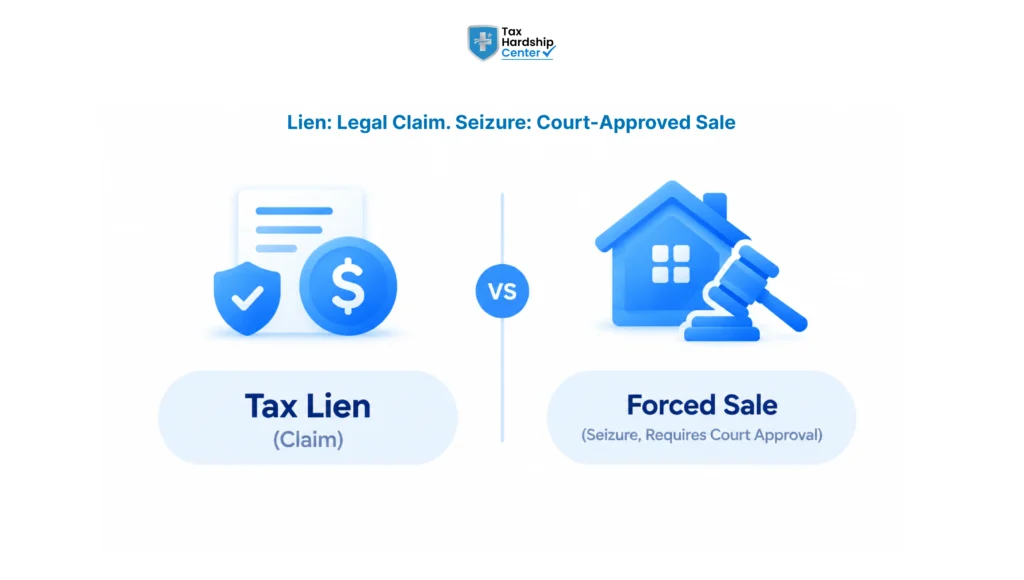
Before getting to the more serious question of seizure, it’s important to understand the tax lien house scenario, since this is what most people actually experience. A federal tax lien is a legal claim against your property that arises automatically once you owe the IRS money and they’ve assessed the debt and sent a Notice and Demand for Payment that goes unpaid.
A tax lien on your house does not mean the IRS is taking your home. It means the IRS has a legal claim recorded against it, which shows up on a title search and can affect your ability to sell or refinance until the debt is resolved. This is very different from can IRS take your house happening in the sense of a forced sale. A lien is a claim. A levy or seizure is an action. Understanding this distinction resolves most of the anxiety people feel when they first hear the word “lien” attached to their home. Our guide on how long an IRS lien lasts explains what happens to that claim over time and how it eventually gets released.
Can IRS Take Your House Through a Forced Sale?
This is where the real answer to can iRS take your house gets more nuanced. Technically, yes, the IRS can pursue a forced sale of real property, including a primary residence, through a process that requires a federal court’s approval. This is a critical safeguard that many people don’t realize exists. Unlike a bank levy or wage garnishment, which the IRS can execute administratively, seizing and selling a primary residence generally requires the IRS to get authorization from a United States District Court judge.
This judicial approval requirement is a significant barrier, and it’s a large part of why actual home seizures are so rare compared to other IRS collection tools. The IRS has to demonstrate to a judge that seizure is warranted, and judges don’t approve these requests casually. If your situation involves genuine risk of an IRS seize home action, this is typically the final step after years of unaddressed debt, not something that happens after a few missed notices.
What Actually Has to Happen Before the IRS Seize Home Action Occurs
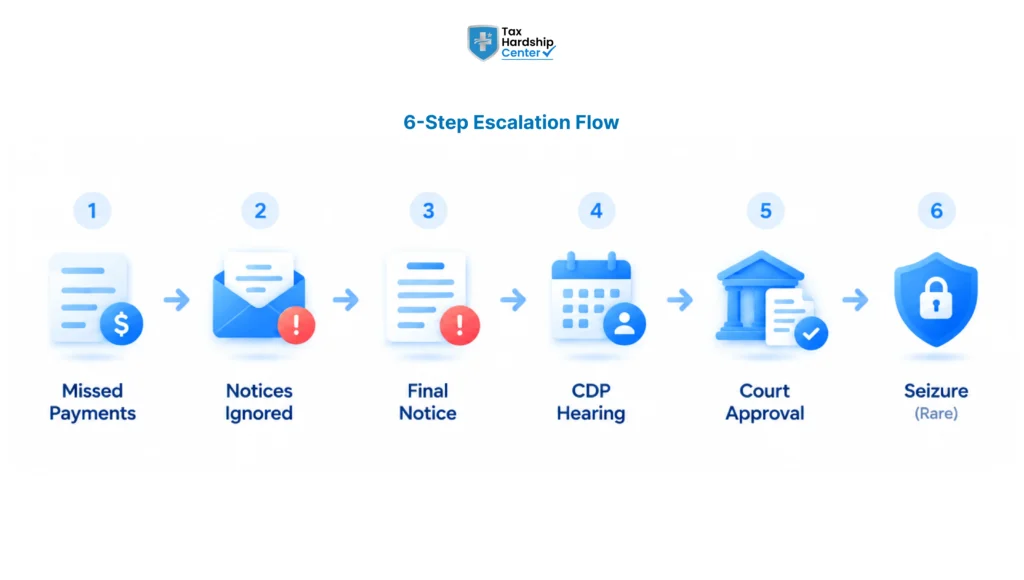
For an actual IRS seize home scenario to unfold, a specific and lengthy chain of events generally needs to happen first:
- A substantial tax debt that has gone unresolved for an extended period, often multiple years
- Multiple notices sent and ignored, including a Final Notice of Intent to Levy
- No response to Collection Due Process hearing rights when offered
- No installment agreement, Offer in Compromise, or Currently Not Collectible status ever established
- Exhaustion or unavailability of other collectible assets, like bank accounts or wages
- Formal court approval obtained by the IRS specifically authorizing the sale of the residence
If you’ve received a notice mentioning enforcement language and haven’t responded, this is exactly the point where engaging can prevent the situation from ever approaching the seizure stage.
How Common Is It for the IRS to Actually Take Someone’s House
Statistically, IRS seizures of primary residences are extremely uncommon, numbering in the dozens nationally in a typical year, compared to the millions of taxpayers who owe back taxes at any given time. This context matters when weighing can the irs take my home against the reality of how IRS collection actually plays out for the overwhelming majority of taxpayers.
The IRS’s own internal policy discourages pursuing a primary residence unless there’s genuinely no other reasonable path to collect the debt. Combined with the court approval requirement, this makes the tax lien house scenario, not an actual seizure, the far more realistic concern for most people dealing with back taxes. That said, “rare” doesn’t mean “impossible,” which is why addressing tax debt proactively still matters even if outright seizure isn’t the most likely outcome.
Steps to Protect Your Home If You Owe Back Taxes
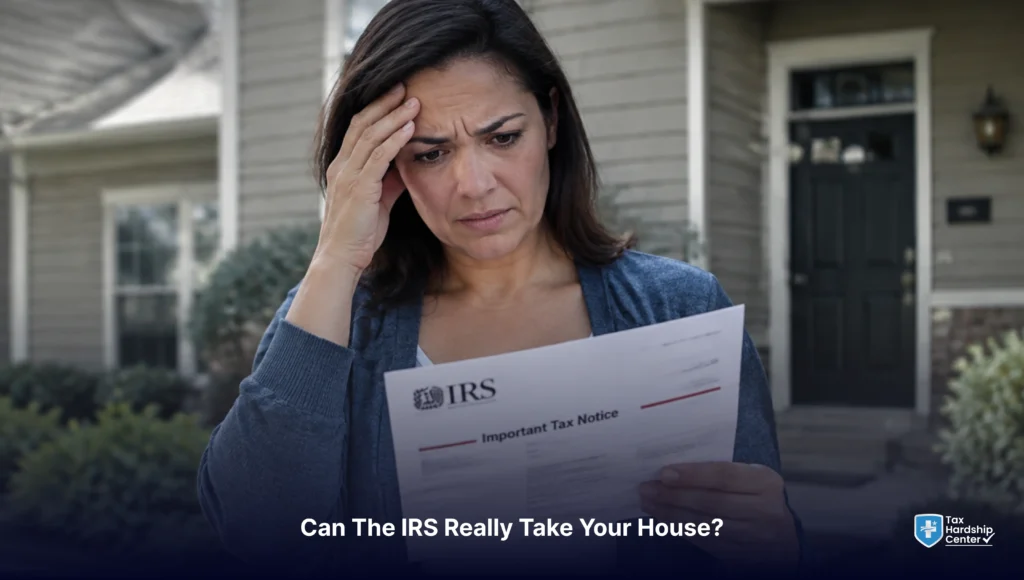
If you’re worried about whether can the irs take my home applies to your specific situation, here’s what actually reduces that risk to nearly zero:
- Respond to every IRS notice, even if you can’t pay in full. Non-response is what escalates a case toward serious enforcement.
- Request a Collection Due Process hearing if you receive a Final Notice of Intent to Levy. This pauses collection while your case is reviewed.
- Set up an installment agreement that fits your actual budget before the IRS considers more aggressive action.
- Explore Currently Not Collectible status if your finances genuinely can’t support payment right now.
- Check Offer in Compromise eligibility if you might qualify to settle for less than the full balance.
Taking any of these steps essentially removes your home from realistic risk, since the IRS pursues seizure only when every other resolution avenue has been exhausted and ignored.
How Tax Hardship Center Helps Protect Your Home From IRS Action
When a client comes to us worried about whether the IRS can take their home, we start by pulling their full IRS transcript to see exactly where their case actually stands in the collection process. In the overwhelming majority of cases, the real issue is a tax lien on the house rather than any imminent seizure risk, and knowing the difference immediately reduces a lot of unnecessary stress.
From there, our team works to resolve the underlying debt before it ever approaches the kind of prolonged non-compliance that could put a home at genuine risk. This might mean negotiating a manageable installment agreement, pursuing Currently Not Collectible status if your finances are genuinely strained, or evaluating whether an Offer in Compromise can settle the balance for less than what’s owed. If a lien is already recorded on your property, we also help you understand exactly what that means for a future sale or refinance and what steps lead toward a lien release.
Frequently Asked Questions
Can the IRS take my home without any court involvement?
No. Seizing and selling a primary residence generally requires the IRS to obtain approval from a federal district court judge, unlike other collection actions.
What’s the difference between a tax lien house situation and can IRS take your house?
A lien is a legal claim against your property, not a seizure. Actually taking and selling your house is a separate, much rarer action requiring court approval.
How common is it for the IRS to seize a primary residence?
Very uncommon. IRS home seizures are among the rarest enforcement actions, typically limited to a small number of extreme cases nationally each year.
Does a tax lien on my house affect my ability to sell it?
Yes. A lien shows up in a title search and generally must be addressed, often paid from sale proceeds, before the sale can close cleanly.
What should I do if I’m worried about an IRS seize home situation?
Respond to all notices, request a Collection Due Process hearing if eligible, and set up a resolution plan like an installment agreement as soon as possible.
Can the IRS take my home if I’m already on a payment plan?
Generally no. Being in a current, compliant installment agreement significantly reduces enforcement risk, including any risk toward your home.
Conclusion
Can the irs take my home is a question rooted in real legal authority, but the practical reality is far less alarming than most people fear. A tax lien on your house is common and automatic once a balance goes unpaid, but an actual forced sale requires court approval and is reserved for the most extreme, prolonged cases of non-compliance. Responding to notices and setting up a resolution plan early keeps your home well outside any realistic risk.
Key Takeaways
- Can the irs take my home is legally possible but extremely rare in actual practice.
- A tax lien on your house is a legal claim, not an actual seizure of the property.
- Seizing and selling a primary residence generally requires federal court approval.
- IRS seize home actions typically follow years of unresolved, ignored tax debt.
- Can IRS take your house happens in only a small number of extreme cases nationally each year.
- Responding to IRS notices early is the most effective way to avoid serious enforcement.
- An installment agreement or Currently Not Collectible status significantly reduces home risk.
- A tax lien can complicate selling or refinancing your home until it’s resolved.
- The IRS generally exhausts other collection methods before pursuing a residence.
- Addressing back taxes proactively keeps your home well outside realistic enforcement risk.
Worried the IRS could come after your home over back taxes? Get a free case review from Tax Hardship Center and find out exactly where your case stands.