
If you can’t afford IRS payment plan payments, do not quietly stop paying. Ask the IRS to change IRS payment plan terms before you miss one. Many taxpayers can reduce IRS installment payment amounts, and if money is truly tight, an IRS financial hardship payment plan may fit.
Here is the part nobody tells you. The IRS often has room to adjust a plan, but only if you speak up before it defaults.
This guide covers each fix, the paperwork, the mistakes to dodge, and when to hand the whole thing to a pro.
What Happens If You Can’t Afford Your IRS Payment Plan?
Life happens. Hours get cut, the car dies, rent jumps. Then a payment date shows up like an uninvited guest.
If you can’t afford IRS payment plan installments and just skip them, the agreement can default. Interest and penalties keep growing, and the IRS can bill the full balance and restart collection. A CP504 notice is often the next chapter, and nobody wants to read that one.
The good news? Default is optional. Acting early keeps your options open.
How Do You Change an IRS Payment Plan Before You Miss a Payment?
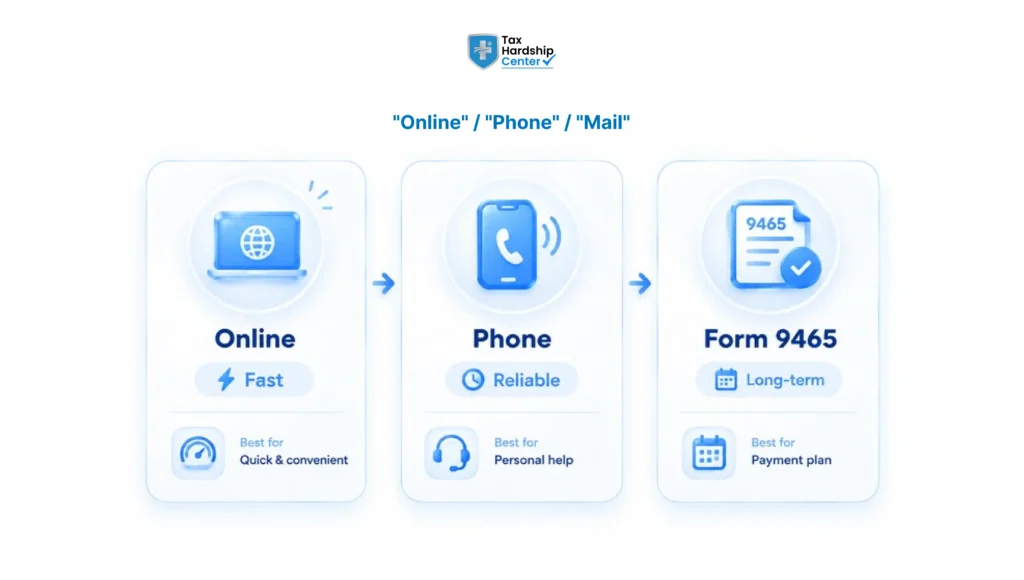
You can usually change IRS payment plan terms in three ways.
| Method | Best For | Watch Out For |
| Online Payment Agreement | Simple edits like a new due date or payment amount | Not every plan or balance qualifies |
| Phone (number on your IRS notice) | Quick questions and plan changes | Hold times, and you may need financial details ready |
| Form 9465 by mail | Cases that need paperwork | Slowest route, so do not wait for the last week |
Fees can apply when you revise a plan, and online requests generally cost less than phone or mail, so check the current IRS fee first. Our Form 9465 guide walks through the form line by line.
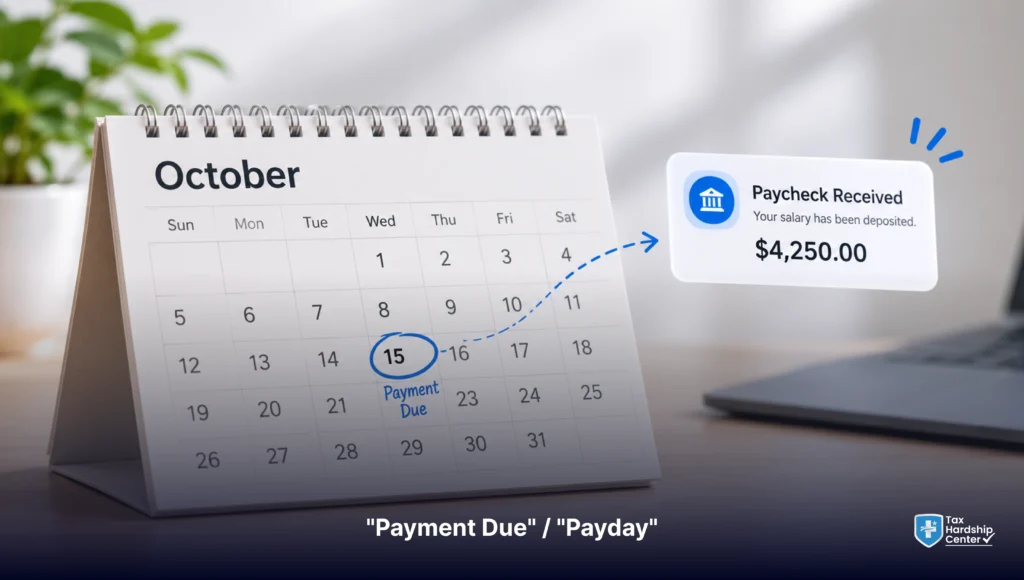
Pro tip: moving your due date to right after payday is the easiest win. If you can’t afford IRS payment plan dates that land before your paycheck, start there.
How Can You Reduce IRS Installment Payment Amounts?
There are three levers, and you can pull more than one.
- Stretch the timeline. Many individual balances up to $50,000 qualify for streamlined terms of up to 72 months, which shrinks the monthly bite.
- Prove a lower ability to pay. If your income and allowable expenses show the current amount is too high, the IRS may agree to reduce IRS installment payment amounts.
- Shrink the bill itself. Penalty relief can lower what you owe, which lowers what you pay each month.
Here is the honest part. The IRS decides, not you. A number that feels impossible to you can still look doable on paper.
Run your numbers in our tax relief calculator before you call. If you can’t afford IRS payment plan math as it stands, walking in with real figures beats walking in with panic.
What Is an IRS Financial Hardship Payment Plan?
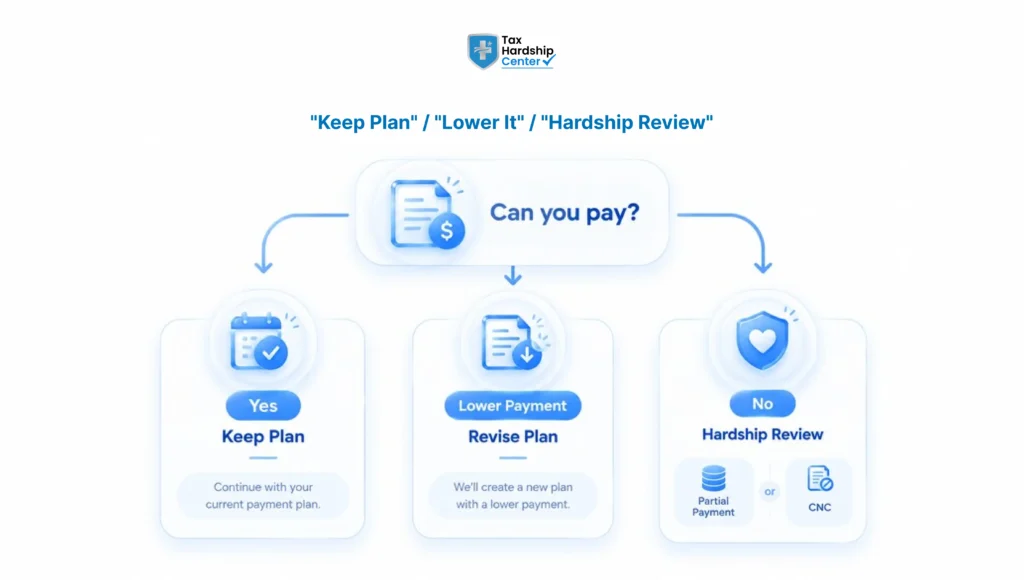
“IRS financial hardship payment plan” is not an official form name. It is the everyday term for two real options.
Partial Payment Installment Agreement
Your payments are lower than what it would take to fully pay the balance before the collection deadline expires. The IRS requires a financial statement and reviews your situation periodically, as IRS Topic 202 explains.
Currently Not Collectible Status
If your allowable expenses swallow your income, the IRS may pause collection. Interest still builds. See how it stacks up in our comparison of an IRS payment plan vs OIC vs CNC.

Not everyone qualifies for an IRS financial hardship payment plan. The IRS looks at income, allowable expenses, and assets like savings or home equity. Your stress is real, but the form speaks in numbers.
What Paperwork Will the IRS Want?
Expect to complete Form 433-F, the Collection Information Statement. Have these ready:
- Recent pay stubs or profit and loss records
- Bank statements
- Bills for housing, utilities, insurance, and medical costs
- Vehicle and loan details
- Proof that all required returns are filed
Which Mistakes Make It Harder to Change Your Plan?
- Going silent. A missed payment plus no call is how a fixable problem becomes a collection case.
- Guessing a number. Offering a payment you cannot keep sets you up to default again.
- Skipping filings. The IRS generally wants every required return filed before it changes anything.
- Hiding assets. Incomplete forms slow approval and hurt credibility.
- Trusting guarantees. Nobody can promise an IRS outcome. Run from anyone who does.
If you can’t afford IRS payment plan terms now, the smartest move is a call this week, not a hope next month.
How Tax Hardship Center Helps When You Can’t Afford Your IRS Payment Plan
When you can’t afford your IRS payment plan, Tax Hardship Center works the numbers first, then the IRS. We review your account, build an accurate financial statement with the right allowable expenses, and handle the request to change IRS payment plan terms so you are not stuck on hold at lunch.
Depending on your case, we pursue the right fix: a revised IRS installment agreement, an Offer in Compromise review for deeper hardship, or our broader IRS tax relief services if notices are escalating. Want pricing before you commit? Our tax relief service costs page explains how fees work.
Picture a delivery driver whose hours were cut mid-plan. We document the income drop, request lower terms or a hardship review, and keep the agreement from defaulting while the IRS decides. We never promise results, because the IRS controls them, but we tell you what is realistic before you pay anything.
Conclusion
You do not have to choose between feeding your family and feeding the IRS. If you can’t afford IRS payment plan payments, change IRS payment plan terms early, bring real numbers, and use the right tool for your situation. That is how you ease the pressure without losing your agreement.
P.S. What day does your payment hit, and does it match payday?
FAQs
What if I can’t afford IRS payment plan payments this month?
Contact the IRS before the due date to request a change. Waiting until after a missed payment can put the agreement at risk.
Can I reduce IRS installment payment amounts?
Often, yes. You can request a longer term or show through a financial statement that a lower payment fits your budget.
Does an IRS financial hardship payment plan stop interest?
No. Interest and penalties generally keep accruing until the balance is paid, even with reduced payments or paused collection.
How long does it take to change IRS payment plan terms?
It varies. Online requests are usually faster, while mailed forms take the longest, so avoid waiting until the last week.
Will changing my plan trigger a lien or levy?
Not by itself. Staying in good standing generally limits enforced collection, though the IRS can still file a lien.
Should I use a tax relief company to change my plan?
Consider it if your balance is large, notices are escalating, or the financial statement feels overwhelming. Ask for clear fees first.
Key Takeaways
- If you can’t afford IRS payment plan payments, never skip quietly, because default invites bills and collection notices.
- Contact the IRS early to change IRS payment plan dates or amounts.
- Online, phone, and Form 9465 are the three main ways to request changes.
- Longer terms and accurate financial statements are the main ways to reduce IRS installment payment amounts.
- Hardship plans usually mean a partial payment agreement or CNC status.
- Not everyone qualifies for hardship relief, because the IRS reviews income, expenses, and assets.
- Interest generally continues even when payments are lowered.
- Form 433-F and supporting documents should be ready before you call.
- File every required return, or the IRS may refuse changes.
- A tax professional can handle the request if your case is complex or urgent.
Can’t afford your IRS payment plan? Get a payment you can actually keep. Click here to get a free quote or call us at [insert THC phone number].