
If you’re lying awake wondering how to know if I owe taxes, there are a few direct ways to find out, and none of them require guessing. You can check your IRS balance online through your IRS account, request a transcript, or call the IRS directly. This guide walks through exactly how to find out if you owe taxes and what your next move should be once you know.
How to Know If I Owe Taxes: The Fastest Ways to Check
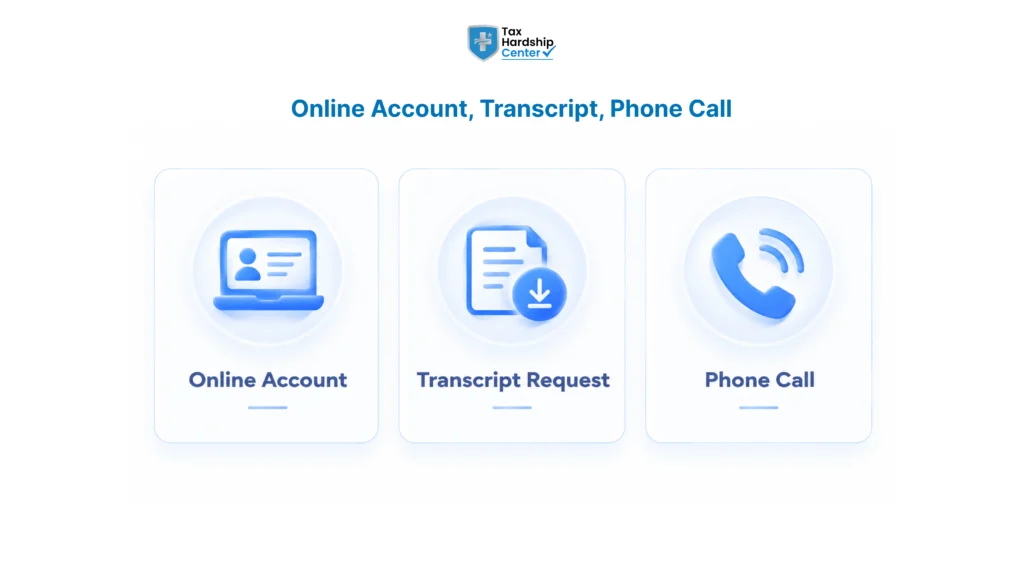
The most reliable way to find out whether I owe taxes is to go directly to the source, rather than guessing based on old paperwork or a vague feeling that something’s off. You have three real options:
- Check your IRS online account. This shows your current IRS balance, payment history, and any pending notices in real time.
- Request an account transcript. This gives you a detailed record of what’s been filed, assessed, and paid for each tax year.
- Call the IRS directly. Slower, but it works if you don’t have online access set up yet.
Each of these methods answers the question “Do I owe taxes?” with actual numbers rather than assumptions, which matters because a lot of people spend months worrying without ever confirming whether there’s a real balance at all.
Do I Owe Taxes? Signs That Point to Yes Before You Even Check
Before you even log in anywhere, there are usually a few signals that answer the question of whether you owe taxes before you get the official confirmation. You’ve probably already noticed one or more of these:
- You’ve received a notice from the IRS in the mail, even one you haven’t opened yet
- You filed a return but didn’t include payment for the amount owed
- You didn’t file a return for one or more years
- Your income changed significantly, and your withholding didn’t keep up
- You had a 1099 job or side income where no taxes were withheld at all
None of these confirm the exact amount, but they’re strong indicators that checking your IRS balance is worth doing sooner rather than later. If any notice you’ve received mentions enforcement language, our guide on help with back taxes and IRS relief options is a good next stop.
How to Find Out If You Owe Taxes Using Your IRS Online Account
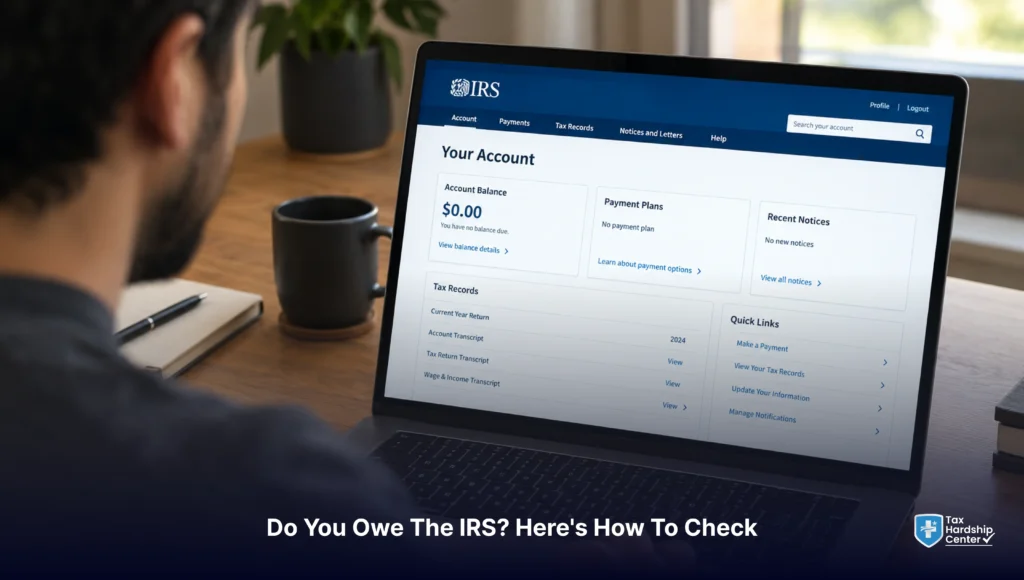
The cleanest way to find out if you owe taxes is through the IRS’s own online account portal. Once you’re logged in, here’s what to look for:
Your account dashboard will show your total IRS balance broken down by tax year, so if you owe for multiple years, you’ll see each one separately rather than a single lump sum. This matters because different years might be at different stages of collection, and knowing which year is furthest along helps you prioritize.
You’ll also see a payment history section, which is useful if you’re not sure whether a previous payment actually applied to your balance. And you’ll see any current notices tied to your account, which is often the fastest way to find out if you owe taxes without waiting for a physical letter to arrive or get lost in the mail.
If you’ve never set up an online account before, the identity verification step can take a few extra minutes, but it’s worth doing once so you have ongoing visibility into your IRS balance, rather than checking blind every time.
Reading Your IRS Balance Once You See It
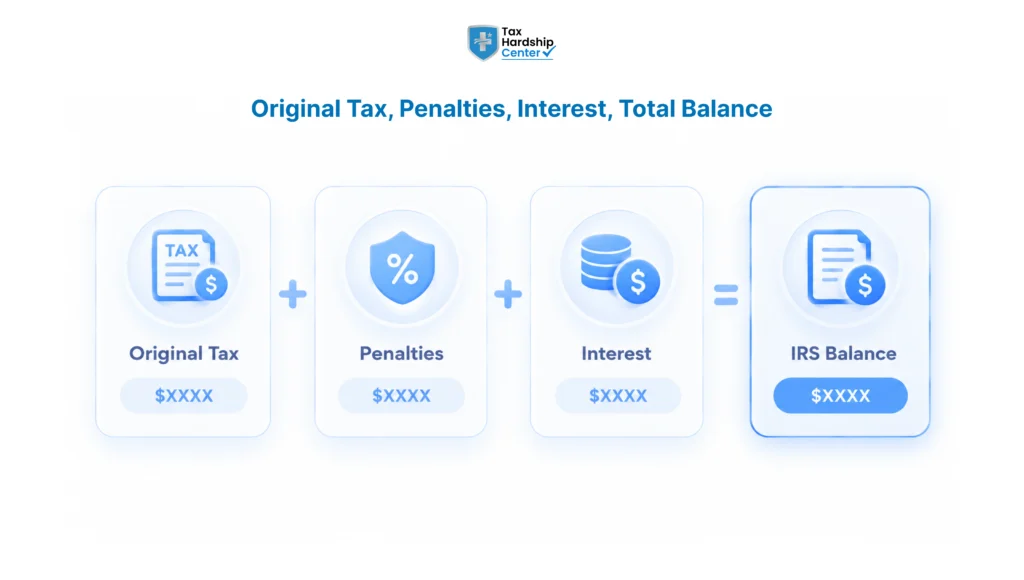
Once you’ve confirmed how to know if I owe taxes and you’re looking at an actual number, a few things are worth understanding about what you’re seeing. Your IRS balance typically includes the original tax owed, plus penalties for late filing or late payment, plus interest that accrues daily until the balance is paid in full.
This is why a balance can look larger than what you expected based on your original return. If your ” Do I Owe Taxes? ” search was prompted by an old return you filed years ago, interest and penalties may have added a meaningful amount on top of the original figure.
It’s also worth checking whether your IRS balance reflects a return the IRS filed on your behalf, known as a substitute for return, if you never filed one yourself. These are often calculated without deductions or credits you’d actually qualify for, which means the number you’re seeing may be higher than it should be. Our guide on IRS tax forgiveness vs tax debt relief explains how these different scenarios are typically resolved.
What If You Owe Taxes and Can’t Pay Right Away
Confirming you owe money is one thing. Figuring out what to actually do about it is the part that causes the most stress. If your IRS balance is more than you can pay in full right now, you generally have a few paths available:
- An installment agreement, which spreads the balance into monthly payments
- Currently Not Collectible status, if your finances genuinely can’t support any payment right now
- An Offer in Compromise, if you qualify to settle the balance for less than what’s owed
- Penalty abatement, if this is your first time falling behind and you have reasonable cause
Which option fits depends on your income, expenses, and how much you owe. Our breakdown of IRS payment plan options compares these paths side by side so you’re not guessing which one applies to your situation.
Common Reasons People Don’t Realize They Owe
A lot of people asking how to know if I owe taxes are surprised by the answer, and it’s rarely because they were careless. The most common reasons include:
- A second job or side income where withholding wasn’t adjusted to cover the extra earnings
- An old return that was never actually filed, even if they thought it was submitted
- A mailing address change that meant IRS notices went to a previous address for months or years
- A misunderstanding about estimated tax payments for self-employed or freelance income
- Divorce or a change in filing status that shifted what was owed
If any of these sound familiar, it’s worth checking your IRS balance directly instead of assuming the situation will resolve itself. Notices don’t stop coming just because they’re unopened, and unfiled years, in particular, tend to compound with penalties the longer they sit. Our page on tax debt relief options covers what typically happens next once a balance like this is confirmed.
How Tax Hardship Center Helps Once You Know Your IRS Balance
Once you’ve confirmed your IRS balance, the next step is to understand what it actually means for your situation and which options genuinely apply. Our team pulls your full IRS transcript to see exactly what’s been assessed across every tax year, not just the number on the notice you received, so nothing gets missed in the process.
From there, we walk through which resolution path fits: an installment agreement if you can pay over time, Currently Not Collectible status if your finances can’t support payment right now, or an Offer in Compromise if your case qualifies to settle for less than the full amount. If part of your balance comes from unfiled years or a substitute return the IRS filed without your input, we handle getting those corrected so your actual balance reflects the deductions and credits you’re entitled to. And if your case is already at the notice stage, we help you understand exactly what a CP14 or CP501 notice means for your timeline before it moves further along.
Frequently Asked Questions
How can I find out if I owe taxes without calling the IRS?
The fastest way is checking your IRS online account, which shows your current balance, payment history, and any active notices without needing a phone call.
Do I owe taxes if I never received a notice?
Possibly. Notices can go to an old address or get lost in the mail. Checking your IRS balance directly is the only way to know for certain.
How to find out if you owe taxes from a previous year?
Request an account transcript for the specific tax year in question. This shows exactly what was filed, assessed, and paid for that year.
Why is my IRS balance higher than what I originally owed?
Penalties for late filing and late payment, plus daily interest, accrue on top of the original amount until the balance is paid in full.
Can my IRS balance be wrong?
Yes, especially if the IRS filed a substitute return on your behalf without your actual deductions and credits. Reviewing your transcript can confirm if this happened.
What should I do immediately after confirming I owe taxes?
Review your options for payment plans, hardship status, or settlement, and respond to any notices promptly rather than letting the balance sit and accrue penalties.
Conclusion
Figuring out how to know if I owe taxes doesn’t have to involve guesswork or weeks of anxiety. Between your IRS online account, an account transcript, and understanding what your IRS balance actually includes, you can get a clear answer quickly. What you do after that answer is where the real decisions happen, and those decisions are a lot easier to make once you’re working with facts instead of assumptions.
Key Takeaways
- Checking your IRS online account is the fastest way to confirm your IRS balance.
- Do I owe taxes has a definitive answer available through an account transcript.
- Notices, unadjusted withholding, and unfiled returns are the most common reasons people owe.
- Your IRS balance includes penalties and daily interest, not just the original tax amount.
- A substitute return filed by the IRS may not reflect your actual deductions or credits.
- Installment agreements, CNC status, and Offers in Compromise are the main paths if you owe and can’t pay.
- Finding out whether you owe taxes for a specific year requires a year-by-year transcript request.
- Address changes are a common reason notices go unseen for months or years.
- Confirming your balance early prevents penalties and interest from compounding further.
- Understanding your options starts with knowing the exact number, not estimating it.
Not sure what your actual IRS balance is or what to do next? Get a free case review from Tax Hardship Center and get a clear answer on where you stand.