


If you’re looking at your IRS transcript and see IRS Code 766 and 768, you may be wondering what those entries mean and whether they affect your refund. Both are credit transactions, but they represent different types of activity on your account. Code 766 generally represents a refundable credit, while Code 768 specifically represents the Earned Income Tax Credit (EITC).
IRS Code 766 and 768: The Quick Overview
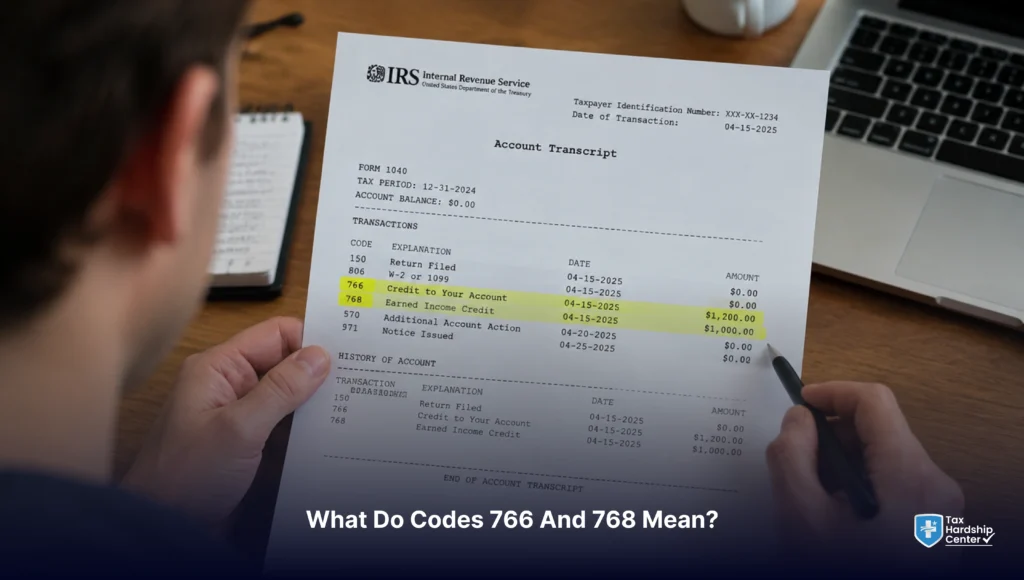
When people first spot irs code 766 and 768 on their transcript, the negative dollar amounts next to each one can look alarming if you’re not used to reading IRS documents. On a transcript, negative numbers represent credits in your favor, not debts. Both code 766 and code 768 are part of a category of transcript entries that add to your available credits rather than subtract from them.
The difference between the two comes down to what specifically generated the credit. Code 766 is a broader designation that can apply to several types of credits, while code 768 is specifically tied to the Earned Income Tax Credit. Understanding irs code 766 and 768 individually helps you see exactly what’s contributing to your refund or reducing your balance.
Code 766 on Transcript: What It Specifically Represents
Code 766 on transcript generally represents a “credit to your account,” and it can reflect a few different things depending on your specific return. Most commonly, code 766 appears when a refundable credit was applied, such as the Additional Child Tax Credit, a Recovery Rebate Credit in applicable years, or an adjustment made by the IRS that resulted in additional credit to your account.
Because code 766 on transcript covers more than one type of credit, the exact source isn’t always obvious just from the code alone. If you claimed multiple credits on your return, it’s worth cross-referencing the dollar amount under code 766 against your actual return to confirm which specific credit it corresponds to. In most cases, this match-up is straightforward once you compare the numbers side by side.
Code 768 on Transcript: The Earned Income Tax Credit
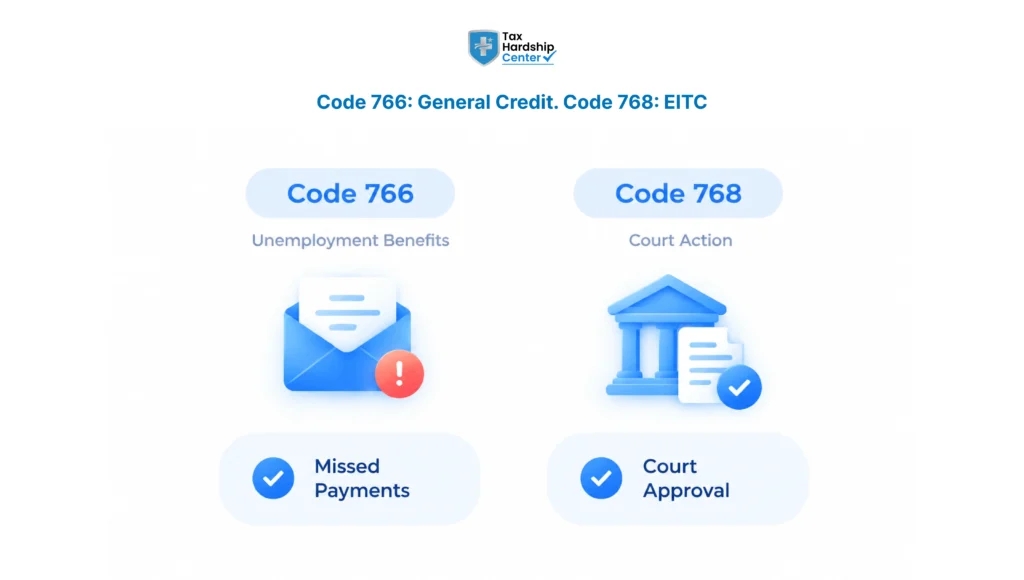
Code 768 on transcript is more specific than code 766. This code is reserved specifically for the Earned Income Tax Credit, a refundable credit designed for low to moderate income working individuals and families. If you claimed the EITC on your return, code 768 on transcript is where that credit shows up as applied to your account.
The Earned Income Tax Credit is one of the more valuable refundable credits available, meaning it can increase your refund beyond what you paid in through withholding. Seeing code 768 confirms that the IRS processed your EITC claim and applied it as a credit. If the amount under code 768 doesn’t match what you expected based on your income and family size, it’s worth double-checking your eligibility calculation against the current year’s EITC guidelines, since income thresholds and credit amounts adjust periodically.
Why These Show Up as a Credit to Your Account
Both code 766 and code 768 represent a credit to your account because that’s fundamentally what refundable tax credits do. Unlike a deduction, which reduces your taxable income before your liability is calculated, a refundable credit directly reduces the amount you owe, and if the credit exceeds your liability, the difference is paid out as part of your refund.
This is why seeing irs code 766 and 768 with negative numbers is a positive sign. A credit to your account under either code is money reducing what you owe or adding to what you’re refunded, functioning very differently from a positive number on your transcript, which would indicate an amount owed instead. Understanding this distinction is the key to reading any transcript code correctly, not just these two.
How Code 766 and 768 Work Together on Your Transcript
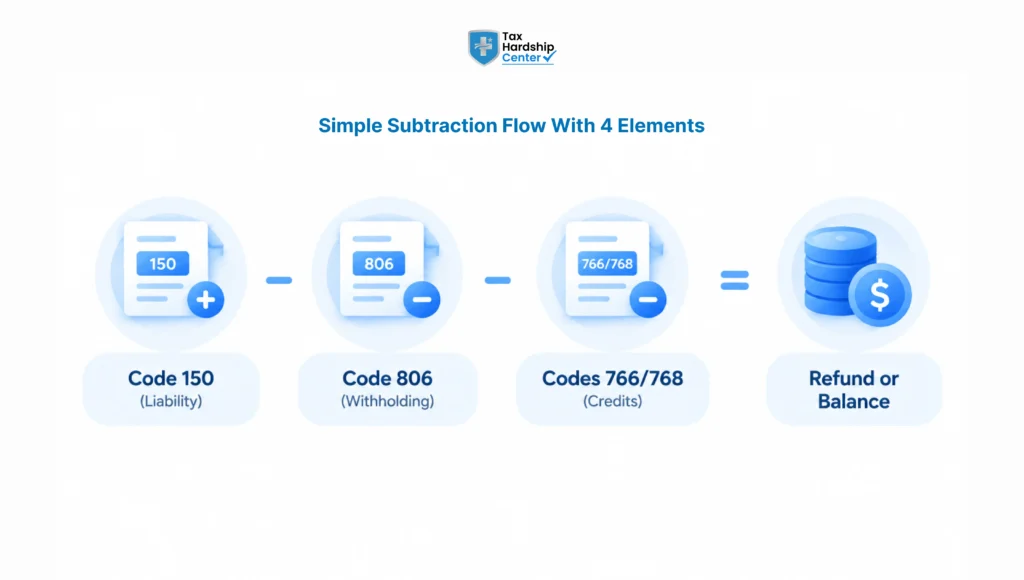
It’s common to see both code 766 and code 768 on the same transcript, since many taxpayers qualify for more than one refundable credit in the same tax year. When both appear, they stack together as separate credit entries, each contributing to the total credit to your account applied against your tax liability.
Your transcript also typically shows code 150, representing your total tax liability, and code 806, representing your withholding. When you add code 766, code 768, and code 806 together and compare that total against your code 150 liability, you get the full picture of whether you’re due a refund or still owe a balance.
If credits from code 766 and 768 combined with your withholding exceed your liability, you’ll typically see a refund code appear further down your transcript, assuming there’s no separate hold in place.
When These Codes Are Worth a Closer Look
In most cases, irs code 766 and 768 are simply confirming credits you’re entitled to, and no action is needed. But there are situations worth paying closer attention to:
- The amount under code 766 or 768 doesn’t match your own calculation. This can indicate the IRS adjusted your claimed credit during processing, sometimes due to income verification or a dependent eligibility check.
- Code 768 doesn’t appear even though you claimed the EITC. This can mean the credit is still under review, particularly if your return was flagged for additional verification.
- A code 570 appears alongside these credit codes. This means a hold is in place, and your refund won’t release until whatever triggered the review is resolved, even though your credits under code 766 and 768 are already recorded.
If you’re seeing an unexpected hold or a credit amount that doesn’t match what you claimed, reviewing your notice history can clarify what’s happening before you assume the credit was denied outright.
How Tax Hardship Center Helps When Transcript Codes Are Confusing
When a client comes to us trying to understand irs code 766 and 768 on their transcript, we start by pulling the complete account transcript and comparing every credit entry against the original return to confirm what generated each one. This matters because code 766 in particular can represent more than one type of credit, and knowing exactly which credit it reflects helps confirm your transcript is accurate.
If a hold like code 570 is sitting alongside your credit codes and delaying your refund, we help identify what triggered it and what steps move your case forward. And if reviewing your full transcript reveals a balance owed once your credits and withholding are compared against your total liability under code 150, we help set up a resolution path, whether that’s an installment agreement or evaluating Currently Not Collectible status, so you’re not left guessing what the numbers actually mean for your situation.
Frequently Asked Questions
What does IRS code 766 and 768 mean together on my transcript?
Both represent credits applied to your account. Code 766 is a broader credit designation, while code 768 specifically reflects the Earned Income Tax Credit.
Why does code 766 on transcript show a negative amount?
Negative numbers on a transcript represent credits in your favor. Code 766 reduces what you owe or adds to your refund, so it appears as negative.
Is code 768 on transcript only for the Earned Income Tax Credit?
Yes. Code 768 is specifically reserved for the EITC, unlike code 766, which can reflect several different types of refundable credits.
What does credit to your account mean on an IRS transcript?
It means a specific amount, whether from withholding, a refundable credit, or an IRS adjustment, has been applied to reduce your tax liability or increase your refund.
Can code 766 and 768 both appear on the same transcript?
Yes, this is common if you qualify for more than one refundable credit in the same tax year. Both stack together toward your total credits.
What if the amount under code 766 or 768 doesn’t match what I claimed?
This can indicate an IRS adjustment during processing. Compare the transcript amount against your original return and follow up if the discrepancy is unclear.
Conclusion
Seeing irs code 766 and 768 on your transcript is generally a good sign, confirming that refundable credits you’re entitled to have been applied to your account. Whether it’s a general credit to your account under code 766 or the specific Earned Income Tax Credit under code 768, understanding what each entry represents makes your transcript far less intimidating to read and gives you a clearer sense of where your refund actually stands.
Key Takeaways
- IRS code 766 and 768 both represent credits applied to your account, not amounts owed.
- Code 766 on transcript can reflect several types of refundable credits or IRS adjustments.
- Code 768 on transcript is specifically reserved for the Earned Income Tax Credit.
- A negative number next to either code reflects credit to your account, which is favorable.
- These codes often appear together when multiple refundable credits apply to the same return.
- Comparing transcript amounts to your original return confirms accuracy of each credit.
- A code 570 alongside these credits means a hold is delaying your refund, not a denial.
- Refundable credits reduce liability directly and can increase your refund beyond withholding.
- Missing or mismatched credit amounts can indicate the IRS adjusted your claim during processing.
- Reading your full transcript together gives a clearer picture than isolating a single code.
Confused about what your IRS transcript codes actually mean for your refund or balance? Get a free case review from Tax Hardship Center and get a clear read on your account.