
Seeing code 846 on your IRS transcript feels like a win, because it usually is. It means the IRS has moved past “processing” and into “payment.”
The part that still trips people up is timing. Even after a refund is issued, 846 shows up, you might be waiting on your bank, the mail, or an offset that reduced what you expected.
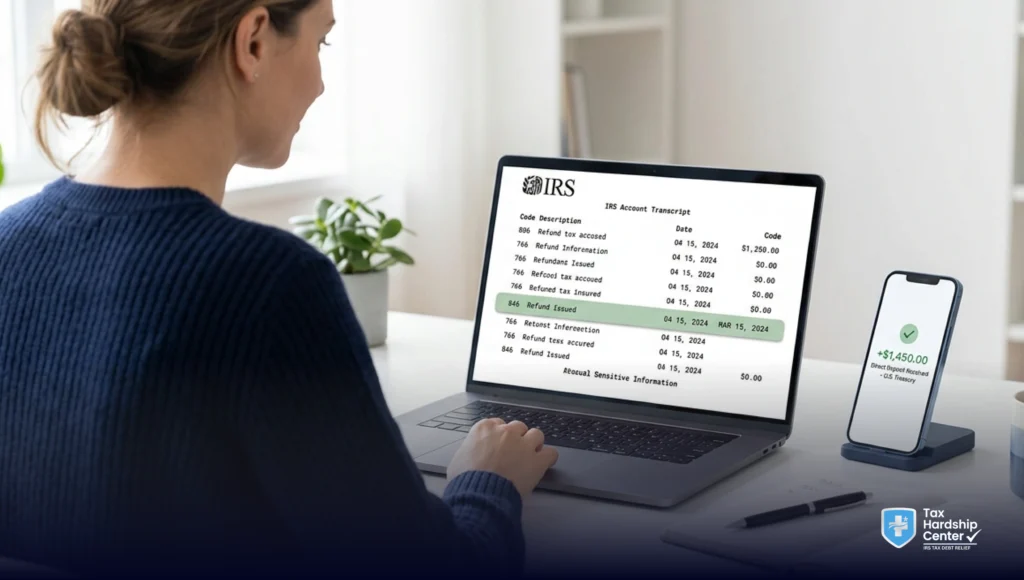
What Does 846 Mean On Tax Transcript
IRS transcript code 846 indicates a refund is being issued. In IRS reference materials, TC 846 is described as a computer-generated refund of an overpayment that debits your tax module for the amount being refunded, plus applicable interest when owed.
In plain English, what does 846 mean on a tax transcript? It means the IRS has approved the refund amount shown on the 846 line and has scheduled it for payment.
If you were previously seeing delay codes like 570 (hold) or 971 (notice issued), 846 is typically what shows up after the IRS clears the issue and moves your refund forward.
What The Date Next To 846 Really Means
The date next to IRS transcript code 846 is the IRS “refund issued” date. It is best viewed as the release date, meaning the IRS has authorized the payment to go out.
Two quick realities to keep in mind:
- Direct deposit posting depends on your bank’s processing schedule, and many banks do not post deposits on weekends or holidays.
- If you are receiving a paper check, delivery is still subject to mailing time.
If you want the IRS’s most taxpayer-friendly tracking, use Where’s My Refund, which provides personalized status updates after the return is processed and the refund is approved.
When Refund Hits Bank After 846
Most refunds are issued in less than 21 days when you e-file and choose direct deposit, but some returns take longer, and your bank can add a little extra lag even after approval.
A practical way to think about “when refund hits bank” after code 846:
- If you chose direct deposit, many taxpayers see the funds on the 846 date or within the next business day, depending on the bank’s posting rules.
- If you chose a check, the 846 date is usually closer to the day it was issued, and then mailing time follows.
Important 2026 update that can affect people expecting checks: the IRS began phasing out paper refund checks, and missing or invalid bank information can trigger a refund freeze and a CP53E notice asking you to update deposit details through your IRS online account within 30 days.
If you already have code 846, your refund has been issued. If you do not have 846 yet and are stuck in a freeze due to bank info, that is when CP53E becomes relevant.
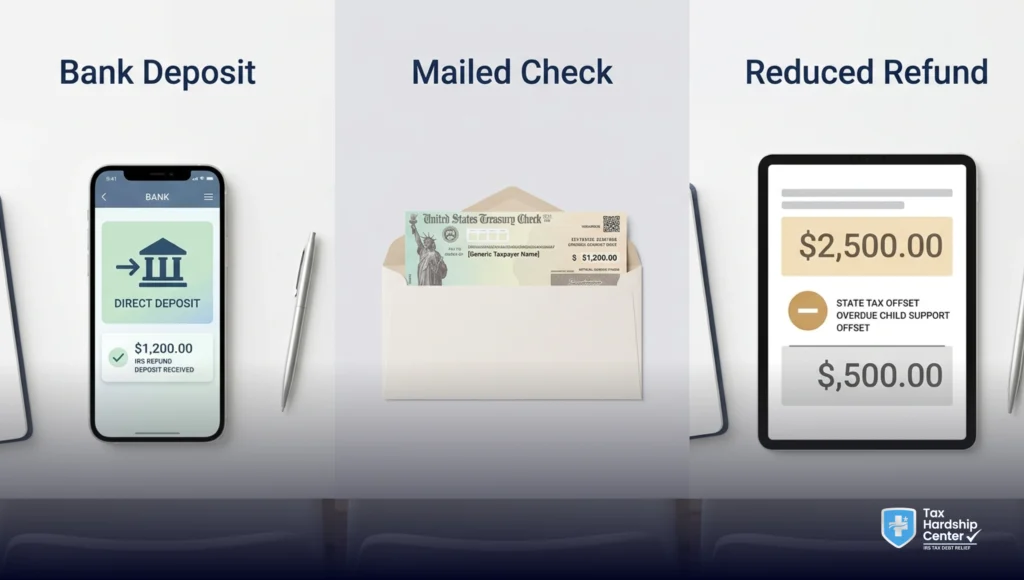
Refund Issued 846, But Amount Is Lower, Offsets Explained
Sometimes 846 shows a refund, but your deposit is smaller or never arrives because the refund was applied to a debt. This is called an offset.
Common offset categories include:
- Past-due federal taxes
- Debts owed to other federal agencies
- Certain state debts
- Child support obligations, depending on the case
For non-IRS debts, the Treasury Offset Program (TOP) is the system that matches federal payments like tax refunds against delinquent debts and withholds funds to pay those debts when allowed.
To check whether an offset may occur for a non-tax debt, the IRS directs taxpayers to the Bureau of the Fiscal Service TOP call center (800-304-3107).
If this is happening on a joint return because your spouse owes a separate debt, an injured spouse claim may protect your share of the refund in the right situation. For a plain-language walkthrough, see Injured Spouse Form 8379 Guide.
846 With Offset Codes: What You Might See On The Transcript
If your refund was offset through TOP, you may see Transaction Code 898 on your account transcript.
In IRS reference documentation, TC 898 is described as a Treasury Offset Program offset that reduces the associated refund.
You might also see reversal activity later (for example, if an offset is reversed), but the key point is simple: if you suspect an offset, your account transcript is often the clearest paper trail, and TOP is the right direction for non-IRS debt questions.
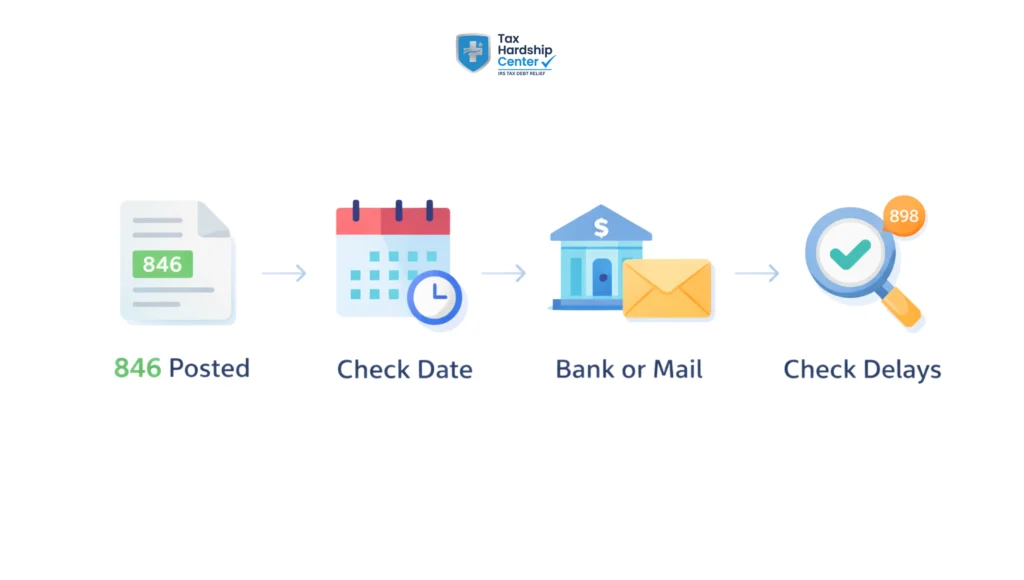
What To Do If You Have 846 But No Money Yet
If code 846 is posted and you still do not have the money, use this order of operations.
Step 1: Check Where’s My Refund And Your IRS Online Account
Start with Where’s My Refund. It is designed to show status updates after approval, and it can also surface messaging when something changes.
Step 2: Confirm Your Deposit Details With Your Bank
If the refund is a direct deposit, confirm:
- Routing number and account number on the filed return
- Whether your bank is holding government ACH deposits
- Whether the account is in your name, because some banks reject deposits that do not match the account holder’s name
The IRS also notes that if your financial institution rejects the direct deposit and returns it to the IRS, the IRS generally issues a paper check to your last known address.
Step 3: If You Used A Refund Product, Contact The Provider
If you used a preparer fee product (often called a refund transfer) where fees are taken from the refund, the deposit may route through a third party bank before it reaches you. In those cases, you may need to confirm timing with the provider first.
Step 4: If It Still Has Not Arrived, Consider A Refund Trace
If your bank cannot locate the deposit, the IRS trace process is usually the next step.
The IRS explains that if you have contacted the financial institution and two weeks have passed with no results, you may need to file Form 3911 to initiate a trace.
For missing refunds more broadly, the IRS also outlines trace options through its refund inquiries guidance, including the refund hotline and Form 3911.
How Tax Hardship Center Helps If Offsets Or IRS Debt Are Involved
If your refund is being reduced because of IRS tax debt, fixing the root problem is often the only way to stop the same thing from happening next year.
Tax Hardship Center supports taxpayers who need a plan for IRS debt and enforcement risk, including:
- Payment plans through an Installment Agreement
- Settlement pathways through an Offer In Compromise
- Temporary hardship protection, like Currently Not Collectible
If you are trying to prevent future offsets by getting compliant and addressing older balances, these may also help:
Frequently Asked Questions
What Does 846 Mean On Tax Transcript?
It means the IRS issued your refund. It is the transaction code the IRS uses to post a refund of an overpayment to your account transcript.
Is The Date Next To 846 My Direct Deposit Date?
It is the IRS refund issued date. Many people receive their deposit on or near that date, but your bank’s posting schedule can shift it, especially around weekends and holidays.
Can I Have 846 And Still Not Receive My Refund?
Yes. Common reasons include a bank rejection, mailing time for a paper check, or a refund offset that reduced the payment.
What Does 846 With Offset Mean?
It means the IRS issued the refund, but some or all of it was applied to a debt. For non-IRS debts, offsets are often handled through the Treasury Offset Program.
What Transcript Code Shows A Treasury Offset?
You may see Transaction Code 898, which IRS reference materials describe as a Treasury Offset Program offset that reduces the associated refund.
What If My Transcript Shows 846 But Nothing Hit My Bank?
Start with Where’s My Refund, then confirm details with your bank. If two weeks pass with no results after contacting the bank, the IRS points to Form 3911 to initiate a trace.
Conclusion
Code 846 is usually the finish line, it means the IRS has issued your refund. From there, the only remaining questions are delivery method, bank timing, and whether your refund was reduced by an offset.
Key Takeaways:
- IRS transcript code 846 means the refund has been issued, and the amount on that line is what the IRS scheduled to pay.
- The date next to 846 is the IRS refund issued date; your bank may post it on that date or the next business day.
- If your refund is smaller than expected, offsets may be involved, and TOP can reduce refunds for certain non-IRS debts.
- TC 898 on a transcript is an official sign of a Treasury Offset Program offset.
- If you have 846 but no deposit, start with Where’s My Refund, confirm with your bank, then use Form 3911 if the delay continues.