

IRS Form 9297 is the Summary of Taxpayer Contact, and it means an IRS revenue officer is working your case. It lists the records you must send and the date they are due. Answer it on time with the right documents, and you keep control of what happens next.
You opened the envelope expecting another bill. Instead, a real human at the IRS now knows your name. Deep breath.
Here is what IRS Form 9297 asks for, how to respond, and what to avoid.
What Is IRS Form 9297 and Why Did You Get One?
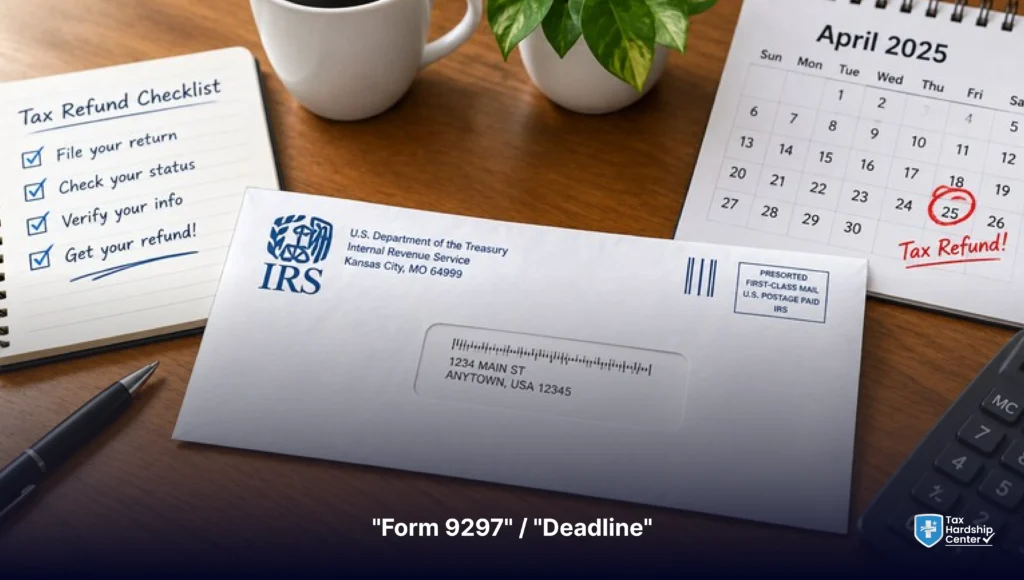
IRS Form 9297 is a written summary of what a revenue officer needs from you. Revenue officers handle collection cases that need personal contact, usually after automated notices went unanswered.
The form lists the items due in one column and the deadline for each in another. It often arrives with an appointment letter. Think of it as the officer’s homework list for you.
The IRS is not always out to punish you here. The officer mainly wants to see your finances so they can decide between a payment plan, other relief, or enforcement.
Form 9297 IRS vs Information Document Request IRS: What Is the Difference?
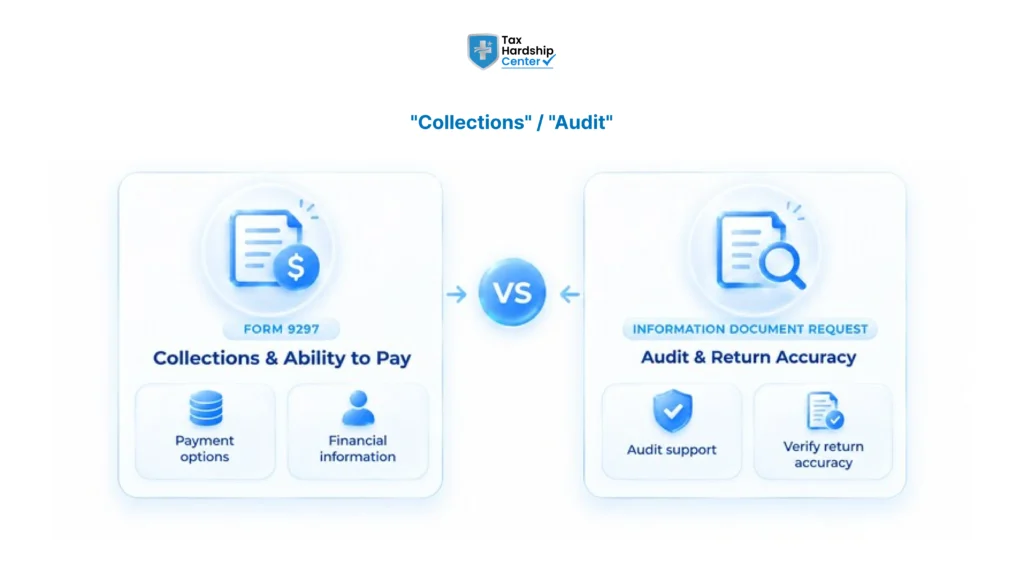
People mix these up all the time, and it matters. An information document request IRS auditors send, known as Form 4564, asks for records to check a tax return during an audit. See our breakdown of IRS audit types for how exams work.
The Form 9297 IRS collections officers use serves a different goal. It asks about your ability to pay, not whether your return was right.
| Feature | Form 9297 | Information Document Request |
| Sent by | Revenue officer (collections) | Examiner (audit) |
| Main question | Can you pay, and how? | Is your return accurate? |
| Typical records | Income, expenses, assets, filings | Receipts, statements, support for deductions |
Same stack of paperwork vibes, completely different story. Knowing which one you hold tells you which problem you are solving.
Which IRS Revenue Officer Documents Do You Need to Send?
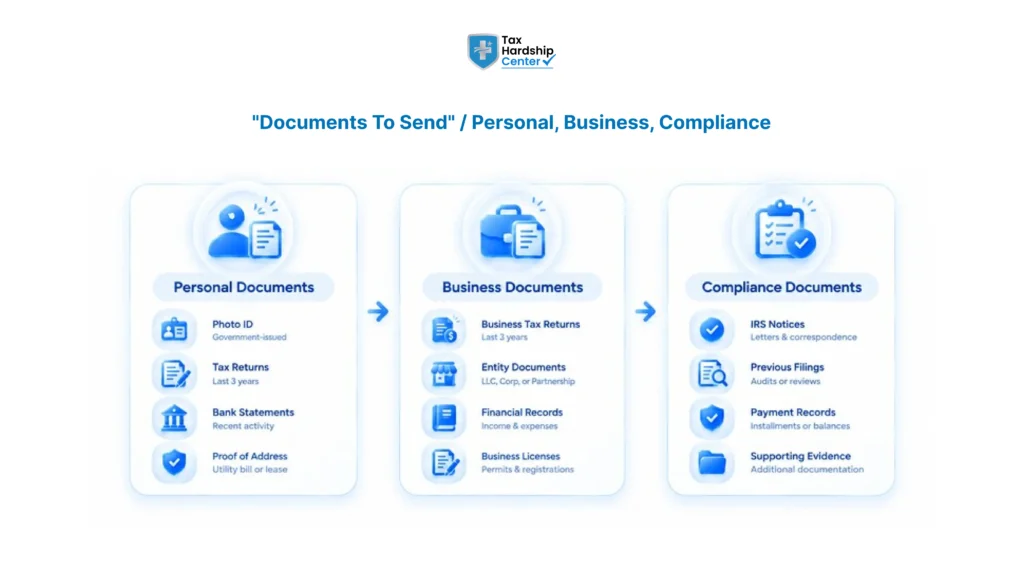
The exact list sits on your form, so follow it line by line. In general, IRS revenue officer documents fall into three groups.
Personal Financial Records
- Recent pay stubs or other income proof
- Bank statements
- Housing, utility, insurance, and vehicle expense records
- The income and expense section of Form 433-A, which our Form 433-A and 433-B guide explains
Business Records (If You Own One)
- Profit and loss statements
- Business bank statements
- Accounts receivable and payroll details
Compliance Proof
- Any unfiled returns, completed and filed
- Proof of current estimated tax payments or deposits
Missing returns are a big deal. If you are behind, our guide to help with back taxes shows the path forward. Every item on the IRS revenue officer documents list exists for one reason: proving what you can actually pay.
How Much Time Do You Really Have to Respond?
The deadline printed on the form is the date that counts. Revenue officers answer to managers, so a missed date can speed up enforcement.
Cannot gather everything in time? Call the officer before the deadline, send what you have, and explain what is missing. A short extension is sometimes possible, but only if you ask early and follow through. Silence, on the other hand, rarely gets a second chance.
Pro tip: keep a log of every call, date, and document you send. It protects you if anything gets disputed later. The IRS explains the broader process in Publication 594.

What Happens If You Ignore IRS Form 9297?
Short answer: the officer stops waiting and starts collecting. That can mean a bank or wage levy, a lien, or both.
Many people discover this when a final notice lands. Our guides to IRS Letter 1058 and the LT11 notice explain what those look like and how you can respond. Ignoring IRS Form 9297 does not make the case smaller. It makes your options fewer.
Which Mistakes Make a Revenue Officer Case Harder?
- Sending partial records without explanation. Tell the officer what is coming and when.
- Guessing at numbers. Wrong figures on a financial statement hurt trust fast.
- Skipping unfiled returns. Most paths to relief require them.
- Talking too much. Answer questions accurately, but do not volunteer guesses.
- Going it alone on a complex case. If assets or business income are involved, get advice before you submit.
How Tax Hardship Center Handles IRS Form 9297 Requests
When IRS Form 9297 shows up, Tax Hardship Center starts by reading it line by line, confirming the deadline, and building a checklist of exactly which IRS revenue officer documents to gather. A Form 9297 IRS request has a short fuse, so speed matters. We contact the officer on your behalf, so you are not the one calling a collections employee cold.
Then we prepare the package: an accurate financial statement, supporting records, and any missing returns. Depending on the numbers, we pursue the right outcome, such as an IRS installment agreement, an Offer in Compromise review, or broader IRS tax relief services if enforcement is already underway.
Picture a small business owner with three years of messy books and a Form 9297 due in two weeks. We sort the records, flag what is missing, and keep the officer informed while the package comes together. We never promise results, because the IRS decides, but we tell you what is realistic before you pay anything.
Conclusion
A Form 9297 IRS letter is serious, but it is also manageable. Read it, gather the documents, and respond before the deadline. A prepared taxpayer gets a very different conversation than a silent one.
P.S. Be honest: how many unopened IRS envelopes are on your counter right now?
FAQs
What does IRS Form 9297 mean?
It means a revenue officer is assigned to your case and needs financial records. The form lists what to send and the due dates.
Is Form 9297 the same as an information document request IRS audits use?
No. An information document request IRS auditors issue tests your return. Form 9297 comes from collections and tests your ability to pay.
Can I get more time to respond to IRS Form 9297?
Sometimes. Call the officer before the deadline, explain what is missing, and send what you already have.
Do I have to send every document on the form?
You should send what is requested or explain why an item is unavailable. Incomplete responses can slow your case or invite enforcement.
Will the revenue officer levy my account if I respond?
A timely, complete response can help you reach a payment arrangement instead. There are no guarantees, so do not assume enforcement is off the table.
Should I hire help with a Form 9297 IRS request?
Consider it if you have unfiled returns, business income, large balances, or a tight deadline. Ask for clear fees first.
Key Takeaways
- IRS Form 9297 is the Summary of Taxpayer Contact sent by a revenue officer.
- It signals that your case has moved beyond automated notices.
- The form lists the records you must send and each due date.
- Form 9297 is a collections tool, unlike an information document request IRS auditors send.
- Typical IRS revenue officer documents include bank statements, pay stubs, and expense proof.
- Unfiled returns and current-year payments usually need to be handled first.
- Call before the deadline if you need more time.
- Ignoring the form can lead to liens or levies.
- Accurate numbers matter more than fast numbers.
- Professional help can speed up a complicated response.
Got a Form 9297 on your table? Click here to get a free quote.