
You cannot just pick a number and mail it to the IRS. That is the part most people get wrong before they ever touch Form 656. The IRS does not negotiate off a feeling. It runs your numbers through a formula, and an offer in compromise calculator is how you see that formula before the IRS does.
If you owe back taxes and are wondering what you would actually have to offer to settle, this guide walks through how an offer in compromise calculator works, what the IRS Offer in Compromise Pre-Qualifier tool checks, and how Form 656 Offer in Compromise turns your numbers into a real submission.
Quick answer:
- An offer in compromise calculator estimates your Reasonable Collection Potential, which becomes the lowest amount the IRS will accept.
- The formula is net equity in assets plus monthly disposable income multiplied by 12 or 24, depending on payment terms.
- The IRS Offer in Compromise Pre-Qualifier tool gives a preliminary check before you file anything.
- Form 656 Offer in Compromise is the actual application, with a $205 fee that may be waived for low income filers.
- Offering less than your calculated minimum IRS offer gets your case rejected, not negotiated.
What an Offer in Compromise Calculator Actually Estimates
An offer in compromise calculator is not guessing at a discount. It is running the same Reasonable Collection Potential formula the IRS itself uses, so you know your realistic number before you submit anything. RCP looks at two pieces: the equity you have in assets, and what is left of your income each month after allowable expenses.
Run the math with real numbers, and you get a realistic target instead of a hopeful guess. Skip it, and you risk offering either too little, which gets rejected outright, or too much, which means overpaying a debt you may not have needed to pay in full.
The Math Behind Your Minimum IRS Offer
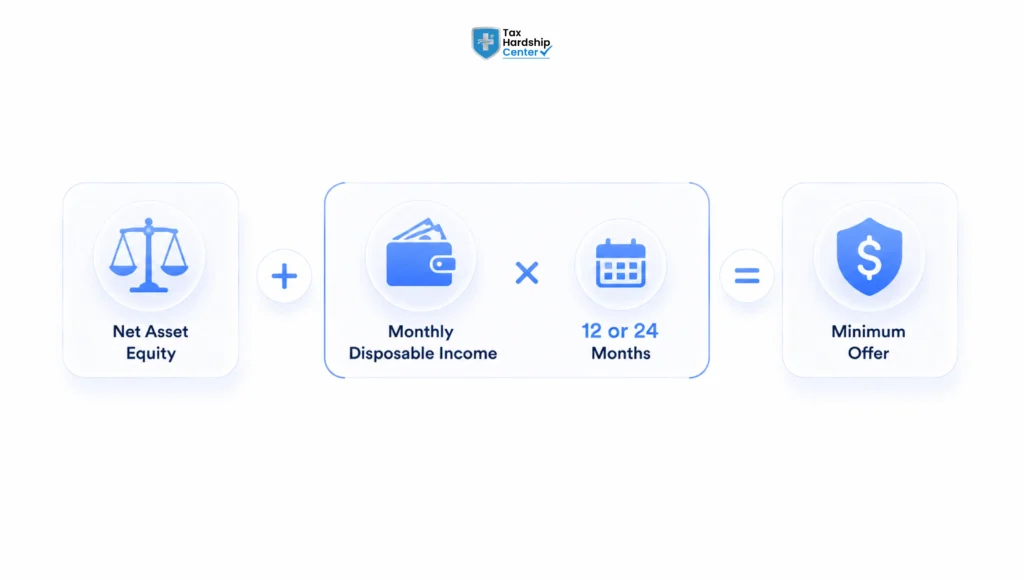
Your minimum IRS offer comes down to one formula: net realizable equity in assets, plus monthly disposable income multiplied by either 12 or 24 months.
Net equity means what you would actually get selling your assets today, not their full market value. The IRS applies a quick sale discount, typically around 20 percent, before counting anything toward your total.
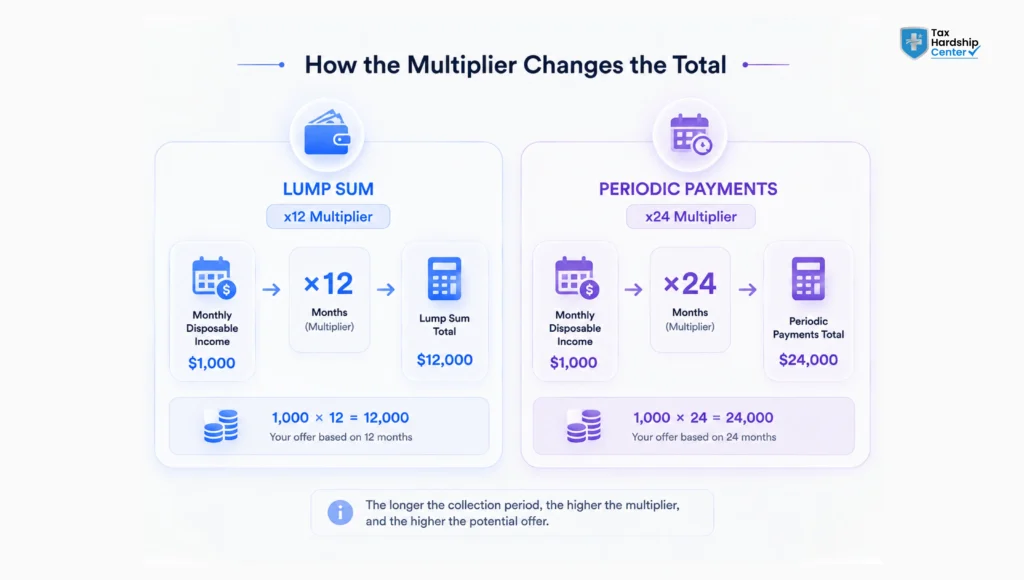
Monthly disposable income is your net income minus allowable expenses under the IRS Collection Financial Standards. Multiply that number by 12 if you are proposing a lump sum offer, or by 24 if you want periodic payments. Choosing periodic payments doubles the income component of your offer, which is why most offer in compromise calculator results favor lump sum whenever the cash is available.
Using the IRS Offer in Compromise Pre-Qualifier Tool
The offer in compromise pre qualifier is the IRS’s own free tool, and running your numbers there before you file gives you a preliminary read on whether an OIC makes sense at all. It is not mandatory. Form 656 itself even asks whether you used the OIC Pre-Qualifier at IRS.gov, but skipping it means walking into the application blind.
The offer in compromise pre qualifier checks your basic eligibility first, filing compliance, no open bankruptcy, current on estimated payments, before it gets anywhere near a number. If you fail that first screen, no calculated result matters until those issues are fixed.
Keep in mind the offer in compromise pre qualifier gives a preliminary estimate only. The IRS may calculate your actual Reasonable Collection Potential differently once your full Form 433-A(OIC) financial disclosure is reviewed.
Form 656 Offer in Compromise: What the Application Actually Requires
Once your offer in compromise calculator numbers hold up, Form 656 is where you actually submit the offer. This is a legal document defined under IRC 7122, not a worksheet. It states the tax years covered, your proposed offer amount, and your chosen payment terms.
Filing the application requires a $205 fee, waived if you qualify for low income certification. You also need Form 433-A(OIC) alongside it, laying out your full financial picture in the same detail the offer in compromise calculator used to estimate your number. Mismatches between what Form 656 Offer in Compromise states and what your 433-A shows are one of the fastest ways to get an offer bounced back.
Common Mistakes That Sink an Offer in Compromise Calculator Estimate
Running the numbers does not guarantee acceptance. A few things consistently derail otherwise solid figures.
Offering below your calculated number because a marketing pitch promised “pennies on the dollar” without actually running your case. Missing asset equity, like a vehicle or a small inheritance, that the IRS finds anyway during review. Filing while behind on current year estimated payments, which gets an otherwise valid offer returned before evaluation. Choosing periodic payment terms without checking whether lump sum would have produced a lower total.
When the Calculator Says No
Sometimes an offer in compromise calculator shows a number higher than what you can realistically pay, even over time. That does not mean you are out of options. Currently Not Collectible status may fit better if your disposable income is genuinely zero, and an installment agreement compared against OIC and CNC may make more sense if your RCP is manageable as a payment plan instead of a lump sum.
How Tax Hardship Center Builds Your Offer in Compromise Case
Tax Hardship Center runs the same Reasonable Collection Potential math against your actual documentation, not estimated figures. That means pulling verified asset values, applying the correct quick sale discount, and calculating allowable expenses against current IRS Collection Financial Standards for your county before a number ever gets proposed.
Once the math is confirmed, THC prepares the application alongside Form 433-A(OIC), making sure every figure on both documents matches, since mismatches are one of the most common rejection triggers. For cases where the offer in compromise pre qualifier suggests a number that is not realistically payable, THC compares it against installment agreement or CNC alternatives before filing anything, so the strategy fits the actual math instead of a hopeful offer amount.
This is not a generic settlement pitch. It is building the exact submission the IRS formula supports.
FAQs
How accurate is an offer in compromise calculator?
It gives a solid estimate using the same RCP formula the IRS applies, but the IRS may calculate your final numbers differently once your full financial disclosure is reviewed.
What is the difference between the offer in compromise pre qualifier and a full calculator?
The pre qualifier checks basic eligibility first, filing compliance and bankruptcy status, before estimating a preliminary offer range.
How is my minimum IRS offer actually calculated?
Net equity in assets plus monthly disposable income, multiplied by 12 for lump sum offers or 24 for periodic payment offers.
Do I have to file Form 656 Offer in Compromise myself?
No. Many taxpayers use a tax resolution professional to prepare the application and the accompanying 433-A(OIC) to avoid mismatched figures.
What happens if I offer less than my calculated minimum IRS offer?
The IRS typically returns the offer without further negotiation rather than countering it.
Is the offer in compromise pre qualifier tool mandatory before filing?
No, but skipping it means submitting Form 656 Offer in Compromise without knowing whether your basic eligibility even holds up.
Conclusion
An offer in compromise calculator turns guesswork into a real number by running the same Reasonable Collection Potential formula the IRS uses on your case. What you owe on paper depends on verified asset equity and disposable income, not on what sounds appealing. Check your eligibility with the offer in compromise pre qualifier, get your numbers right, and file with documentation that matches every figure.
Key Takeaways
- An offer in compromise calculator estimates your Reasonable Collection Potential before you file anything.
- Your total equals net asset equity plus monthly disposable income times 12 or 24 months.
- The offer in compromise pre qualifier checks eligibility before estimating a number.
- Form 656 Offer in Compromise requires a $205 fee, waived for qualifying low income filers.
- Lump sum offers use a 12 month multiplier, periodic payments use 24, which changes your total significantly.
- Mismatches between Form 656 Offer in Compromise and Form 433-A(OIC) are a common rejection cause.
- Offering below your calculated number typically gets an offer returned, not countered.
- If the math does not work for an OIC, CNC status or an installment agreement may fit better.
- Verified documentation matters more than an estimated offer in compromise calculator number.
- Getting professional review before filing catches errors an online tool cannot.
Ready to see your actual minimum IRS offer? Get a free case review from Tax Hardship Center and find out what your numbers really support.