
If your offer in compromise rejected letter just landed, you usually have 30 days to file an offer in compromise appeal with the IRS Independent Office of Appeals. A rejected IRS offer is not always the final word. The right fix depends on why it failed.
You opened the envelope hoping for a fresh start. You got a no. Your stomach dropped, and one question took over: is that it? Not yet. This story has a second act.
Quick Answer (TL;DR)
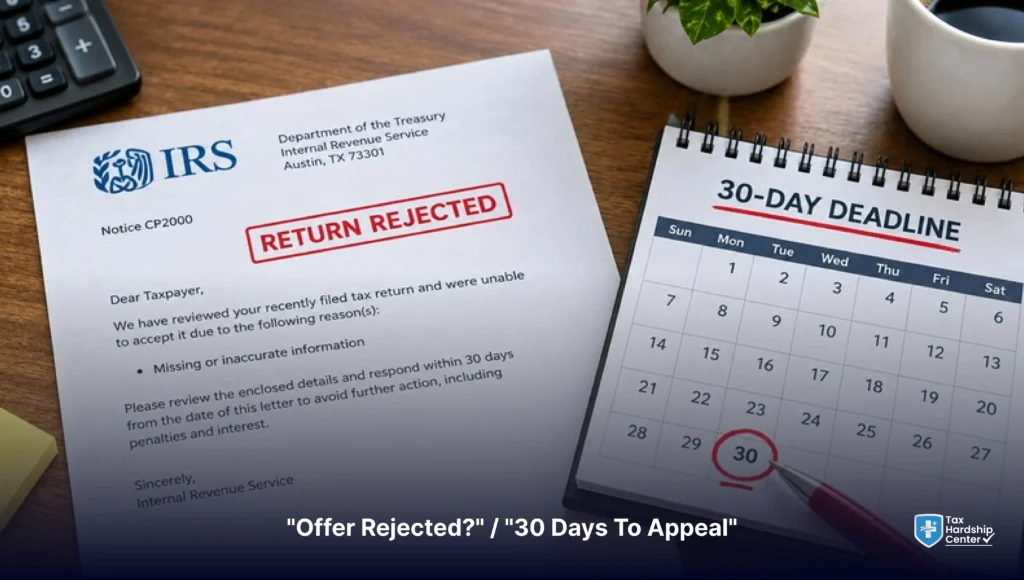
- You generally have 30 days from the date on the letter to appeal.
- An offer in compromise rejected after review can be appealed, but a returned offer cannot.
- To appeal IRS OIC decision letters, file Form 13711 with a clear written explanation.
- A rejected IRS offer often fails over math or compliance, and both can sometimes be fixed.
- Not every appeal succeeds, so get an honest review of your numbers first.
Why Was My Offer in Compromise Rejected?
When an offer in compromise rejected notice arrives, the IRS has usually decided you can pay more than you offered. That math is called reasonable collection potential, and it adds up your income, equity, and assets. Most rejected IRS offer cases trace back to a handful of causes:
- Income or asset values the IRS counted higher than you did
- Unfiled returns or missed current-year tax payments
- Expenses the IRS considered above its allowable standards
- Financial records that did not back up the numbers on your forms
The IRS Fresh Start eligibility checklist shows how these factors work before you ever apply or reapply.
Rejected or Returned: Which One Did You Get?
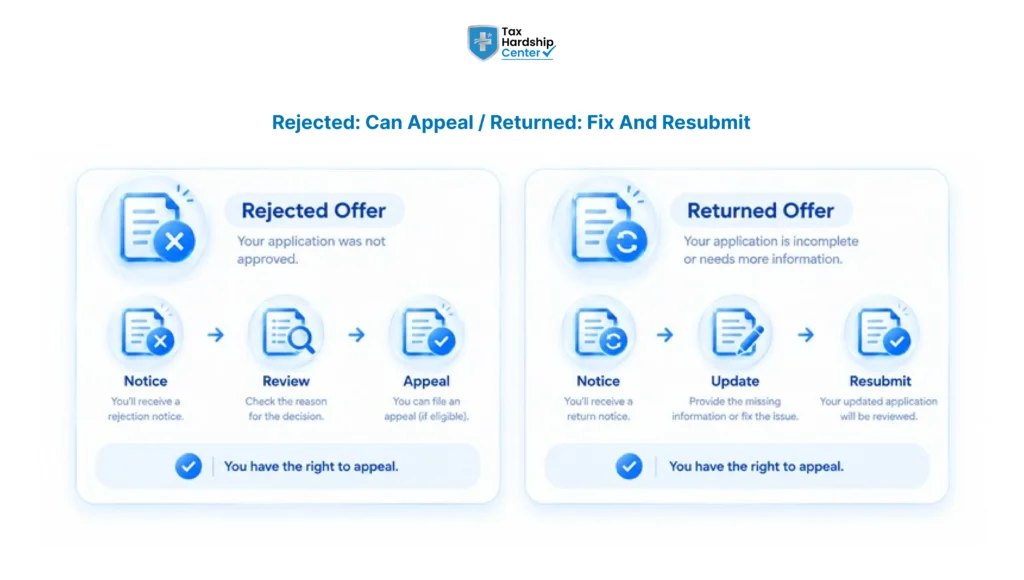
An offer in compromise rejected after full review can be appealed. A returned offer cannot, because the IRS never processed it. The IRS explains the difference on its Offer in Compromise page. If you are new to the process, here is how Offers in Compromise work.
| Rejected | Returned | |
| What happened | IRS reviewed it and said no | IRS could not process it |
| Appeal right | Yes, within 30 days | No |
| Typical next step | File Form 13711 | Fix the issue and resubmit |
How to Appeal IRS OIC Decision Letters Within 30 Days
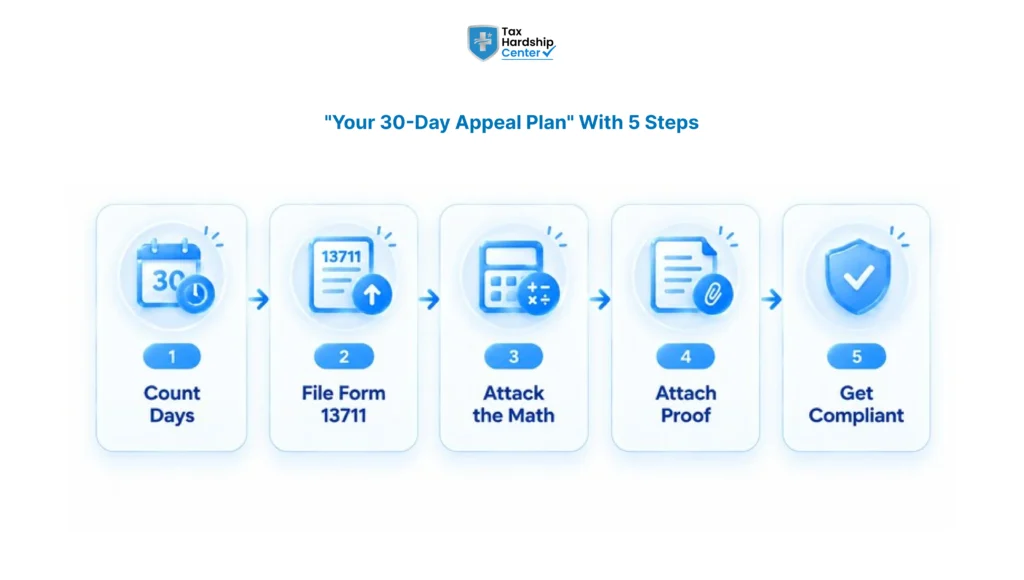
To appeal IRS OIC decision letters, you must act within 30 days of the date printed on the rejection letter. Miss it, and the door can close. A strong offer in compromise appeal follows these steps:
- Count your 30 days. Start from the date on the letter, not the day it arrived.
- File the request. Use Form 13711 or the written protest your letter describes.
- Attack the math. Explain, line by line, where the IRS got your numbers wrong.
- Attach fresh proof. Bank statements, pay stubs, medical bills, and asset valuations carry weight.
- Get compliant. File every missing return and stay current on payments.
Think of it as a rebuttal. Your offer in compromise rejected result is the IRS’s math, and you are bringing better math.
What Happens During an Offer in Compromise Appeal?
An Appeals officer, separate from the original reviewer, studies your numbers and your argument. They may request more records, uphold the rejection, or work toward an acceptable offer under 26 U.S.C. 7122. Timing varies by case.
The IRS generally pauses levy during the 30-day window and while a timely appeal is pending, though the collection clock is paused too. If your offer in compromise rejected decision is under review, keep filing and paying on time. New problems can sink a good appeal.
What Mistakes Hurt You After an Offer in Compromise Rejected Letter?
- Waiting to “think about it.” The 30 days do not wait.
- Claiming hardship with no numbers. Appeals officers read documents, not emotions.
- Ignoring new compliance gaps. A missed payment can undo your case.
- Understating your finances. The IRS verifies, and credibility is everything.
- Assuming a rejected IRS offer is a permanent no. Changed facts can support a new submission.
Is Appeal the Only Move After an Offer in Compromise Rejected?
No. Depending on your numbers, you have other routes:
- Reapply with new facts: useful if income dropped or assets changed since the first filing.
- Installment agreement: structured monthly payments, covered in this guide to IRS payment arrangements.
- Currently Not Collectible status: a pause when paying would cut into basic needs. See how it compares with an Offer in Compromise and payment plans.
Honest note: an appeal wins only when the IRS’s math or facts are wrong. If your numbers show you can pay, a payment plan may be the faster, safer fix. Our breakdown of tax forgiveness versus tax debt relief shows what realistic relief looks like.

How Tax Hardship Center Handles Offer in Compromise Rejected Cases
When your offer in compromise rejected letter arrives, Tax Hardship Center starts by reading the rejection reason and counting your 30 days. We tell you whether an appeal, a fresh submission, or a payment plan fits your numbers before you pay for the wrong path.
Our team rebuilds your financial statement, closes unfiled return and payment gaps, prepares the offer in compromise appeal package with Form 13711 and supporting records, and speaks with the IRS for you. If appeal is not the best path, we check your eligibility for IRS forgiveness programs, review your back tax relief options, and move you toward a payment plan or hardship status. Whether you want to appeal IRS OIC decision letters or start over, we map the plan first.
Money is tight after a no, so we explain fees upfront. See how tax relief service costs work. The IRS controls the result, so we never promise approval, but we will tell you the truth about your odds. Every rejected IRS offer has a reason, and finding it is step one.
Call us at [phone number] to talk to a tax specialist today.
Conclusion
An offer in compromise rejected letter feels like a closed door, but the 30-day window is a real second chance. Check your deadline, fix what the IRS flagged, and choose between appeal, reapplication, or a payment plan with clear numbers.
FAQs
What should I do first when my offer in compromise rejected letter arrives?
Check the date on the letter, because your 30-day appeal clock starts there. Then gather updated financial records and speak with a tax professional or the IRS contact listed.
Can I appeal IRS OIC decision letters without a lawyer?
Yes. Taxpayers can file Form 13711 on their own. Many get help when the numbers are complex, since the appeal rests on documentation.
Does the IRS levy my accounts during an appeal?
The IRS generally holds off on levy during the 30-day window and while a timely appeal is pending. Still, review any other enforcement notices you have received.
How successful is an offer in compromise appeal?
The IRS does not guarantee outcomes, and results depend on your documentation. Appeals tend to work best when the IRS’s valuation or expense figures were wrong or new facts exist.
Do I get my money back after a rejection?
The application fee is generally not refunded. Payments sent with the offer are generally applied to what you owe.
Can I submit a new offer after a rejection?
Yes, if your circumstances changed and you can document new facts. Resubmitting the same numbers rarely changes the result.
Key Takeaways
- An offer in compromise rejected letter is a deadline, not a dead end.
- You generally have 30 days from the letter date to appeal.
- Only rejected offers can be appealed, while returned offers must be fixed and resubmitted.
- To appeal IRS OIC decision letters, file Form 13711 with line-by-line corrections and proof.
- A rejected IRS offer often fails on math or compliance, and both can sometimes be fixed.
- Every offer in compromise appeal needs updated records, not just explanations.
- Staying current on filings and payments protects your appeal.
- Reapplying, an installment agreement, or CNC status may fit better than appealing.
- Honest qualification before you pay protects you from the wrong path.
- The IRS decides outcomes, so choose representation that tells you the truth.
Click here to get a quote and get an honest read on your rejection before the 30 days run out.