

If you’re asking should i file separately if my husband owes taxes, the short answer is it depends on how the debt was created and whether it happened before or during your marriage. Filing separately can protect your refund and your future income from being pulled toward his balance, but it also comes with real tax tradeoffs. Before you decide, it helps to understand exactly what’s at risk and what other options, like injured spouse relief, might solve the problem without giving up the benefits of filing jointly.
Should I File Separately If My Husband Owes Taxes? The Core Question

When your spouse owes taxes and it’s time to file, the decision usually comes down to one thing: are you willing to risk your refund and potentially your future tax situation being tied to his debt in order to keep the tax benefits that come with filing jointly? For a lot of couples, that’s not a simple yes or no.
Should i file separately if my husband owes taxes really depends on the size of the debt, whether it existed before you were married, and whether you have income or a refund of your own that you don’t want exposed to his balance. There isn’t a universal right answer here, which is exactly why this decision deserves a closer look before tax season instead of a rushed choice at the filing deadline.
What Happens to Your Refund If You File Jointly When Spouse Owes Taxes
If your spouse owes taxes and you file a joint return, the IRS can apply your combined refund toward his existing tax debt, even if the income generating that refund was entirely yours. This is one of the biggest reasons people start researching should i file separately if my husband owes taxes in the first place. It’s not theoretical. It happens regularly, and it can catch people off guard when a refund they were counting on simply doesn’t show up.
This applies to federal tax debt, but it can also extend to certain other government debts, like defaulted student loans or past-due child support, depending on the type of offset involved. If you’ve noticed a notice mentioning a refund offset or your expected refund never arrived, this is likely why.
Married Filing Separately: The Real Pros and Cons
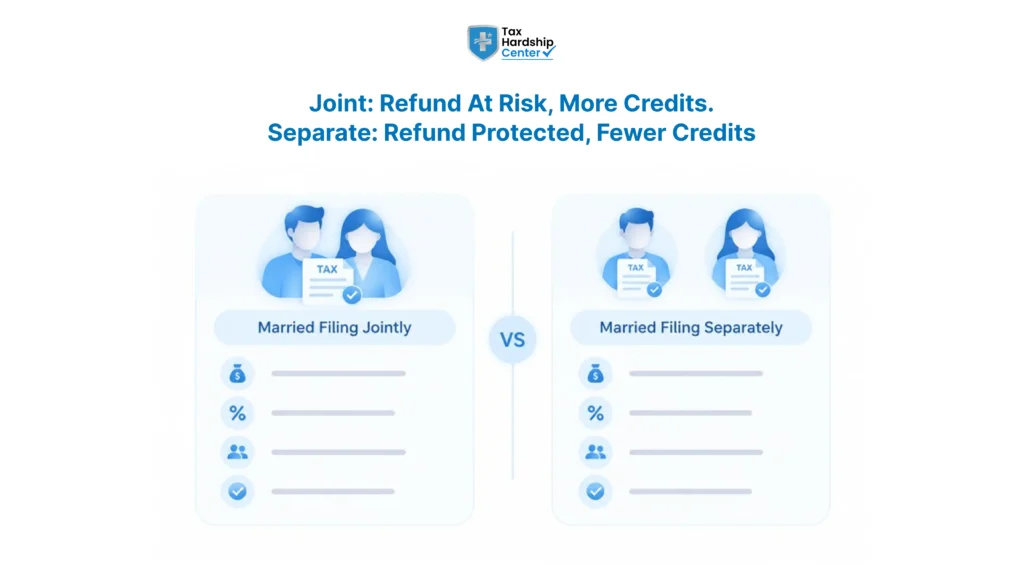
Choosing married filing separately protects your individual refund and income from being applied to your spouse’s debt, but it comes with tradeoffs that are worth weighing honestly before you commit to it every year.
The upside of married filing separately:
- Your refund stays yours and isn’t exposed to your spouse’s tax debt
- You’re not held jointly liable for errors or omissions on his portion of the return
- It can simplify things if you’re already managing finances separately for other reasons
The downside of married filing separately:
- You typically lose access to several tax credits, including the Earned Income Tax Credit and education credits
- Your standard deduction and tax brackets are often less favorable than filing jointly
- Some deductions require both spouses to itemize or both to take the standard deduction, which limits flexibility
For many couples, married filing separately ends up costing more in lost credits and deductions than it saves by protecting the refund. This is exactly why it’s worth running the numbers both ways rather than assuming separate filing is automatically the safer or smarter choice.
Injured Spouse Relief: The Option Most People Don’t Know About
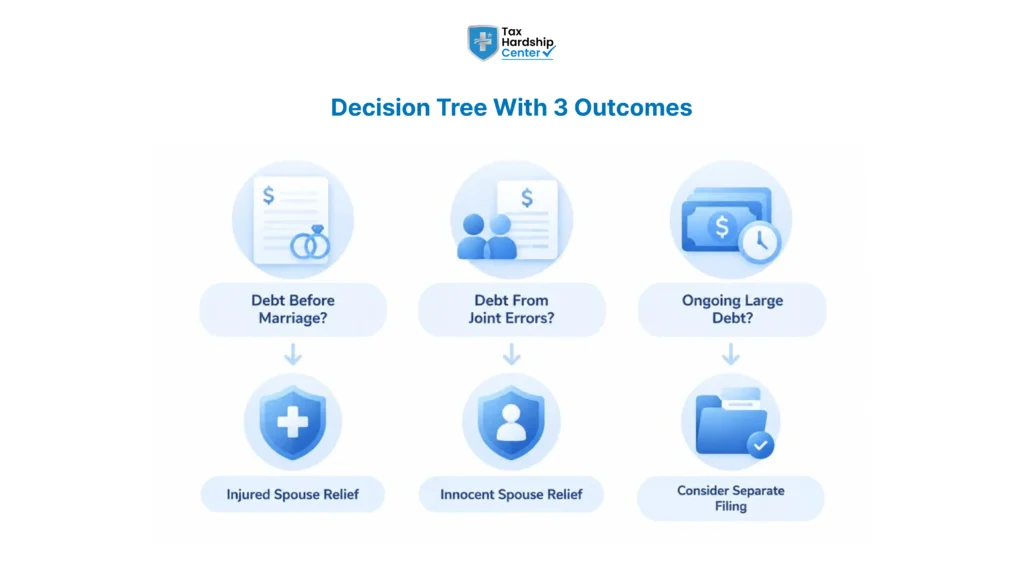
Before deciding should i file separately if my husband owes taxes, it’s worth knowing that injured spouse relief often solves the exact problem people are trying to avoid, without giving up the benefits of filing jointly.
Injured spouse relief allows you to file jointly and still claim your portion of the refund back, even if part of it would otherwise be applied to your spouse’s back tax debt. You do this by filing Form 8379, either attached to your joint return or afterward if the offset has already happened. The IRS calculates your share of the refund based on your individual income and withholding, and that portion is protected from being applied to his separate debt.
This is different from innocent spouse relief, which addresses a different situation entirely, tax debt created by errors or omissions on a joint return you didn’t know about. If your spouse owes taxes from before your marriage or from a separate financial situation, injured spouse relief is usually the more relevant path.
When Filing Separately Actually Makes Sense
There are situations where the answer to should i file separately if my husband owes taxes genuinely is yes, and it’s worth being clear about when that applies:
- The debt is large and ongoing, and you’d rather not deal with repeated refund offsets year after year
- You’re not comfortable with joint liability for any part of his tax situation, especially if you’re unsure what else might be involved
- Your individual finances are already separate, and filing separately fits how you manage money as a couple
- You anticipate divorce or separation and want your tax filings to reflect that separation clearly going forward
If one or more of these describes your situation, married filing separately may be worth the tradeoff in lost credits, even with the higher tax cost it usually carries.
When Staying Joint Is Usually the Better Move
For most couples, staying joint and using injured spouse relief solves the core problem, your refund, without sacrificing the tax benefits of filing together. If spouse owes taxes but the amount is manageable, or if you qualify for credits that only apply when filing jointly, this combination usually comes out ahead financially compared to filing separately every year.
It’s also worth considering whether the underlying tax debt itself can be resolved directly, since that removes the need to navigate around it every filing season. Reviewing IRS payment plan options for the debt itself might be a more permanent fix than repeatedly filing around it.
What to Do If the Tax Debt Happened Before You Got Married
If the tax debt in question existed entirely before your marriage, this changes the calculation. Debt from before the marriage is generally considered separate debt, meaning you’re not personally liable for it regardless of how you file. The concern in this case isn’t liability, it’s refund offset, since a joint refund can still be applied to his pre-marriage debt even though you’re not responsible for it.
In this scenario, injured spouse relief is usually the cleaner solution rather than married filing separately, since it protects your share of the refund without requiring you to give up joint filing status. If you’re unsure how much of the debt predates your marriage, requesting a transcript for the years in question can clarify the timeline. Our guide on help with back taxes and IRS relief options covers how these older balances are typically handled.
How Tax Hardship Center Helps When One Spouse Owes Back Taxes
When a client comes to us trying to figure out should i file separately if my husband owes taxes, we start by pulling the transcript on the debt itself to understand when it originated and how large it actually is. That single piece of information usually determines whether injured spouse relief, married filing separately, or resolving the debt directly is the right path forward.
For couples who want to keep filing jointly, we help prepare and file Form 8379 for injured spouse relief so future refunds aren’t repeatedly offset. If the debt itself is the real issue, we also look at whether an Offer in Compromise or an installment agreement can resolve it directly, which removes the need to navigate around it every year. And if the situation involves debt created by errors on a joint return rather than a separate pre-marriage balance, we evaluate whether innocent spouse relief applies instead, since that’s a different process with different requirements.
Frequently Asked Questions
Should I file separately if my husband owes taxes from before we married?
Not necessarily. Injured spouse relief often protects your refund while letting you keep the tax benefits of filing jointly, even if the debt predates your marriage.
Does married filing separately protect me from all of my spouse’s tax debt?
It protects your individual refund and liability going forward, but it doesn’t retroactively remove liability for any joint returns already filed together.
What’s the difference between injured spouse and innocent spouse relief?
Injured spouse relief protects your refund share when your spouse owes taxes from a separate debt. Innocent spouse relief addresses liability from errors on a joint return you didn’t know about.
Will filing separately cost us money in lost tax credits?
Often, yes. Married filing separately typically loses access to certain credits and has less favorable tax brackets than filing jointly.
How do I know if my spouse’s tax debt happened before or during our marriage?
Requesting an IRS transcript for the relevant tax years will show exactly when the debt was assessed relative to your marriage date.
Can we still file jointly and protect my refund at the same time?
Yes, through injured spouse relief using Form 8379, which lets you file jointly while keeping your portion of the refund protected from offset.
Conclusion
Deciding whether I should file separately if my husband owes taxes isn’t a decision to rush into every filing season without weighing the actual tradeoffs. In many cases, injured spouse relief solves the core problem, protecting your refund, without requiring you to give up the tax benefits of filing jointly. The right choice depends on when the debt was created, how large it is, and whether resolving the debt directly might be a better long-term fix than filing around it year after year.
Key Takeaways
- Should i file separately if my husband owes taxes depends heavily on when and how the debt was created.
- Filing jointly when spouse owes taxes can result in your refund being applied to his balance.
- Married filing separately protects your refund but often costs more in lost credits and deductions.
- Injured spouse relief lets you file jointly while still protecting your share of the refund.
- Innocent spouse relief is different and applies to errors on a joint return, not separate debt.
- Debt from before your marriage is generally considered separate and not your liability.
- Form 8379 is the form used to claim injured spouse relief on a joint return.
- Resolving the underlying tax debt directly may be more effective than filing around it every year.
- Running the numbers both ways before deciding helps avoid an unnecessary tax cost.
- A transcript request can clarify exactly when the debt originated relative to your marriage.
Not sure whether to file jointly or separately with your spouse’s tax debt? Get a free case review from Tax Hardship Center and get clarity before filing.