
A state tax levy on paycheck means your state tax agency has ordered your employer to hold back part of your wages and send it to the state. You can challenge it, negotiate it, or stop it. But every payroll cycle you wait costs you money, so move fast.
Your paycheck is smaller. Nobody warned you. HR calls it a “state order.”
Welcome to the worst plot twist of the month. Let’s fix it.
TL;DR: What You Need to Know First
- A state tax levy on paycheck is a legal order sent to your employer, usually after state notices went unanswered.
- State tax wage garnishment keeps taking money every pay period until the debt is paid or the order changes.
- State tax levy release is possible through a payment plan, proof of hardship, or proof the debt is wrong.
- State garnishment relief works best when you act before the next payroll.
- Not every option fits every person. We tell you which one does before you pay.
What Is a State Tax Levy on Paycheck and How Is It Different From the IRS?
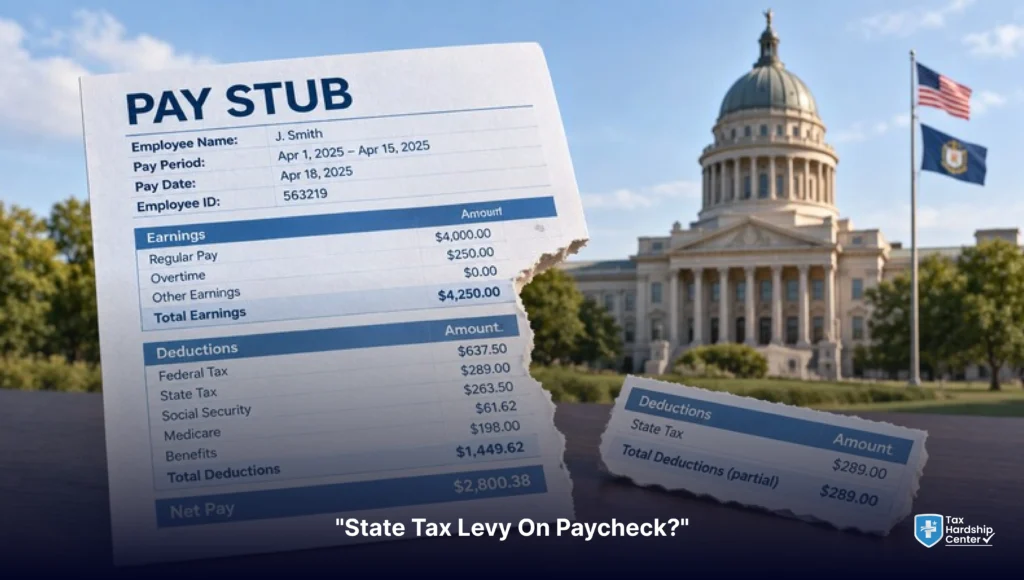
A state tax levy on paycheck is an order from your state tax agency telling your employer to withhold wages. Your employer has to follow it. Think of it as a bouncer at the door of your payroll. Once the order lands, the state gets its cut first.
This is not the same as an IRS levy. The IRS has its own steps, like the LT11 notice. States such as California run parallel systems through agencies like the Franchise Tax Board. Same pain, different rulebook.
Here is the part that catches people off guard. A state tax levy on paycheck is not a credit card garnishment. Protections that stop a card company often work differently for a tax agency. Check the letterhead on your order to see who is actually behind it.
How Does State Tax Wage Garnishment Start?
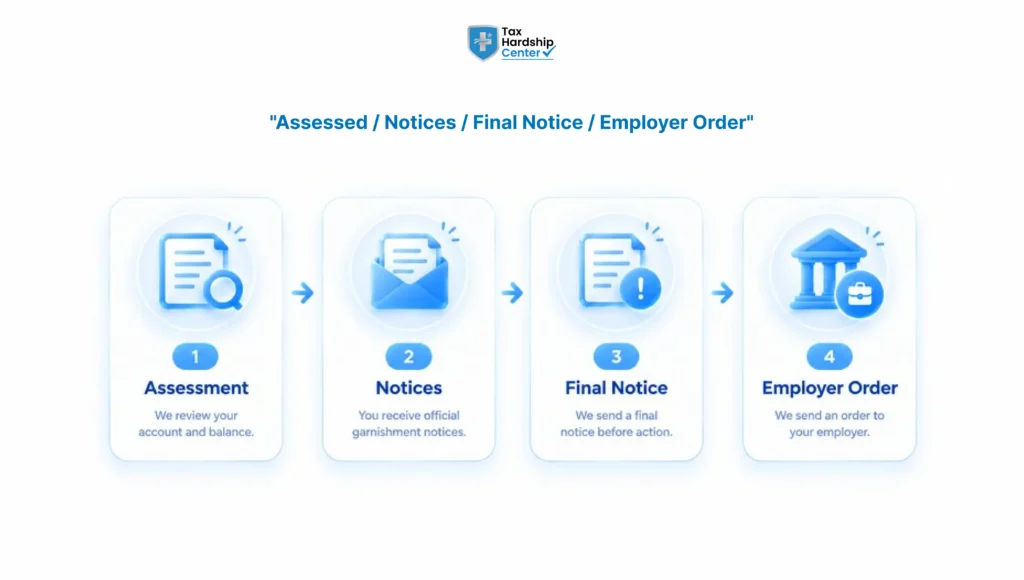
State tax wage garnishment rarely comes out of nowhere. Most states follow a pattern:
- The state assesses tax after a return, audit, or estimate for unfiled returns.
- Balance notices arrive. Many get ignored.
- A final notice warns of a levy or garnishment.
- The order goes to your employer.
Missing that third step is how most people land here. Feeling embarrassed? Don’t. The envelope pile happens to organised people too, and our guide to help with back taxes walks you through what to do next.
Once state tax wage garnishment begins, it repeats every pay period. It stops only when the balance is paid, the state issues a release, or the order is changed.
How Much Can a State Tax Levy on Paycheck Take?
It depends on your state. Federal limits on consumer garnishment, covered by the U.S. Department of Labor, do not always apply to tax levies. Many states use their own tables based on income, filing status, and dependents.
Because a state tax levy on paycheck can hit harder than you expect, run your numbers early. Our wage garnishment calculation guide shows how disposable income works. Then confirm the exact rules with your state agency, since they vary.
Can I Challenge a State Tax Levy on Paycheck?
Yes, you have real options. Here are the main ones:
- Dispute the debt: wrong income, identity problems, or a balance you already paid.
- Request a hardship review: the levy leaves you short on rent, food, or utilities.
- File a protest or appeal: each state has its own process.
- File missing returns: this can replace an estimated bill with your real number.
The catch is deadlines. A state tax levy on paycheck does not pause while you think about it. Many appeal windows are short, so find the date on your notice today.
A challenge works when the debt is wrong or the hardship is real. It does not work just because the number hurts.
How Do I Get State Tax Levy Release?
State tax levy release is the official instruction telling your employer to stop withholding. States commonly issue it when:
- The debt is paid in full or corrected.
- A payment agreement is approved.
- Financial hardship is shown.
- The levy was issued in error.
Ask for state tax levy release in writing. Then hand a copy to your payroll team and check your next paycheck. Many states offer payment plans similar to the IRS’s, and our breakdown of installment plan options shows how they compare.

Do not assume state tax levy release is automatic once you make a call. Get the paperwork.
Which State Garnishment Relief Option Fits Me?
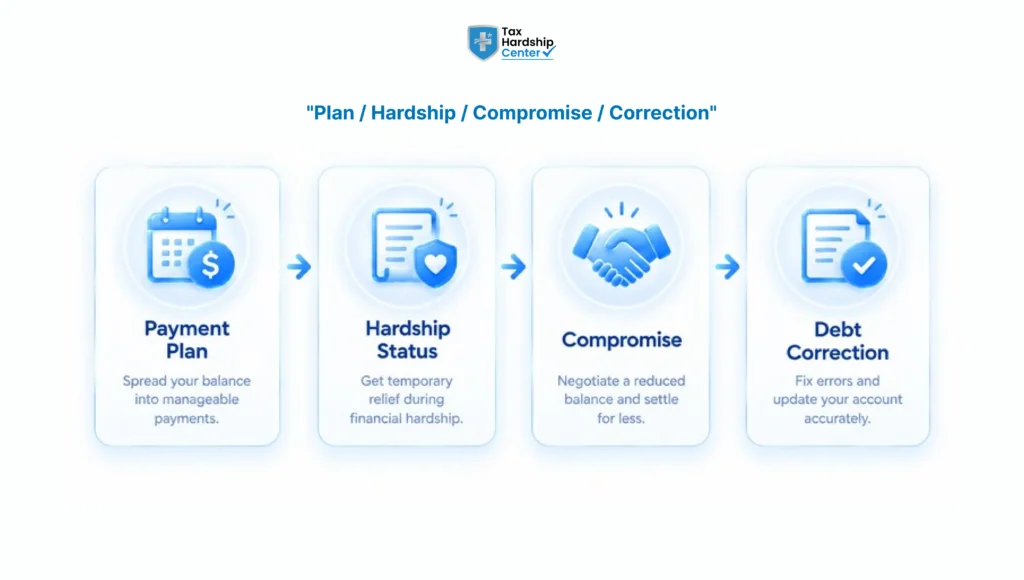
Names and rules differ by state, but the paths look alike.
| Option | Best For | Honest Catch |
| Payment plan | Steady income and a monthly budget | Interest and penalties may continue |
| Hardship status | Income barely covers basics | Needs proof, may be temporary |
| Compromise offer | Real inability to pay in full | Strict rules, not everyone qualifies |
| Debt correction | Balance is wrong | Needs documents and fast action |
State garnishment relief is not one size fits all. A payment plan can bring quick state garnishment relief, while a compromise takes longer and has tougher requirements. Our comparison of payment plans vs OIC vs CNC explains the trade-offs, and our offer in compromise guide shows who actually qualifies.
Why Taxpayers Hire Tax Hardship Center to Stop a State Tax Levy on Paycheck
When a state tax levy on paycheck hits, the order is rarely the whole problem. It is unfiled returns, a missed notice, and a payroll clock all at once. Tax Hardship Center handles that full picture, not just the one letter on your kitchen table.
We start by reading your notices and account to see what the agency assessed. Then we match you to a path: negotiating a payment plan, requesting state tax levy release, or reviewing whether a compromise could apply. Our IRS tax relief services cover that process. If returns are behind, we file them first so the agency stops estimating your income. You can see how fees work on our tax relief service costs page before you commit.
In practice, we send the agency what it needs and give you release paperwork to hand to payroll. Then we track whether the withholding actually stops. Fast state garnishment relief depends on that follow-through. Not every case ends in a release, and we say so upfront.
Click here to get a quote or Call us at [THC phone number].
Conclusion
A state tax levy on paycheck feels like a punch, but it is a process, and processes have exits. Check your notice, find the deadline, and pick the path that fits. Whether you need state tax wage garnishment stopped, state tax levy release, or state garnishment relief, the next payroll is your deadline.
FAQs
Can a state garnish my wages without a court order?
Often yes. Many state tax agencies can issue a levy or withholding order after sending notices, so state tax wage garnishment can start without a judge. Rules vary by state, and the USA.gov state tax guide points you to your agency.
How long does a state tax levy on paycheck last?
It lasts until the debt is paid, the agency issues a release, or the order is changed. A state tax levy on paycheck does not expire on its own in most cases.
Can I get state tax levy release if I cannot pay in full?
Often yes. A payment plan or proven hardship can lead to state tax levy release, though approval is not guaranteed. The agency decides based on your income and expenses.
Will my employer know why my wages are being taken?
Your employer receives the order, which usually names the agency. They must follow it. They do not typically get your full tax history.
Is state garnishment relief different from IRS relief?
Yes. State garnishment relief runs through your state agency, with its own forms, limits, and deadlines. Some programs look similar, but you cannot assume IRS rules apply.
Can filing back returns stop a state tax levy on paycheck?
It can help, especially if the bill was an estimate. But filing alone does not automatically stop a state tax levy on paycheck. Contact the agency and ask for a release in writing.
Key Takeaways
- A state tax levy on paycheck is an agency order your employer must follow.
- State and IRS levies run on different rules, forms, and deadlines.
- State tax wage garnishment usually follows ignored balance and final notices.
- Limits on tax levies often differ from consumer debt garnishment limits.
- Appeal and protest deadlines are short, so find yours on the notice today.
- You can dispute the debt, request hardship review, or set up a payment plan.
- State tax levy release should always be requested and confirmed in writing.
- State garnishment relief options include payment plans, hardship status, and compromise offers.
- Filing missing returns can replace an estimated bill with your real number.
- Not everyone qualifies for every option, so get honest guidance early.
Get a free case review before your next payroll.
P.S. Has your paycheck ever surprised you in a way that made you stare at the pay stub for five minutes?