

If you’re settling a loved one’s affairs and just discovered they owed the IRS, here’s the direct answer to what happens to tax debt when you die: the debt doesn’t simply disappear, but it also doesn’t automatically become your personal responsibility just because you’re a family member. Tax debt after death is generally paid from the deceased person’s estate before anything is distributed to heirs. Understanding exactly how this works can save you from unnecessary worry and from mistakes that could cost the estate money.
What Happens to Tax Debt When You Die: The Core Answer
The most direct answer to what happens to tax debt when you die is that the debt becomes a claim against the deceased person’s estate, not a debt that transfers to a surviving spouse or children personally in most situations. The IRS is treated as a creditor of the estate, similar to how a mortgage lender or credit card company would be, and the estate is responsible for settling that debt before any remaining assets are distributed to heirs.
This distinction matters enormously for families going through this process. What happens to tax debt when you die is fundamentally about the estate’s obligations, not an automatic transfer of debt to the people left behind. Understanding this early prevents a lot of unnecessary panic during an already difficult time.
Does the Estate Have to Pay When a Deceased Person Owes Taxes?
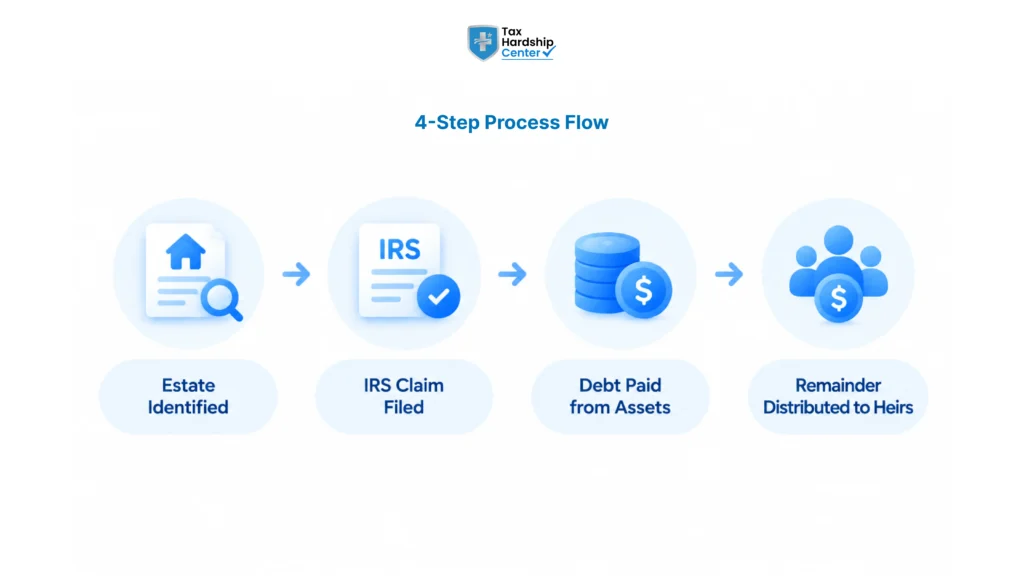
Yes. When a deceased person owes taxes, the estate is legally required to address that debt as part of the probate or estate administration process. The IRS files a claim against the estate just like any other creditor would, and the executor or personal representative handling the estate is responsible for ensuring outstanding tax debt is paid from estate assets before distributions go out to beneficiaries.
This includes both taxes owed from years before the person passed away and any final tax return that needs to be filed for the year of death itself. If a deceased person owes taxes from multiple years, all of those balances typically need to be addressed through the estate administration process, not handled piecemeal by whichever family member happens to notice the notice first.
Who Is Actually Responsible for Estate Tax Debt
Understanding estate tax debt responsibility starts with knowing the order of priority. The executor, sometimes called the personal representative, is the person legally responsible for managing the estate, which includes identifying debts, notifying creditors including the IRS, and using estate assets to pay valid claims before distributing anything to heirs.
This is different from personal liability. An executor managing estate tax debt is acting on behalf of the estate, using estate funds, not their own money, to satisfy the balance. If the executor fails to properly account for known tax debt and distributes assets to heirs before paying the IRS, this can create personal liability for the executor specifically, which is why handling this step correctly matters so much.
When Family Members Can Become Personally Liable
While the general rule is that tax debt after death is handled through the estate, there are specific situations where a surviving family member can become personally liable, and it’s worth understanding these exceptions clearly:
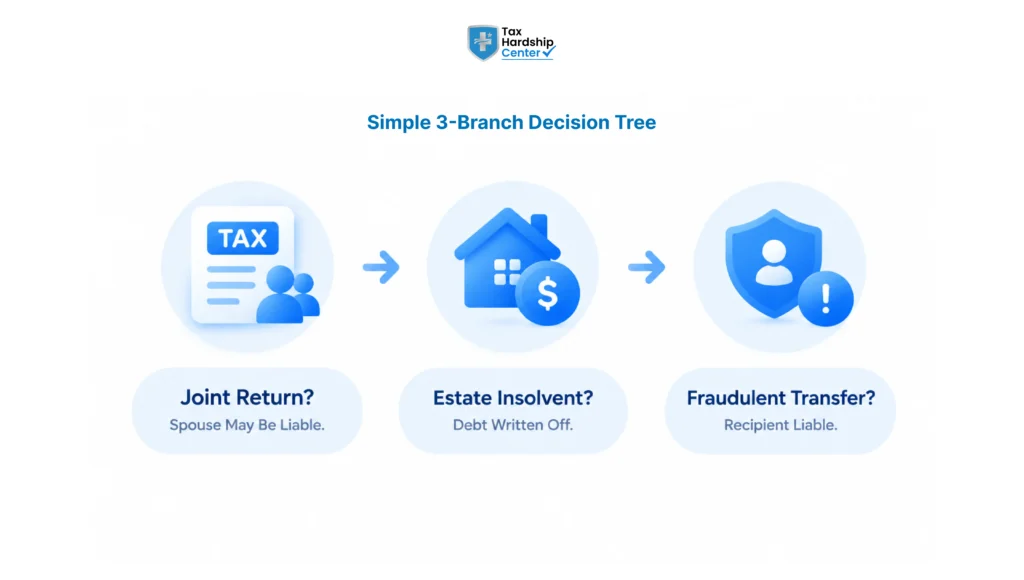
- Jointly filed returns. If you filed a joint tax return with your spouse and they passed away, you may still be liable for the joint tax debt, since joint filers share responsibility for the full balance regardless of which spouse earned the income.
- Co-signed obligations. If you co-signed on a tax-related obligation or were a joint account holder on something tied to the debt, liability can extend to you directly.
- Fraudulent transfers. If assets were transferred out of the estate specifically to avoid paying legitimate creditors, including the IRS, this can create liability for whoever received those assets.
- Executor mismanagement. As mentioned, an executor who distributes assets without properly addressing known estate tax debt can become personally liable for that oversight.
Outside of these situations, simply being a surviving child, sibling, or other relative does not make you personally responsible for tax debt after death. This is one of the more reassuring facts people learn once they understand what happens to tax debt when you die.
What Happens If the Estate Doesn’t Have Enough to Pay
Sometimes a deceased person owes taxes but the estate simply doesn’t have enough assets to cover the full balance. In this situation, the IRS is generally paid according to its priority position among creditors, but if the estate is genuinely insolvent, meaning debts exceed assets, the remaining tax debt typically doesn’t transfer to heirs personally. It’s written off as uncollectible against the estate rather than pursued against family members who had no legal obligation to pay it themselves.
This is an important protection built into how estate tax debt works. Heirs generally cannot inherit debt beyond what the estate itself can cover, which is different from how some people assume estates work. If you’re an executor facing this situation, documenting the estate’s insolvency properly is important, since it establishes the legal basis for why remaining balances aren’t being paid. Our page on tax debt relief options covers some of the broader resolution paths that may still apply during this process.
Steps an Executor Should Take When Tax Debt After Death Is Discovered

If you’re handling an estate and discover tax debt after death, here’s the practical order of operations:
- Notify the IRS of the death and request the deceased person’s account transcripts to understand the full scope of what’s owed
- File a final individual tax return for the year of death if one hasn’t been filed yet
- Identify whether any prior years remain unfiled, since unfiled returns can compound the estate’s tax debt significantly
- Prioritize IRS debt appropriately among other estate creditors according to legal priority rules
- Document the estate’s assets and liabilities clearly before making any distributions to heirs
Following this order protects both the estate and the executor personally from complications that arise when debts aren’t properly addressed before distributions occur. Reviewing IRS payment plan options may also be relevant if the estate has assets but needs time to liquidate them to cover the balance.
How Tax Hardship Center Helps With Estate Tax Debt
When a family or executor comes to us dealing with a deceased person’s tax debt, we start by pulling the full IRS transcript for the deceased to understand exactly what’s owed across every tax year, including whether a final return still needs to be filed. This clarity is essential before any estate distributions happen, since it protects the executor from personal liability down the line.
From there, we help determine the right path for resolving the estate tax debt, whether that means setting up a structured payment arrangement using estate assets, or documenting insolvency if the estate genuinely can’t cover the balance. If the situation involves a jointly filed return where a surviving spouse may share liability, we also help evaluate whether innocent spouse relief or another protection applies. And if the deceased person had unfiled years that need to be addressed as part of settling the estate, we help get those filed properly so the full picture is accurate before the estate is closed out.
Frequently Asked Questions
What happens to tax debt when you die if there’s no estate to speak of?
If the estate has no significant assets, the tax debt is generally written off as uncollectible rather than transferred to family members personally.
Does tax debt after death automatically pass to a surviving spouse?
Not automatically, unless the debt came from a jointly filed return, in which case the surviving spouse may share liability for that specific balance.
Who is responsible for filing a deceased person’s final tax return?
The executor or personal representative of the estate is generally responsible for filing the final individual tax return for the year of death.
Can heirs be forced to pay estate tax debt out of their own pocket?
Generally no, unless they received assets through a fraudulent transfer meant to avoid paying legitimate creditors, including the IRS.
What happens if an executor distributes assets before paying the IRS?
This can create personal liability for the executor if the IRS wasn’t properly notified or the estate tax debt wasn’t accounted for first.
How does the IRS find out that a deceased person owes taxes?
The IRS typically has existing records from prior filings and can also be formally notified during the estate administration or probate process.
Conclusion
What happens to tax debt when you die comes down to a fairly reassuring principle for most families: the debt is handled through the estate, not transferred personally to surviving relatives in most situations. Understanding how estate tax debt works, who’s responsible for what, and when exceptions like joint filing status apply, takes a lot of the fear out of an already difficult process.
Key Takeaways
- Tax debt after death is generally paid from the deceased person’s estate, not by family members personally.
- What happens to tax debt when you die depends largely on estate assets and filing status.
- The executor is responsible for using estate funds to pay a deceased person’s tax debt.
- Joint tax returns can create shared liability for a surviving spouse specifically.
- An insolvent estate typically has its remaining tax debt written off, not passed to heirs.
- Executors who distribute assets before paying known IRS debt can become personally liable.
- A final tax return generally still needs to be filed for the year of death.
- Unfiled prior years should be identified early, since they compound estate tax debt.
- Fraudulent asset transfers meant to avoid the IRS can create liability for whoever received them.
- Requesting the deceased’s IRS transcript is the first step to understanding the full scope owed.
Handling a loved one’s estate and discovered they owed the IRS? Get a free case review from Tax Hardship Center and get clarity on what needs to happen next.