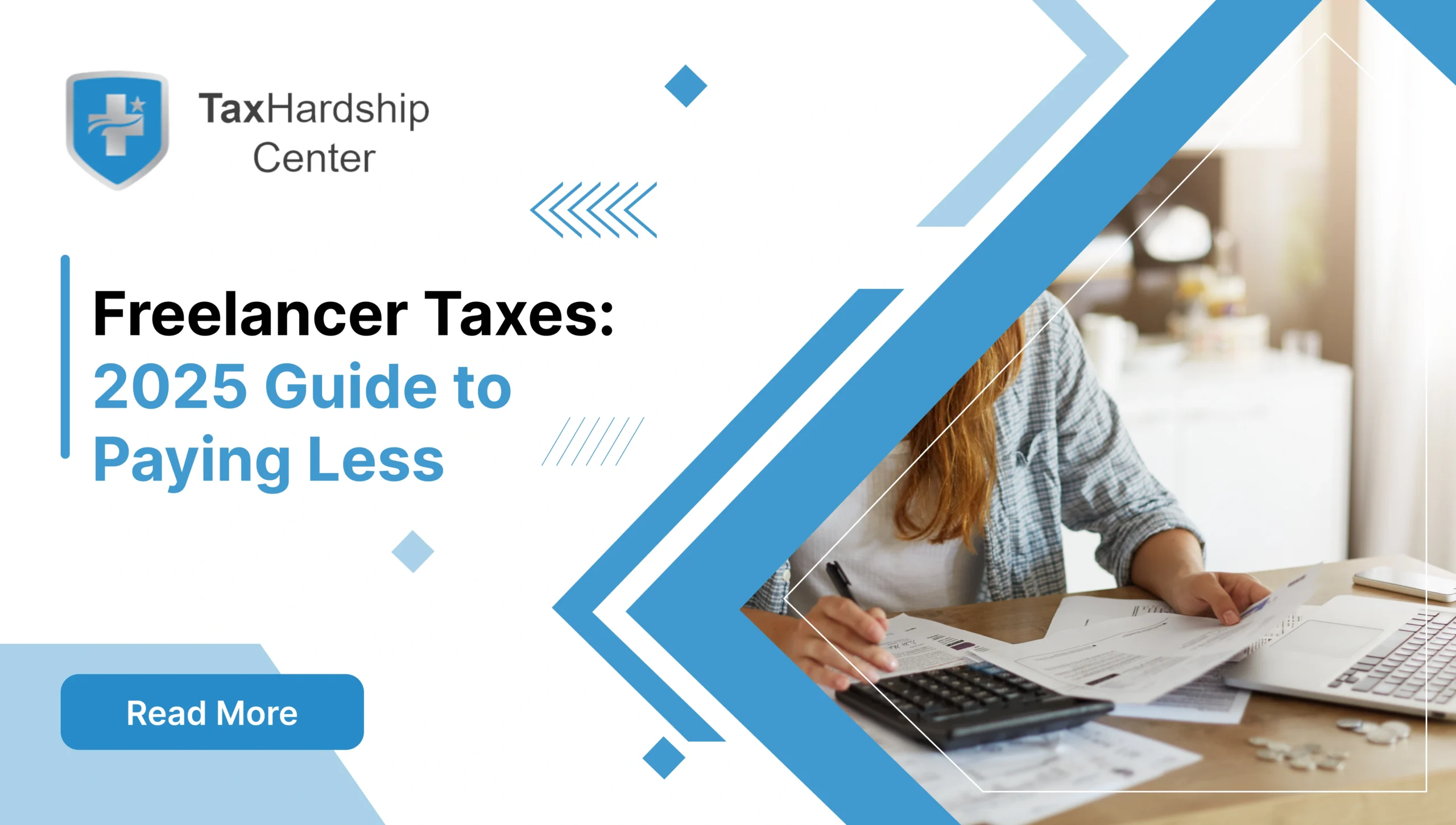

Freelancers pay both income tax and the 15.3 percent self‑employment tax on net profit. Quarterly estimated payments due in April, June, September, and January prevent the IRS from adding interest. A smart rule: stash 30 percent of every client payment in a separate account until tax day. You file income and deductions on Schedule C, then report the bottom line on Form 1040. Work with a preparer who files at least 25 freelance returns each season for fresh insight and credible advice. Keep reading to cut taxes, stay audit proof, and grow profit with smart planning.
Tax Hardship Center Support for Freelancers
Our services at Tax Hardship Center tackle every stage of a freelancer’s tax life cycle. When you face a large balance, the Offer in Compromise program can settle debt for less than the total owed. If unfiled returns keep you up at night, our unfiled tax returns help team files back years fast while stopping penalties. We also design payment plans for clients who carry back taxes and need breathing room. Each case starts with a free consultation so you understand options and costs before you commit. Clients appreciate our plain‑English updates and the way we guard their time so they can stay focused on billable work.
Advanced Self-Employment Tax Strategies
High earners can lower payroll tax and boost retirement savings through entity choice, deductions, and income timing. The IRS explains how the 15.3 percent self‑employment tax works on its Self‑Employment Tax page (irs.gov).
Electing S‑corp status: benefits and criteria
Switching from sole proprietorship to S‑corp can slash self‑employment tax once net profit tops about $80,000. As an S‑corp, you pay yourself a reasonable salary subject to payroll tax. The rest flows out as distributions that skip the 15.3 percent levy, cutting your overall burden. File Form 2553 within 75 days of the start of the tax year and use payroll software to submit federal deposits. Maintain minutes, salary calculations, and shareholder agreements so the IRS sees the election as legitimate.
Maximizing the QBI deduction (20 percent)
The Qualified Business Income deduction lets eligible freelancers subtract up to 20 percent of net profit from taxable income. Keep total taxable income under $191,950 for single filers or $383,900 for joint filers in 2025 to get the full break. If you project higher income, prepay expenses or boost retirement contributions to stay below the cap. Track wages and qualified property figures because service businesses lose the deduction when those metrics fall short. Review the Tax Hardship Center blog on reducing taxes owed for more planning moves (taxhardshipcenter.com).
Income shifting strategies and planning
Move some work to a spouse taxed in a lower bracket by paying a fair wage through the business. Hire your teen children to handle administrative or social media tasks. The wages paid to family members become deductible for the business and often taxed at lower individual rates. Make sure each worker performs real duties, tracks hours, and receives a W‑2 to satisfy the IRS. Keep contemporaneous logs that show the economic reason for each shift of income.
Complex Deduction Scenarios
Some write‑offs require careful allocation and documentation to hold up under IRS scrutiny.
Depreciation and Section 179 write‑offs
Section 179 lets you deduct up to $1,220,000 of equipment and software placed in service during 2025. Bonus depreciation still allows a 60 percent immediate write‑off of the remaining basis this year. Track purchase dates, costs, and business‑use percentages for each asset to maximize the first‑year benefit. Heavy SUVs over 6,000 pounds and laptops both qualify as long as you use them mainly for business. Elect depreciation methods on Form 4562 and store receipts digitally in case the IRS requests proof.
Mixed‑use asset apportionment (home/car)
The IRS sets strict record rules for car and travel costs. Publication 463 lists the records you must keep and the standard mileage rate (irs.gov). Use a phone app to log every trip and snap photos of odometer readings each quarter. For the home office, allocate space by square foot or by rooms if they are roughly equal in size. Reconcile totals monthly so you never scramble at filing time. Keep utility and rent bills in cloud storage with clear labels.
Continuing education and certification expenses
Fees for webinars, college courses, and professional licenses count as deductible if they maintain or improve your current trade skills. Travel costs to conferences, including airfare and lodging, also qualify when the schedule shows a clear business purpose. The Tax Hardship Center article on gig worker tax tips breaks down more examples of qualifying expenses (taxhardshipcenter.com). Pay for classes in December if you need an extra deduction before year‑end. Avoid deducting programs that qualify you for a new line of work because the IRS treats those as personal education.
State & Local Nuances
Where you live and sell affects sales tax, income tax, and local filing duties.
Sales and use tax implications for services
Many states now tax digital services, design work, and online coaching. Check each state’s revenue site before you invoice a new customer. If required, register for a seller permit and start collecting tax on the invoice date. Deposit collected tax on the schedule set by the state, often monthly or quarterly. Late filings carry steep penalties, so set calendar alerts.
Local business or gross receipts taxes
Cities like San Francisco and Portland levy a gross receipts tax even when state rules exempt you. Calculate the tax on total revenue, not profit, so even unprofitable years can produce a bill. File local returns along with your state and federal forms to keep your business license active. Factor these costs into your pricing because they can run one to three percent of revenue. Appeal incorrect assessments in writing within the allowed window, usually 30 days.
Nexus issues across states
Shipping work product or visiting clients in other states can create taxable presence called nexus. Earning over a revenue threshold such as $100,000 in a state often triggers the filing duty even without physical visits. Track sales by destination and run periodic checks against each state threshold. Register in new states before you cross the line to avoid back penalties and interest. Cloud‑based service providers miss nexus rules most often, so review contracts quarterly.
Adapting to Changing Tax Rules
Tax forms change every year; staying current keeps penalties away.
New 1099‑K thresholds and reporting rules
For 2025, payment platforms must issue Form 1099‑K once payments total more than $5,000 to your account. The form reports gross receipts, not net, so reconcile platform fees separately on Schedule C. Expect duplicate income reporting if clients also issue 1099‑NEC; keep detailed invoices to prove actual totals. Update your bookkeeping software to import 1099‑K data automatically each January. Dispute incorrect forms with the processor in writing within 30 days to limit IRS mismatch letters.
Upcoming IRS or gig economy regulations
The IRS plans more automated matching between platform data and individual returns. Proposed rules may broaden worker classification audits for delivery drivers and creative freelancers. Keep contracts and proof of independence, such as multiple clients and control over schedule. The agency also hints at tighter crypto reporting for side income, so track basis and sale dates now. Follow IRS News Release emails to catch rule changes before they take effect.
Staying current with legislative changes
Congress tweaks deduction limits and phaseouts almost every year. Subscribe to industry newsletters or set Google Alerts for critical terms. Join a professional association that hosts monthly tax updates. Review IRS publications each February for the newest figures. Schedule an annual check‑in with a tax pro so shifting rules never blindside you.
Audit Readiness & Record Retention
Good records turn an IRS letter from painful to routine.
Red flags that trigger IRS scrutiny
Large home office deductions relative to income signal higher audit risk. Deductions that exceed industry averages, such as meals over 50 percent of profit, raise questions. Late filing and high charitable contributions also land returns in the audit pool. Stay under the radar by matching deductions to profit percentage benchmarks published in IRS statistics. Explain any outlier items in a short note on the return or attach Form 8275 disclosure.
Best practices for documentation and receipts
Scan every receipt to cloud storage the day you incur the cost. Use bank feeds in bookkeeping software so each transaction carries a source document link. Keep mileage logs, signed contracts, and bank statements for at least three years. Save payroll filings and S‑corp election paperwork for seven years. Reconcile books monthly to catch missing paperwork while memories stay fresh.
How to respond to notices and audits
Open IRS letters right away and stick to the deadline printed in the upper right corner. Provide only the documents requested, not your entire file. Label each exhibit clearly and include a concise cover letter that references the notice number. If the issue involves a math error, correct it with an amended return instead of a protest letter. Seek representation from an enrolled agent or CPA if the balance due tops four figures.
Tax Filing Tools & Professional Help
Software works for a simple return, but lines blur when income spikes.
Software solutions vs hiring a CPA
DIY software suits freelancers with less than $50,000 profit and few state filings. The program walks you through Schedule C and calculates quarterly estimates in minutes. Beyond that level of income, software still works but the risk of missed deductions grows. CPAs bring experience, representation rights, and planning advice that software cannot match. Compare the cost of software and your time to the average $600 fee for a freelance return before choosing.
When outsourcing makes sense
Outsource once bookkeeping takes more than four hours a week. A professional can set up categories that speed deduction tracking and cut errors. Outsourcing also lets you keep weekends free for client work rather than data entry. Pick a bookkeeper who uses cloud tools so you get real time reports. Review their work monthly to confirm accuracy and guard against fraud.
Cost benefit of doing it yourself vs professional support
Calculate your hourly billable rate then multiply by the time you spend on taxes. Add software fees, late penalties, and stress to find the true cost of DIY. Compare that number to the CPA fee plus any tax savings they spot. If savings exceed the fee, outsourcing pays for itself. Review each year because income changes may swing the math.
Year‑End Tax Planning
December moves can save thousands by April.
Tax‑saving checklists and deadlines
September is the best month to run a year‑to‑date profit report and project tax due. Use that report to adjust the final quarterly estimate due January 15. Make charitable contributions and pay state taxes in December to front load deductions. Write down every open invoice so you know income still coming before year‑end. File W‑9s for subcontractors now so you issue 1099s on time.
Year‑end retirement contributions and strategies
Max a Solo‑401(k) with $23,000 employee deferral plus 25 percent of net profit as employer match. Fund a SEP IRA by the return due date, including extension, if you need flexibility. If cash is tight, at least open the account by December 31 to keep the option alive. Roth contributions give no deduction but lock in tax free growth, handy in low income years. Track contributions in a spreadsheet to avoid breaching annual limits.
Inflation‑adjusted thresholds to watch
The standard mileage rate and Section 179 limit rise most years, giving extra deductions. Income tax brackets also shift upward with inflation, sometimes dropping you into a lower marginal band. Health Savings Account contribution caps climb, adding another pre tax shelter. Estimate your tax using new thresholds each fall once the IRS releases them. Adjust withholding or estimates right after those announcements to keep cash flow smooth.
Growing Your Freelance Business
Expansion brings new tax obligations that catch many freelancers off guard.
Sales tax collection for digital goods and services
Digital design files, templates, and online classes face sales tax in more than 30 states. Use a sales tax platform that auto calculates the correct rate by buyer location. Show the tax separately on invoices to keep gross receipts clear. File returns even for zero tax collected months to keep the account active. Review exemption certificates yearly for business buyers.
Multi‑state expansion: planning for nexus
Set a revenue tracker that alerts you when sales to a new state reach 80 percent of its nexus threshold. Register for foreign qualification with the secretary of state before opening a local bank account. Examine each state treatment of digital services versus tangible goods because rules vary. Budget for extra bookkeeping time once multiple state returns enter the mix. Consider forming an LLC holding company to simplify future expansion filings.
Hiring subcontractors vs employees – tax impacts
Subcontractors file their own taxes, leaving you with fewer payroll duties. Workers who follow your schedule and use your tools likely count as employees. Employee misclassification penalties include back payroll tax and steep fines. Review the IRS 20 factor test before engaging any worker for more than a short project. Obtain Form W‑9 from contractors and Form W‑4 from employees on day one.
Financial Health & Risk Management
A strong balance sheet shields you from lean months and emergencies.
Building cash reserves and rainy day funds
Aim to keep three to six months of average expenses in a high yield savings account. Fund the reserve each time a client pays instead of waiting for year‑end. A solid reserve lets you cover tax bills even when a client pays late. Review the balance quarterly to ensure it matches current spending levels. Keep the account separate from operating funds to avoid impulse withdrawals.
Emergency planning and insurance needs
General liability and professional liability policies protect you from client lawsuits. Disability insurance covers your income if illness hits and you cannot work. Health insurance premiums remain deductible above the line on Form 1040. Add a business owner policy if you store equipment or inventory at home. Review coverage annually because freelance income often swings.
Retirement planning beyond SEP and Solo‑401(k)
Once income grows, a defined benefit plan can shelter far more than a 401(k). Contributions can exceed $100,000 for freelancers in late career with high profit. The plan also cuts adjusted gross income, which can bring QBI and child tax credit benefits. Work with an actuary and CPA because setup and annual filings get technical. Freeze the plan in lean years instead of making a painful contribution you cannot afford.
Partner With Tax Hardship Center
At Tax Hardship Center, we help you stay compliant while paying the least amount the law allows. Our specialists interpret changing IRS rules and line them up with solutions like the Offer in Compromise and tailored installment agreements. We also prepare power of attorney documents so the IRS contacts us, not you, during any inquiry. Clients receive a personalized tax health report with action steps and cost estimates before we begin work. Transparency and empathy sit at the core of every client relationship we build.
In Summary…
In summary, freelancers thrive when they treat taxes as a year‑round business function.
- S‑corp and entity choice
- Elect S‑corp once net profit passes roughly $80,000 to cut payroll tax.
- Pay yourself a fair wage and schedule payroll deposits.
- Elect S‑corp once net profit passes roughly $80,000 to cut payroll tax.
- Deduction tracking
- Scan receipts daily into cloud software.
- Separate mixed use costs with mileage logs and square foot ratios.
- Scan receipts daily into cloud software.
- State and local compliance
- Register for sales tax the moment you hit nexus thresholds.
- File local gross receipts forms even in loss years.
- Register for sales tax the moment you hit nexus thresholds.
- Audit defense
- Keep three years of receipts and seven years of corporate documents.
- Respond
- Keep three years of receipts and seven years of corporate documents.
FAQs
How do I know if I must pay quarterly estimated taxes?
If you expect to owe at least $1,000 in federal tax after subtracting withholding and credits, the IRS wants you to pay estimated taxes four times a year. Use the IRS estimated tax guide to project your bill and set reminders for the April, June, September, and January deadlines. Falling short can trigger penalties, so keep a simple spreadsheet that tracks income as it lands. Update the totals each month and adjust your next voucher if your earnings spike.
What deductions can freelancers claim for a home office?
You may write off a portion of rent, mortgage interest, utilities, and insurance when you use a dedicated room only for business. Measure the square footage of that space and divide it by the home’s total square footage to find your deductible share. Keep photos of the office, copies of utility bills, and a yearly floor plan sketch to prove the claim during an audit. Pair the home-office deduction with the simplified method if your space is small and you want faster record-keeping.
Do I need to collect sales tax on digital services?
Many states now tax design files, software, and other downloadable products. Check each state where you have customers for “economic nexus” rules; some kick in after as little as 200 transactions. Register for a permit before charging sales tax and file returns on time even if you owe nothing that period. The IRS business taxes page links to every state revenue site where you can verify current thresholds.
What happens if I miss a quarterly payment?
Interest starts the day the voucher was due, and the IRS adds a late-payment penalty on top. Pay the shortfall as soon as you catch it to stop the clock, then review your bookkeeping so it doesn’t repeat. Our services at Tax Hardship Center can negotiate penalty abatement when reasonable cause exists and set up an installment plan if cash flow feels tight. Acting quickly shows good faith and often reduces extra charges.
When should I hire a tax professional instead of using software?
Bring in a pro when gross receipts top six figures, you operate in multiple states, or the IRS sends a notice you don’t fully understand. A certified public accountant spots deductions software misses and structures income to trim self-employment tax. At Tax Hardship Center, we help freelancers weigh the cost of an S-corp election, set up payroll, and prepare state filings so you stay focused on billable work. The savings often exceed the fee by tax time.