
If you’re wondering how to file for back taxes, the process is more manageable than it may seem. You can file past-due tax returns using the correct prior-year tax forms, request IRS transcripts when records are missing, set up a payment plan if you owe, and protect refunds you may still be eligible to claim. This guide walks you through each step so you can get your tax filing history back on track.
What are back taxes and who must file them
Back taxes include any federal tax return you did not file on time and any taxes owed from a filed return that you did not pay. If your income exceeds Filing Requirements for that year, you must file a tax return. Many people search for Filling Requirements online, yet the rule remains the same for most Entities, including sole proprietors, S corporations, and pass-through entities. Students, gig workers, and retirees must review Eligibility Criteria and their own tax bracket for each year. A complete file builds a strong Tax Compliance History that supports relief and payment options when you need them.
What counts as an unfiled tax return and a past-due return
An unfiled tax return means no submission for that year. A past-due return means you missed the deadline and still need to file. Both increase Tax Liability and can trigger notices. If you receive an Audit Letter or balance notice, you still file an original return on prior-year federal forms. Your Disclosure must remain accurate because false statements create larger issues later.
Common reasons people don’t file and why it matters
People miss returns because of Oversight, a move, lost documents, Tax Complexity, or fear of a balance. Some paused during the COVID pandemic, then let the disturbance harden into habit. Others held back refund paperwork, thinking a Refund Request could wait. Every delay adds interest and penalties, and a substitute return can ignore deductions, credits, and Tax Exempt income rules. Filing on your timeline with correct data beats collection on the IRS timeline. For a deeper look at timelines, see our explainer on how long the IRS can collect back taxes.
How a substitute return by the IRS works
If you do not file, the IRS can create a substitute return based on third-party reports. That return often sets single status and standard deduction, which raises Liability. You can replace it with your own original return that includes credits, dependents, and business deductions. A correct return protects you if a Tax Audit starts later. Careful Disclosure and receipts close the door on disputes.
Why you should file your past due return now
Fast filing protects refunds, trims penalties, and keeps credit lines open. You stop the failure-to-file penalty, start a payment plan on your terms, and protect time limits under the statute. You also show good faith that helps with Penalty Appeal Eligibility. Lenders like clean files because they can underwrite without delays. Learn the true cost of waiting in our guide to the IRS penalty for not filing taxes.
How Tax Hardship Center helps you file back taxes without guesswork
Our services at Tax Hardship Center focus on fast, accurate filing and real relief. We start with a transcript review, then match you to solutions like an Installment Agreement or an Offer in Compromise, depending on Eligibility Criteria and your budget. If business payroll issues pile up, we resolve them through dedicated Payroll Tax Relief. When collections heat up, our IRS settlement services help stop levies and liens while you file each year correctly. You can start a plan with a quick free consultation so your case moves forward on day one.
Key takeaways before you file taxes for previous years
Preparation beats panic. Build folders for each year, list forms you need, and plan payments. A simple workflow reduces Oversight and errors. You can file several years at once, yet complete each year on its own forms. Keep copies of returns, transcripts, and every Disclosure you make to the IRS.
Gather documents, use transcripts, and choose the right tax forms
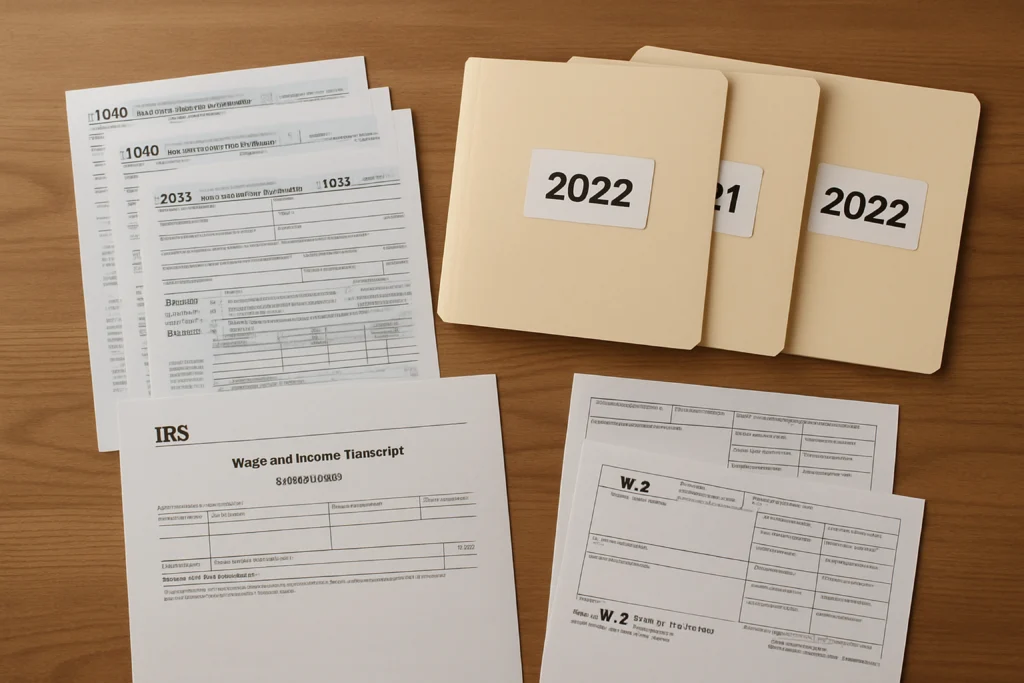
Collect W-2s, 1099s, 1098s, and receipts. If forms are missing, order wage and income transcripts. Match every line to avoid mismatch letters that feel like a Tax Audit. Use the correct prior-year federal tax forms and instructions because amounts and thresholds change. Accurate inputs show Expertise and speed processing.
Use a tax calculator to estimate a payment plan you can afford
Estimate each year’s balance, then add them up. A tax calculator gives a baseline and helps you choose monthly amounts. If cash is tight, you document Tax Payment Inability and request terms that fit. Build a cushion around paydays and recurring bills. Realistic numbers prevent future Inability to pay. For options that fit different balances, review our post on understanding IRS payment plans.
Check your tax bracket and year-specific tax deductions
Tax brackets, credits, and deductions shift each year. Review rules for education credits, the Child Tax Credit, and retirement savers credits. Check whether you itemize or take the standard deduction. Verify Tax Exempt income treatment for municipal bond interest or disability benefits where the law applies. Correct choices lower taxes owed and protect refunds.
Filing taxes for multiple previous years at once
File the oldest refund-eligible year first, then move forward. Cross-check carryovers such as capital losses and depreciation. If you own a pass-through entity, align K-1s across years. Mail separate envelopes if you cannot e-file. Track deliveries and save receipts to protect your Tax Compliance History.
How to file tax returns for previous years step by step
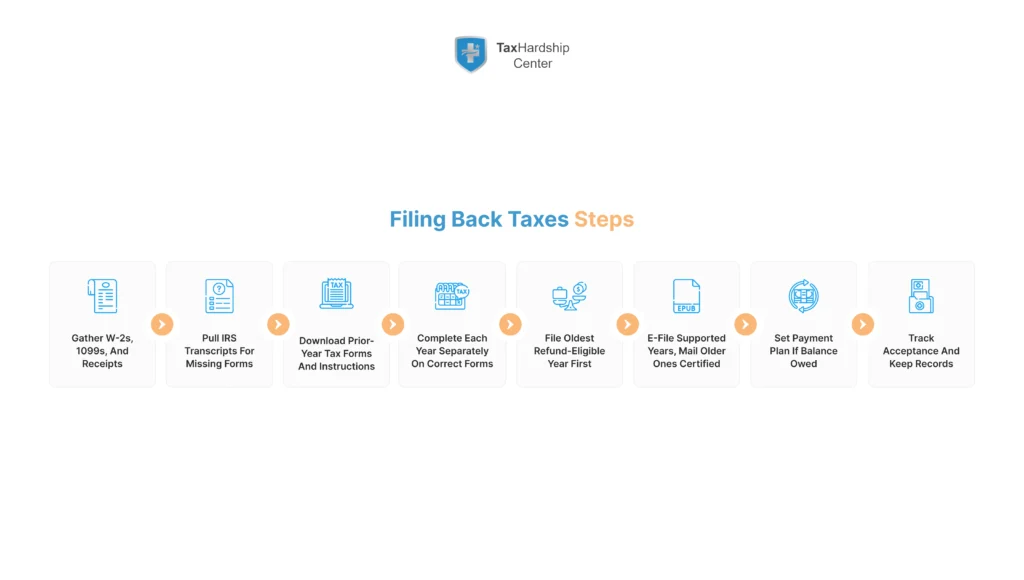
Work a clear list. Rebuild income, download prior-year forms, complete each return, file, then track acceptance. You move faster when you work the same steps for every year.
Collect W-2s, 1099s, and missing forms with IRS transcripts
Gather wage statements, contractor forms, mortgage interest, tuition, and charitable records. If a payer fails to send a form, use transcripts to rebuild numbers. Compare to bank statements to catch Oversight before you file. If a number looks wrong, request a correction from the payer. You avoid an Audit Letter with clean entries.
Use Form 4506-T for transcripts and Form 4852 for a substitute W-2
Request transcripts online or with Form 4506-T. If a prior employer refuses to reissue a W-2, use Form 4852 and attach backup such as pay stubs. Keep notes that explain your method and your Disclosure choices. This documentation defuses questions later.
Download the proper prior-year federal tax forms and instructions
Visit the IRS page on filing past-due tax returns. Download the 1040, schedules, and instructions for each year. Review lines that changed because of statute updates or temporary rules. Print clean copies if you plan to mail. Keep a checklist of Availability for every form you need.
Complete the simple form accurately for each tax year
Enter your filing status, dependents, and Social Security numbers. Report all income sources, including Unemployment Income, gambling winnings, and digital side gigs. Attach Schedules C, D, E, and SE where needed. If you run a sole proprietorship, consider an Upgrade Schedule C Tax Form workflow in software so you capture mileage, inventory, and home office details. Accurate math keeps your return out of the notice stream.
File tax returns by mail or e-file where allowed

You can e-file some recent prior years through software. Older years require mail. Use certified mail or an approved private delivery service. Include a check or money order with the voucher if you pay with filing. Save scanned copies of every page, including signatures.
Track acceptance and keep proof of tax preparation and filing
Check software status pages for e-file acceptance. For mailed returns, save the certified receipt and delivery scan. Watch your IRS online account for posting activity. If you need a Refund Request, follow the instructions and keep copies. Documentation supports Penalty Appeal Eligibility if the IRS posts a penalty in error.
Your options to file: free, software, or a tax professional
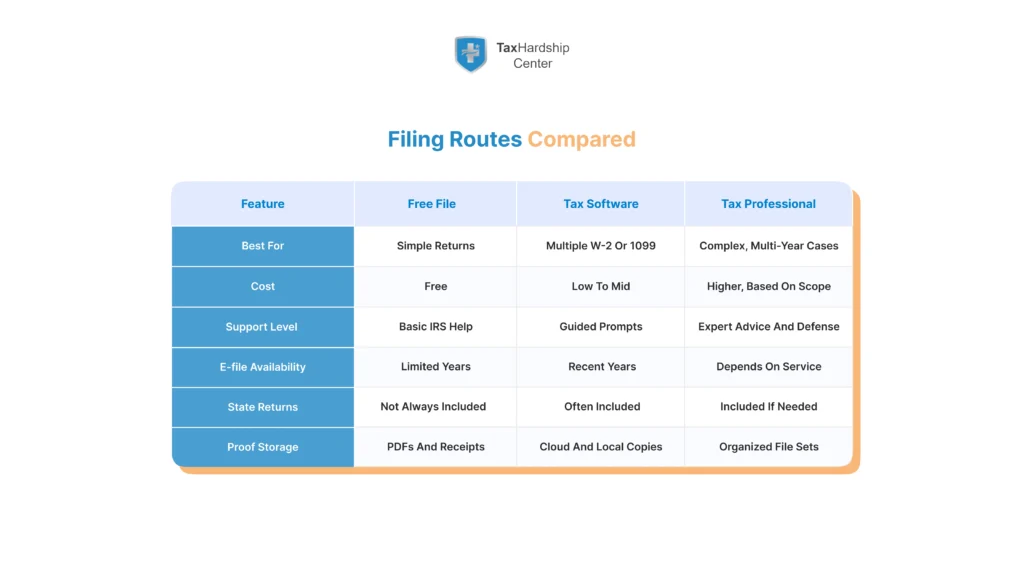
Pick the route that fits the return and your comfort. IRS Free File covers many simple cases. Partner software guides you through forms and can import data. A Tax Return Preparer steps in when multiple years, business activity, or liens raise the stakes. The right choice saves time and money.
Choose from IRS Free File options based on eligibility
If your income meets the threshold for that year, start with IRS Free File. Review Eligibility Criteria and the forms each partner supports. Confirm state support if you need it. Save PDFs of finished returns and your account credentials. Free File coverage depends on partner Availability each season.
How IRS Free File offers work from start to finish
Select a provider from the IRS page, create an account, and enter your data. E-file if the year allows it or print and mail. Track status and store acknowledgments. If you need to check a refund, the Tax Refund Website Under Payment status page shows updates. Keep copies of every screen you submit.
Free File Fillable Forms versus partner tax software
Fillable Forms mirror the paper 1040 and suit confident filers. Partner software adds prompts, math checks, and some import capability. Fillable Forms do not support state returns. Software often supports both federal and state filings and helps you avoid Oversight. Choose the path that matches your skill and the return’s Tax Complexity.
When tax software makes sense for previous years
Software works well for W-2 income, some 1099s, and standard deductions. You can process several years with the same flow. Many vendors let you e-file recent prior years and print older ones. Use built-in diagnostics to catch missing entries. Save PDFs to cloud storage and a local drive. For a self-help walk-through, see our post on filing back taxes online.
When to hire tax professionals for complex returns
Hire a professional when you have business losses, capital transactions, rental properties, forgiven debt, or IRS notices. A pro brings Expertise, requests transcripts, and organizes documents. You also gain a representative who can answer an Audit Letter and speak with the IRS. If liens or levies exist, a pro moves faster and reduces risk. You focus on work while the pro handles filings and Disclosure.
If you owe more than you can pay
File first, then solve the balance. Filing stops the steeper penalty. You can request a short-term plan or a monthly installment agreement. Terms depend on balance size and your Tax Compliance History.
Set up an installment agreement with the IRS
An installment agreement spreads payments across months. Apply online under program limits or by mail for larger totals. Keep current filings and payments to avoid default. Ask about Penalty Waiver Codes where First Time Abate or reasonable cause applies. A clear budget keeps the plan on track. If you want help, our Installment Agreement service sets up terms that fit real budgets.
Consider a short-term payment plan for taxes owed
A short-term plan gives up to 180 days to pay. This option fits when a bonus, sale, or refund arrives soon. You avoid setup fees that longer plans require. Interest still accrues, so set calendar reminders for each payment. Aim to clear the balance before other bills crowd your cash flow. For streamlined options, read our guide to the IRS Streamlined Installment Agreement.
What interest and penalties look like during a plan
Interest continues on unpaid amounts. The failure-to-pay penalty continues at a lower rate during an agreement. Send extra funds when possible and apply to principal. Track dates and amounts so you see progress. If cash tightens, adjust before you miss a due date.
What if you don’t file voluntarily and the IRS files for you
A substitute return usually shows a higher bill and can lead to a lien. Replace it with your original return, then request a plan that fits. If the IRS posted a penalty after you filed in good faith, pursue Criteria Relief based on facts. You can support a Penalty Appeal Eligibility request with transcripts, bank records, and proof of a Pandemic disturbance or natural disaster.
Special situations that change how you file
Certain facts change forms and timelines. Business owners, investors, and victims of identity theft face different steps. Temporary COVID rules and Tax Extension Deadlines also matter. Address these cases with care and clear notes.
Filing business taxes or self-employment income
Report sole proprietor income on Schedule C and self-employment tax on Schedule SE. Keep mileage logs, receipts, and bank records. If you changed business Entities, align EINs and ownership shifts across years. Apply the Qualified Business Income deduction where the statute allowed it. If payroll issues stack up, our Payroll Tax Relief team fixes filings and payment plans.
Amending a tax return and claiming missed deductions
Use Form 1040-X to correct errors or claim deductions you missed. Attach updated schedules and an explanation of changes. If you discover Tax Exempt interest or new basis data, amend to reflect it. Some corrections carry a statute limit, so act quickly. Store both original and amended returns with receipts.
Dealing with tax liens, levies, and wage garnishment
A tax lien secures the government’s claim to property when you owe. A levy takes money from wages or accounts after notices. You can request release or withdrawal after you set a plan and show compliance. If a levy creates a hardship, ask for relief and provide Disclosure of expenses. For step-by-step defense, use our wage garnishment guide.
Fixing identity theft or mismatched income reports
If someone filed using your SSN, file an Identity Theft Affidavit and alert credit bureaus. Respond to IRS letters with documents that prove identity. If a payer reported income that is not yours, request a correction. Keep a log of calls and case numbers. Clean data prevents future Audit Letter cycles.
COVID pandemic footnotes that still matter
The COVID pandemic changed deadlines, credits, and rules for some years. Review statute dates and temporary credits for those returns. Check Tax Extension Deadlines that shifted during those seasons. Confirm whether special rules entitle you to credits or relief. Document how the pandemic created Tax Payment Inability if you pursue penalty relief.
How to avoid issues obtaining loans and credit
Lenders weigh tax status alongside income and debt. Unfiled years or liens can stop a mortgage or a business line. Clean up old returns, then bring transcripts and agreements to underwriting. Keep Disclosures concise and accurate. A complete package moves faster.
Clear unfiled tax years to satisfy lenders
Most lenders want two years of filed returns. If you lack them, expect a delay or denial. File missing years and show proof of acceptance. If a balance remains, show an installment agreement with on-time payments. This record reduces risk in the lender’s eyes.
Request a transcript to document federal tax compliance
Account transcripts show returns, balances, and payment history. Print or download them for loan files. Confirm names and addresses match across documents. If a lender requests more, answer quickly and keep copies. Good records shorten the process.
How to check status and stay compliant after you file
Your job continues after you file. Track processing, answer letters, and adjust withholding or estimates. Put reminders on a calendar for estimates and filing dates. A simple checklist keeps you current. If collections start, see our plain-English guide to the IRS collection process.
What are the advantages of filing back taxes
Filing back taxes cuts costs, restores refunds, and calms your finances. You stop penalty growth, protect credits, and build a clean history. You also gain control, which reduces stress and improves sleep.
Stop penalty growth and protect future refunds
Filing ends the failure-to-file penalty and starts resolution on your terms. You keep refunds by staying within the three-year window. Filing also prevents future offsets that can grab refunds without warning. The result boosts cash flow and confidence.
Restore eligibility for credits and Social Security records
Filing fills Social Security gaps for self-employed workers and restores access to credits. Correct returns can entitle you to education and family credits for prior years. These steps improve future benefits and options. Clean files support student aid and licensing applications that rely on tax data.
Reduce stress with a documented plan and a clean file history
A written plan quiets worry and replaces it with action. Each finished return builds momentum. You track payments, watch balances drop, and sleep better. Your records make future tasks faster, from loan apps to background checks.
When to call Tax Hardship Center for professional help
At Tax Hardship Center, we help you file accurate prior-year returns and resolve balances with practical solutions. Our services at Tax Hardship Center include IRS settlement services, custom Installment Agreements, and targeted Offer in Compromise cases. We analyze Tax Compliance History, Penalty Statute timelines, and Eligibility Criteria so your plan fits the statute and your budget. If liens, levies, or garnishments hit, we document hardship and request relief fast. Start with a no-pressure free consultation and get a same-day action list.
In summary…
You can file back taxes without drama if you work a simple plan. Use the right prior-year forms, file now to limit penalties, and set payments you can keep. Track every step and respond to letters quickly. If the case feels large, bring in a pro and move faster with less risk.
- Key actions to take
- File the oldest refund-eligible year first, then move forward.
- Pull transcripts and compare to your records to avoid Oversight.
- Use prior-year forms, not current-year forms, for every return.
- E-file where allowed or mail with certified tracking.
- Save proofs of filing, payment confirmations, and all letters.
- File the oldest refund-eligible year first, then move forward.
- Smart payment planning
- Estimate the full balance with a tax calculator and set a budget.
- Pick a short-term plan if cash arrives soon.
- Choose an installment agreement if balances run larger.
- Send extra amounts to principal when income spikes.
- Keep calendar reminders for due dates and Tax Extension Deadlines.
- Estimate the full balance with a tax calculator and set a budget.
- Compliance that sticks
- Adjust W-4 or estimates when income changes.
- Track credits and deductions for each year and keep receipts.
- Respond to notices and Audit Letter requests by their due dates.
- Review your transcript annually to confirm clean status.
- Keep a clean Tax Compliance History to support relief later.
- Adjust W-4 or estimates when income changes.
This roadmap turns a pile of unfiled tax returns into manageable steps. File, pay, document, and keep moving. If you want a partner who handles the details, Tax Hardship Center stands ready to help.
FAQs
Can I still get a tax refund from previous years
Yes, if you file within three years of the original due date. The statute closes after that, and you lose the refund. If Eligibility Criteria for credits like the Earned Income Tax Credit fit your year, you can still claim them. Use the Tax Refund Website Under Payment page to follow status. Save copies of every submission and acknowledgment.
How far back can I file tax returns
You can file any year, though the IRS usually wants six recent years for compliance. File more if refunds remain within the three-year window or a lender asks. Some relief programs require a clean Tax Compliance History. Keep transcripts and receipts for each year you submit.
Do I have to use the same tax software for each year
No. You can switch software by year. Store PDFs and usernames in a secure place. Confirm Availability for the forms you need before you start. If complexity rises, hire a Tax Return Preparer for accuracy and speed.
What happens if I owe but can’t pay in full
File anyway, then choose a plan. Short-term plans fit when money arrives soon. Installment agreements spread the load. If you qualify, pursue Criteria Relief or First Time Abate under Penalty Waiver Codes. Document Tax Payment Inability if you request a waiver after a Pandemic hardship.
Will filing back taxes trigger a tax lien or an audit
Filing accurate returns lowers the risk of a lien or Tax Audit. Liens arise when you owe and ignore payments. Audits focus on documentation and Disclosure. Keep receipts, transcripts, and a clear file. Good records protect you if questions arise later.