

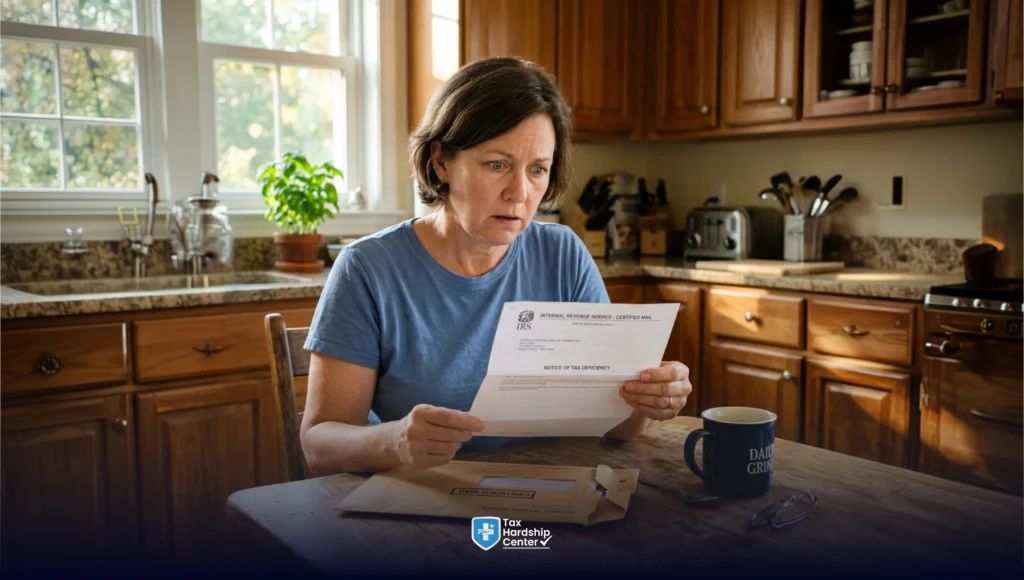
The letter came on a Tuesday.
Nothing about Tuesdays usually feels dangerous. This one did.
Inside was a number Meera had never seen before, tied to a tax return she barely remembered signing. Her husband filed it. She just signed where he told her to sign.
Now the IRS wanted its money. And it wanted it from her too.
That is the moment most people learn about Form 8857. Not from a finance blog. From an envelope that changes how safe their own mailbox feels.
Here is everything you need to know before you file it.
The Moment You Realize the Debt Isn’t Yours
Here’s the part nobody warns you about. When you sign a joint tax return, you’re not just agreeing with your spouse’s math. You’re co-signing their honesty.
If they under-reported income, hid a side business, or claimed deductions that never existed, the IRS doesn’t see two separate people. It sees one joint liability. Yours included.
This is called “joint and several liability,” and it’s exactly as unfair as it sounds when you had no idea what your spouse was doing.
But the IRS built an escape hatch for exactly this situation. It’s called innocent spouse relief, and you request it using Form 8857, officially titled Request for Innocent Spouse Relief.
What Form 8857 Actually Does (And What It Doesn’t)
Think of Form 8857 as your case file, not a form you attach to your tax return.
You never mail it with your return. You never fax it “just in case.” It’s a standalone request, sent directly to the IRS, asking them to separate your liability from your spouse’s or former spouse’s.
What it does: opens a review where the IRS looks at your specific situation and decides whether you should be held responsible for tax, penalties, and interest that came from your spouse’s errors.
What it doesn’t do: guarantee anything. Not every innocent spouse form gets approved. The IRS evaluates your case on its own facts, not on how badly you need the relief.
One twist that surprises almost everyone: by law, the IRS will contact your spouse or former spouse once you file. There are no exceptions to this, not even for documented abuse situations. It changes how some people approach filing, and it’s worth knowing before you submit.
Do You Qualify? The Three Kinds of Relief the IRS Will Consider
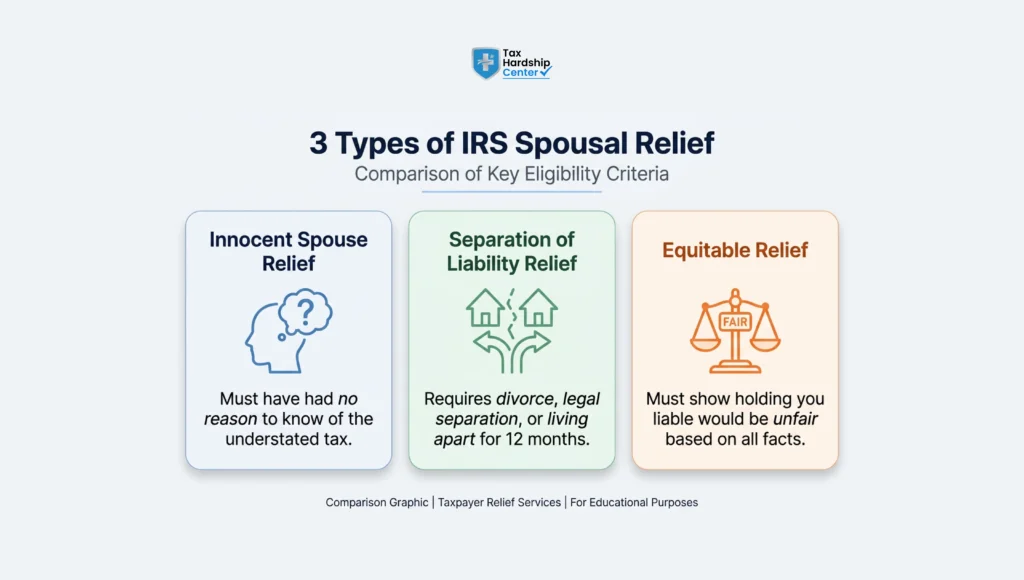
Here’s the part most articles skip past. You don’t have to pick one type of relief and hope you guessed right. When you file your request for innocent spouse relief, the IRS automatically reviews your case against all three categories.
Innocent spouse relief. For understated tax caused by your spouse’s erroneous items, income you didn’t know about and had no reason to know about.
Separation of liability relief. Splits the understated tax between you and your ex based on who actually caused it. Available if you’re divorced, widowed, legally separated, or have lived apart from your spouse for the 12 months before filing.
Equitable relief. The catch-all. For people who don’t fit neatly into either category above but where holding them liable would still be unfair.
Here’s the twist: two of these three have a hard deadline. The third doesn’t. Which brings us to the part that trips up more people than anything else on this form.
The Clock You Didn’t Know Was Running
This is the detail that costs people their case. Not bad paperwork. Bad timing.
If you’re requesting innocent spouse relief or separation of liability relief, you have exactly two years from the date the IRS first attempts to collect the tax from you to file Form 8857. Miss it, and those two doors close, even if your case is genuinely strong.
Equitable relief is different. It has no fixed deadline, which is exactly why many attorneys build it into every request as a fallback.
The IRS itself advises against waiting until you have every document ready. File the request, then supply supporting paperwork as your case moves forward. Waiting for a “complete” file is how people accidentally miss the two-year window entirely.
Filling Out Form 8857 Without Losing Your Mind
The form itself isn’t the hard part. Understanding what each section is really asking is.
Part I is a gate. It asks a simple question to determine if Form 8857 is even the right form for you, or if you actually need Form 8379 (Injured Spouse Allocation) instead. These sound similar. They are not the same thing, and filing the wrong one wastes months.
Part II covers you and the spouse or former spouse named in your request, including their current whereabouts if known.
Part III is where your case is actually built. Were you involved in preparing the return? Did you review it before signing? Did you have access to bank accounts and financial records? Be specific and honest here. Vague answers read as evasive.
Part IV covers your current financial situation.
Part V applies only if domestic violence or abuse is part of your story.
Once submitted, expect the review to take six months or longer. If the IRS denies your request, you generally have 30 days from the date on your determination letter to appeal.
The Mistakes That Get Innocent Spouse Claims Denied
Three patterns show up again and again in denied cases.
Waiting too long. People spend a year gathering documents before filing, and by the time they submit, they’ve blown past the two-year deadline for two of the three relief types.
Signing without asking questions, then claiming total ignorance. If you had “reason to know” about the understated tax, based on your education, financial involvement, or lifestyle, the IRS can hold that against you, even if you didn’t technically know the exact numbers.
Filing the wrong form entirely. Innocent spouse relief and injured spouse relief sound like siblings. They are not. Confusing them delays a case by months.
Why Tax Hardship Center Is the Right Call for Complicated Cases
Innocent spouse cases rarely stay simple. They tangle with divorce proceedings, existing IRS collection activity, and sometimes years of back taxes that piled up while one spouse handled the finances alone. That combination is exactly where Tax Hardship Center does its best work.
Before you file Form 8857, it helps to know where you actually stand with the IRS overall, not just on the disputed return. Tax Hardship Center reviews your full collection status, including whether you’re already facing enforcement, and lays out your realistic tax debt relief options before you commit to a strategy. If your former spouse’s unfiled years are part of the picture, the team also works directly through help with back taxes so the innocent spouse request isn’t fighting an incomplete filing history in the background.
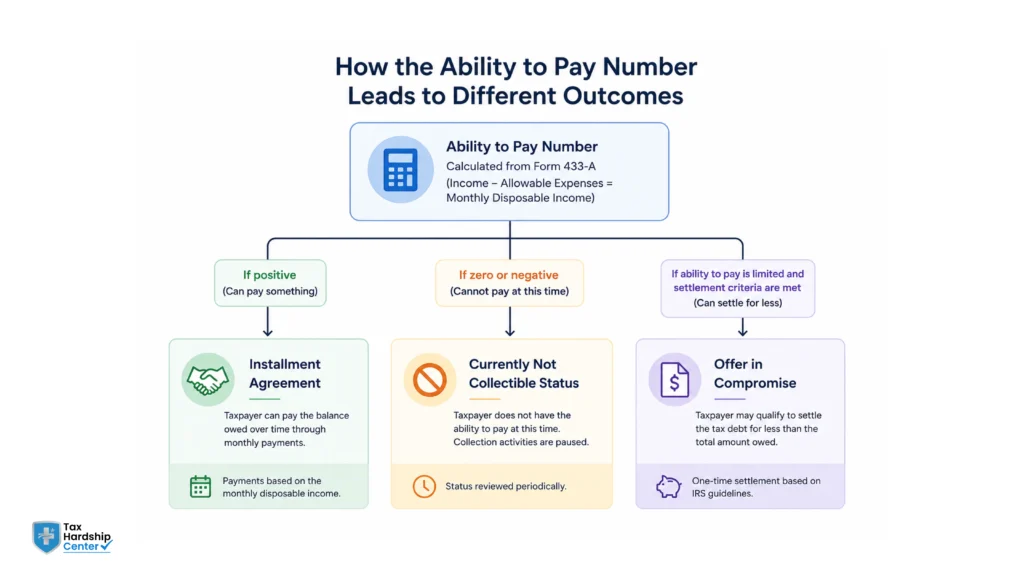
Cases involving a spouse or ex-spouse who is uncooperative, unreachable, or actively contesting your request need someone who has actually built a Part III narrative before, not someone learning the form in real time. If you’re also weighing whether you need an attorney, a CPA, or a resolution firm for a case this personal, Tax Hardship Center’s breakdown of tax attorney vs. tax relief company vs. CPA is a useful place to start before you decide who handles your file. And since knowing where a case like this fits among broader resolution paths matters too, the installment agreement, Offer in Compromise, and CNC comparison is worth a look if collection activity is already underway on the account.
FAQs
How long does the IRS take to decide on Form 8857?
Typically six months or longer. The IRS must also contact your spouse or former spouse as part of the review, which can add time, especially if they’re uncooperative or hard to reach.
Can I file Form 8857 if I’m still married?
Yes. You don’t need to be divorced or separated to request innocent spouse relief, though separation of liability relief specifically requires divorce, widowhood, legal separation, or living apart for 12 months.
What’s the difference between innocent spouse relief and injured spouse relief?
Innocent spouse relief (Form 8857) addresses liability for your spouse’s tax errors. Injured spouse relief (Form 8379) addresses your share of a refund being seized for your spouse’s separate debts. They are not interchangeable.
Will the IRS tell my spouse I filed Form 8857?
Yes, always. The law requires the IRS to notify your spouse or former spouse once you request innocent spouse relief, with no exceptions, including in abuse-related cases.
What happens if I miss the two-year deadline?
You may lose eligibility for innocent spouse relief and separation of liability relief specifically. Equitable relief has no fixed deadline, so it may still be available depending on your circumstances.
Do I need a lawyer to file Form 8857?
Not required, but cases involving contested facts, an uncooperative ex-spouse, or overlapping back tax debt often benefit from professional help building the case file correctly the first time.
Conclusion
Form 8857 exists because tax law recognizes something simple: you shouldn’t pay for a mess you didn’t make. But recognizing that and proving it to the IRS are two different things, and the two-year clock doesn’t pause for anyone gathering their courage. If your spouse’s tax mistakes landed on your doorstep, the sooner you file, the more doors stay open.
Key Takeaways
- Form 8857 is filed separately from your tax return, never attached or faxed with it.
- The IRS automatically reviews your case against all three relief types once you file.
- Innocent spouse and separation of liability relief both carry a strict two-year filing deadline.
- Equitable relief has no fixed deadline, making it a common fallback option.
- The IRS is legally required to notify your spouse or former spouse, with no exceptions.
- File first and supply supporting documents later rather than waiting for a “complete” file.
- Confusing Form 8857 with Form 8379 (injured spouse) is a common, costly mistake.
- Part III of the form is where your case is actually won or lost, so be specific.
- Reviews typically take six months or longer before a determination letter arrives.
- Denied requests can generally be appealed within 30 days of the determination letter.
Get a Free Case Review
If your spouse’s or former spouse’s tax mistakes have put you on the hook with the IRS, don’t wait out the two-year clock figuring it out alone. Speak to a tax specialist today, find out exactly where you stand, and see what tax relief services actually cost before you commit to anything.