
Yes, and it catches most people off guard. Can the IRS levy Social Security benefits even after decades of paying into the system? The honest answer is yes, but only up to a limit, and only after specific warnings land in your mailbox first.
This guide answers can the IRS levy Social Security directly, walks through the 15 percent Social Security levy rule, explains what a CP91 notice or CP298 notice actually means, and covers what you can do before a levy starts pulling money out of your monthly check.
Quick answer:
- Yes, can the IRS levy Social Security is answered with a clear yes, through the automated Federal Payment Levy Program.
- The IRS levy Social Security amount is capped at 15 percent of your monthly benefit, taken continuously until resolved.
- A CP91 notice or CP298 notice gives you 30 days of warning before the levy actually starts.
- Supplemental Security Income is exempt, but regular retirement and disability benefits are not.
- You can stop a 15 percent Social Security levy through a payment plan, an appeal, or a documented hardship claim.
Can the IRS Levy Social Security Benefits? The Short Answer
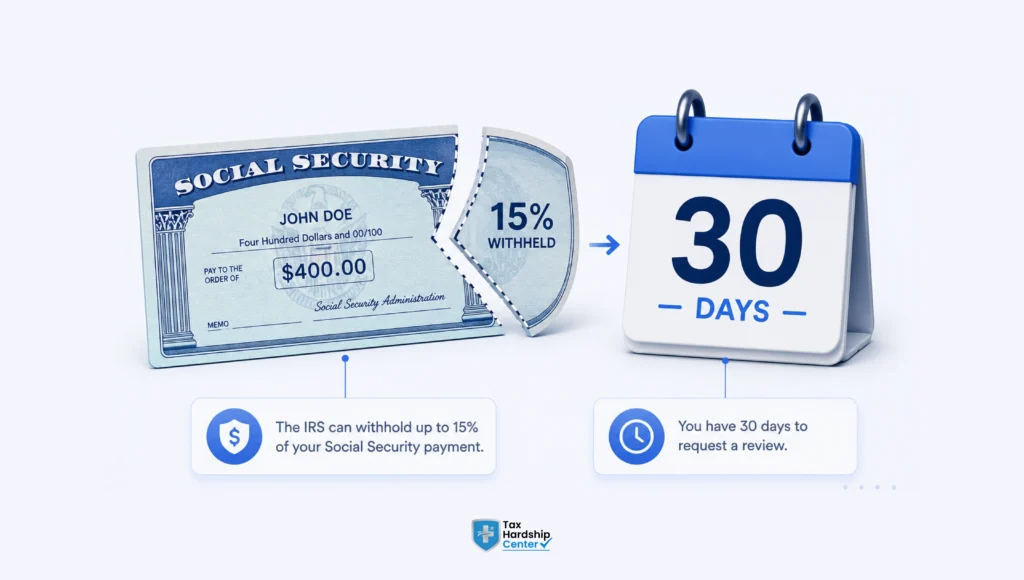
Can the IRS levy Social Security is one of the most common fears among retirees carrying back tax debt, and the answer is yes, through what is called the Federal Payment Levy Program. This system automatically identifies federal payments, including Social Security, and applies a levy against unpaid tax debt.
So when someone asks can the IRS levy Social Security even if they are already living on a fixed income, the answer does not change based on need. Benefits get pulled into this system whether the balance is small or large, as long as proper notice was sent first.
The 15 Percent Social Security Levy Rule Explained
The 15 percent Social Security levy is not negotiable in amount, it is set by statute under Internal Revenue Code section 6331(h). Once active, the IRS levy Social Security continues taking 15 percent of your monthly benefit every single month, not as a one time deduction.
This structure keeps applying until one of a few things happens: the balance gets paid in full, a resolution like an installment agreement or Offer in Compromise gets approved, or the Collection Statute Expiration Date arrives, generally ten years from assessment. This levy is separate from any other collection action, meaning a wage garnishment and a Social Security levy can technically run at the same time.
What a CP91 Notice or CP298 Notice Actually Means
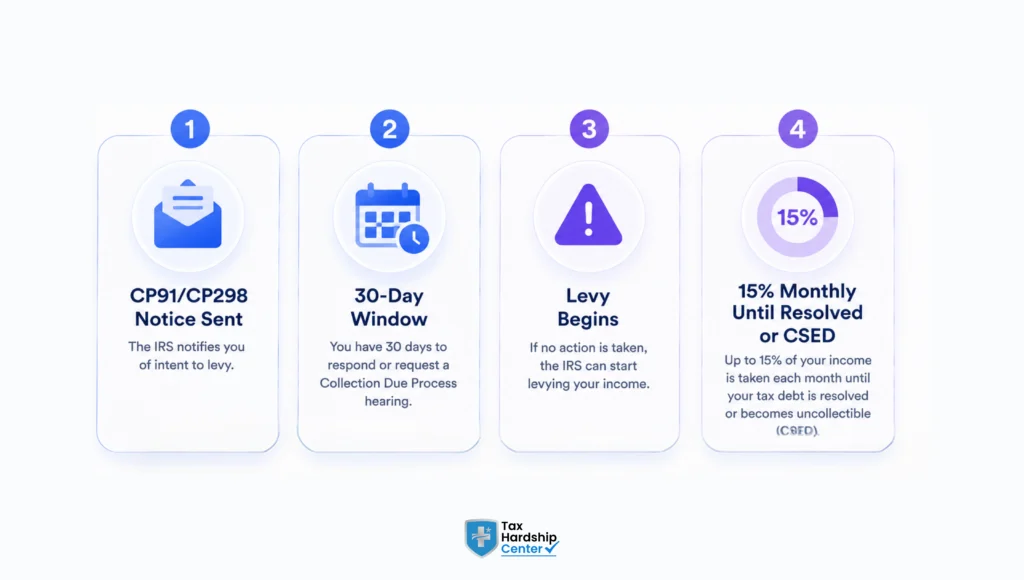
A CP91 notice is the final warning the IRS sends individual taxpayers before starting to levy Social Security benefits. A CP298 notice covers the same warning but applies to business or entity accounts tied to Social Security payments. Both give you 30 days from the notice date to respond before the levy begins.
If you receive this notice, that 30 day window is your real deadline, not a suggestion. You can pay the balance in full, request a Collection Due Process hearing, or set up a resolution before the window closes. Miss it, and the answer to can the IRS levy Social Security stops being theoretical for your case.
Some taxpayers instead receive a CP90 or CP297 notice, which serve a similar function reminding you of your right to a hearing before collection begins.
Which Benefits Are Actually Exempt
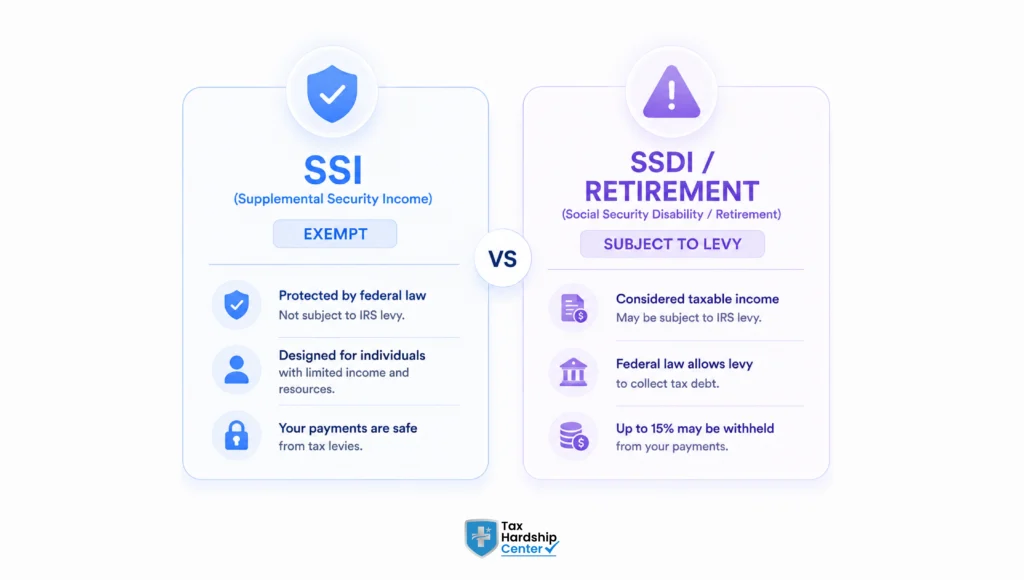
Not every payment from Social Security is exposed to the same risk. Supplemental Security Income, or SSI, is fully exempt from federal levies, including this one. Regular Social Security retirement benefits and Social Security Disability Insurance, or SSDI, are both subject to the Federal Payment Levy Program and do not carry that same protection. This is the core mechanism behind how the IRS levy Social Security applies to most retirees carrying a balance.
This distinction matters because people often confuse SSI with SSDI, assuming both benefits are shielded. They are not. If your income comes from retirement or disability benefits rather than SSI, the answer to can the IRS levy Social Security applies fully to your situation.
How to Stop a 15 Percent Social Security Levy
Can the IRS levy Social Security even after you request a hearing? Only if the hearing does not resolve things in your favor or the deadline has already passed. A few paths actually stop an active levy or prevent one from starting. Paying the balance in full ends it immediately, though that is not realistic for most people facing this situation. Setting up an installment agreement or getting Currently Not Collectible status approved typically triggers a levy release within one to two payment cycles.
There is also a hardship path specific to this situation. If this deduction pushes your income below 250 percent of the federal poverty level, you can request a hardship review with supporting documentation showing your actual monthly expenses. This is different from a general financial hardship claim, since it applies specifically to Social Security income being reduced below a livable threshold. This is the same mechanism the IRS levy Social Security process uses to collect from other federal payments, just applied to your benefit specifically.
How Tax Hardship Center Handles Social Security Levy Cases
Tax Hardship Center starts by confirming exactly what notice was received, since a CP91 notice or CP298 notice carries a hard 30 day deadline that cannot slip. THC pulls the account transcript to verify the balance, checks whether the benefit involved is SSI or a levy-eligible payment like SSDI, and confirms whether a Collection Due Process hearing is still available. THC confirms exactly how the IRS levy Social Security mechanism applies to the specific benefit type before recommending next steps, rather than assuming every case is the same.
If the levy is already active, THC builds the hardship documentation needed to show income has dropped below the poverty threshold, or structures an Offer in Compromise or installment agreement that gets the Treasury instruction to release the levy moving. For clients on a fixed income, this often means the difference between a case resolved in weeks versus months of continued deductions from a check that was already tight.
FAQs
Can the IRS levy Social Security if I am already on a fixed income?
Yes. Fixed income does not exempt you from the Federal Payment Levy Program, though it can support a hardship request to stop the levy.
What is the difference between a CP91 notice and a CP298 notice?
A CP91 notice goes to individual taxpayers, while a CP298 notice applies to business or entity accounts, but both warn of the same 15 percent deduction.
Is SSI protected from an IRS Social Security levy?
Yes. Supplemental Security Income is exempt, while regular retirement benefits and SSDI are not.
How much can the IRS actually take from my benefit?
This levy caps the deduction at 15 percent of your monthly benefit, taken continuously each month.
Can I stop the levy after receiving this warning notice?
Yes, within the 30 day window, by paying in full, requesting a hearing, or setting up a resolution like an installment agreement.
Does the levy stop automatically once I set up a payment plan?
Not automatically. It typically takes one to two payment cycles for the Treasury to process the release after a resolution is approved, per IRS Publication 594.
Conclusion
Can the IRS levy Social Security is not a hypothetical question for anyone carrying back tax debt into retirement. The answer is yes, capped at 15 percent, and it starts only after a CP91 notice or CP298 notice gives you 30 days to act. Knowing your exemptions, your appeal rights, and your hardship options before that window closes is what actually keeps your benefit intact.
Key Takeaways
- Can the IRS levy Social Security has a clear answer: yes, through the Federal Payment Levy Program.
- The IRS levy Social Security amount is capped at 15 percent monthly, taken continuously until resolved.
- A CP91 notice applies to individuals, a CP298 notice applies to business accounts, both giving 30 days notice.
- SSI is exempt from this levy, but SSDI and standard retirement benefits are not.
- The 15 percent Social Security levy continues until paid in full, resolved, or CSED is reached.
- A hardship review can stop the levy if income drops below 250 percent of the poverty level.
- Missing the 30 day window on this notice removes your appeal opportunity.
- Installment agreements and OIC resolutions typically release the levy within one to two cycles.
- A wage garnishment and Social Security levy can technically run simultaneously.
- Acting within the notice window is the most reliable way to protect your benefit.
Facing a CP91 notice or CP298 notice? Get a free case review from Tax Hardship Center before the 30 day window closes.