


If you pulled your IRS transcript and spotted irs code 806 with a negative dollar amount next to it, take a breath, this one is usually good news. IRS code 806 on transcript represents the total federal tax withheld from your paychecks throughout the year, based on your W-2s and 1099s, and it’s applied as a credit toward what you owe. Here’s exactly what it means, how it interacts with other codes like 766 and 570, and what it tells you about your refund.
IRS Code 806: What It Actually Represents
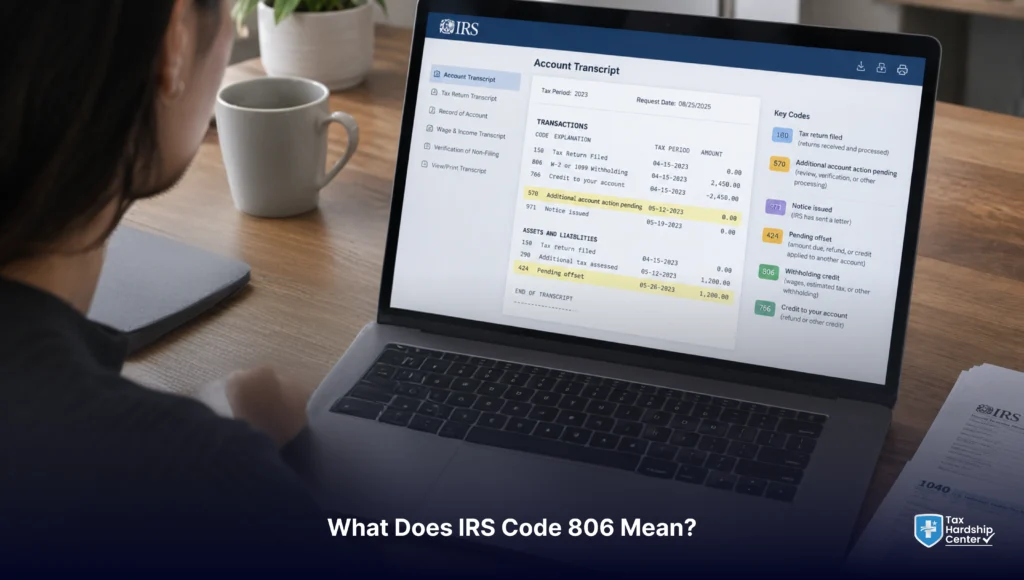
IRS code 806 on your account transcript stands for “W-2 or 1099 withholding,” and it reflects the total amount of federal income tax that was withheld from your income throughout the tax year. This figure comes directly from the W-2s and 1099s reporting your income to the IRS, and it’s automatically applied to your account as a credit once your return is processed.
Think of irs code 806 as the running total of everything already paid in on your behalf before you even filed. If you had a job with a regular paycheck, your employer withheld a portion of every check for federal taxes, and that entire year’s worth of withholding shows up as a single line under code 806 once the IRS processes your return.
Why IRS Code 806 on Transcript Shows a Negative Number
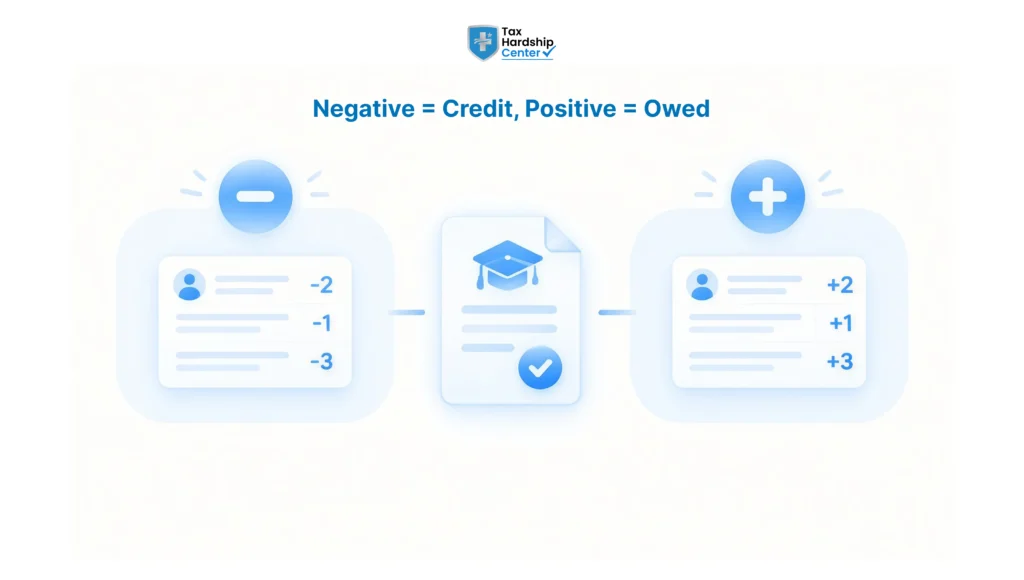
This trips people up every year. IRS code 806 on transcript almost always appears as a negative number, and that’s not a mistake or a bad sign. On an IRS transcript, negative numbers represent credits, money that’s working in your favor, while positive numbers represent amounts owed.
Since code 806 represents money already withheld and paid toward your tax liability, it shows as a credit, hence the negative sign. If you see irs code 806 with a minus sign next to a dollar amount, that’s simply the total withholding being applied as a credit against your tax bill for the year. It’s one of the more reassuring codes to see on a transcript, since it’s confirming money already worked in your favor.
Code 806 and 766: How They Work Together
A lot of people search code 806 and 766 together because these two codes commonly appear on the same transcript and both represent credits. While irs code 806 reflects your withholding from W-2s and 1099s, code 766 typically represents a credit to your account, often tied to a refundable tax credit like the Earned Income Tax Credit or an adjustment applied by the IRS.
When you see code 806 and 766 both listed, your transcript is essentially stacking multiple credits toward your account. Together with your total tax liability, shown under a different code, these credits determine whether you’re due a refund or still owe a balance. If the combined credits from code 806 and 766 exceed your total tax liability, the difference is your refund amount.
Code 806 and 570: What to Do If Both Appear
This combination gets people more anxious, and understandably so. Code 570 represents an additional account action pending, which essentially means the IRS has paused processing your return for further review. When code 806 and 570 both show up on your transcript, it means your withholding credit has been recorded, but something else in your return triggered a hold before your refund can be released.
Code 570 doesn’t necessarily mean there’s a problem with your return. It can be triggered by routine identity verification, a mismatch between reported income and what employers submitted, or a manual review of a credit you claimed. What it does mean is that your refund, even though the withholding shown under irs code 806 has already been credited, won’t be released until whatever triggered code 570 gets resolved.
If code 570 has been sitting on your transcript for several weeks without movement, checking your account for a follow-up notice is worth doing. Our guide on what code 570 means on your tax transcript goes deeper into what typically causes this hold and how long it usually takes to clear.
Where Code 806 Fits in the Bigger Refund Picture
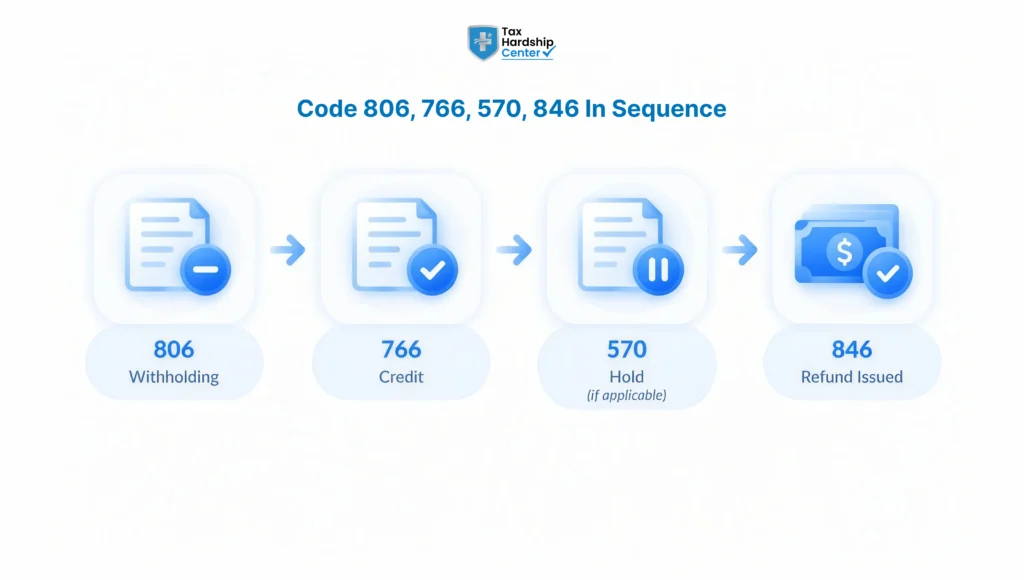
Understanding irs code 806 in isolation only tells part of the story. Your transcript is essentially a running ledger, and code 806 is one entry in that ledger representing your withholding credit. To understand your actual refund or balance, you need to look at code 806 alongside your total tax liability, any additional credits like those under code 766, and any codes indicating a hold or adjustment.
If your total credits, including code 806, exceed your tax liability and there’s no code 570 or similar hold in place, your transcript will typically show a code 846, which represents your refund being issued. If you’re trying to track a refund and want to understand what comes after code 806 in that sequence, it helps to view your transcript as a timeline rather than a single number to interpret.
If you owe a balance instead of expecting a refund, understanding how your withholding under code 806 was calculated is still useful, since it shows exactly how much was paid in before any additional balance was assessed. This can matter if you’re trying to understand why you owe more than expected for the year.
When IRS Code 806 Signals a Problem Worth Checking
In most cases, irs code 806 is simply informational and doesn’t require any action. But there are a few situations where it’s worth a closer look:
- The amount under code 806 doesn’t match your own records. If your W-2 or 1099 withholding total looks different than what’s showing on your transcript, this discrepancy is worth investigating before you file, since it can delay processing.
- Code 806 appears but your expected refund never arrives. This usually means other codes, like a hold or an offset, are affecting the final outcome even though your withholding credit was applied correctly.
- You’re self-employed and expected code 806 to reflect estimated payments. Code 806 specifically covers W-2 and 1099 withholding, not quarterly estimated payments, which show up under a different code entirely.
If any of these apply and your transcript shows a balance owed rather than the refund you expected, reviewing your IRS payment plan options can help you understand how to address it.
How Tax Hardship Center Helps When Transcript Codes Are Confusing
When a client comes to us with questions about irs code 806 or any other transcript code, we start by pulling the full account transcript and walking through every entry in order, not just the one line they’re stuck on. This matters because code 806 rarely tells the whole story on its own, and understanding it alongside codes 766, 570, or an eventual 846 gives a much clearer picture of what’s actually happening with a refund or balance.
If your transcript shows a hold like code 570 sitting alongside your withholding credit, we help identify what triggered it and what needs to happen to move your case forward. And if reviewing your transcript reveals an unexpected balance rather than the refund you were expecting, we help set up a resolution path, whether that’s an installment agreement or evaluating Currently Not Collectible status, so the balance doesn’t sit and accrue penalties while you’re still trying to figure out what the codes mean.
Frequently Asked Questions
What does IRS code 806 on transcript actually mean?
It represents the total federal tax withheld from your W-2s and 1099s for the year, applied as a credit toward your total tax liability.
Why does IRS code 806 show a negative number?
Negative numbers on an IRS transcript represent credits in your favor. Code 806 is a credit for withholding already paid, so it shows as negative.
What’s the difference between code 806 and 766?
Code 806 reflects W-2 and 1099 withholding specifically, while code 766 typically represents a separate credit, such as a refundable tax credit or IRS adjustment.
Does code 806 and 570 together mean my refund is denied?
No. It means your withholding credit has been recorded, but a separate review or hold is pausing your refund from being released yet.
Does IRS code 806 include estimated tax payments?
No. Code 806 covers only W-2 and 1099 withholding. Estimated payments made throughout the year are recorded under a different transcript code.
How do I know if code 806 is accurate for my situation?
Compare the amount shown under code 806 to the total federal withholding listed on your own W-2s and 1099s for the year to confirm they match.
Conclusion
IRS code 806 on transcript is one of the more straightforward and generally reassuring entries you’ll see on your account record, representing the federal tax already withheld from your income throughout the year. Understanding how it interacts with other codes, especially code 806 and 766 for additional credits or code 806 and 570 when a hold is in place, gives you a much clearer read on where your refund or balance actually stands.
Key Takeaways
- IRS code 806 represents total federal tax withheld from your W-2s and 1099s for the year.
- A negative number next to code 806 reflects a credit, not a problem.
- Code 806 and 766 often appear together, both representing credits toward your tax liability.
- Code 806 and 570 together mean your credit is recorded but a review is pausing your refund.
- Code 806 does not include estimated tax payments for self-employed income.
- Comparing your transcript’s code 806 amount to your own W-2s can confirm accuracy.
- A refund typically appears under code 846 once all credits and holds are resolved.
- If your expected refund doesn’t match code 806, other codes are likely affecting the outcome.
- Transcript codes should be read together, not in isolation, to understand your actual balance.
- A mismatched withholding total is worth investigating before delays compound further.
Confused about what your IRS transcript codes actually mean for your refund or balance? Get a free case review from Tax Hardship Center and get a clear read on your account.