
Your phone rings. Unknown number. You almost let it go to voicemail, but something makes you pick up. A voice says your tax debt qualifies for a new forgiveness program. Sounds too good. Feels a little too convenient.
If you are asking yourself why you are getting tax debt relief calls, you are not alone, and you are right to be suspicious. Millions of these calls go out every month, and most of them are not coming from anyone who can actually help you. This guide breaks down why I am getting tax debt relief calls in the first place, how to tell scam calls apart from real help, and what a legitimate tax relief company actually looks like.
Quick answer:
- If you are wondering why you are getting tax debt relief calls, the short answer is your number likely ended up on a purchased lead list, often tied to public records like liens or old tax filings.
- The IRS never initiates contact by phone. It always starts with mail.
- Tax debt relief scams rely on urgency, fake government names, and demands for upfront payment.
- Yes, tax debt relief is real is a fair question, and the answer is yes, but only through licensed professionals, not cold callers.
- A real firm will never guarantee a specific dollar reduction before reviewing your case.
Why Am I Getting Tax Debt Relief Calls in the First Place?
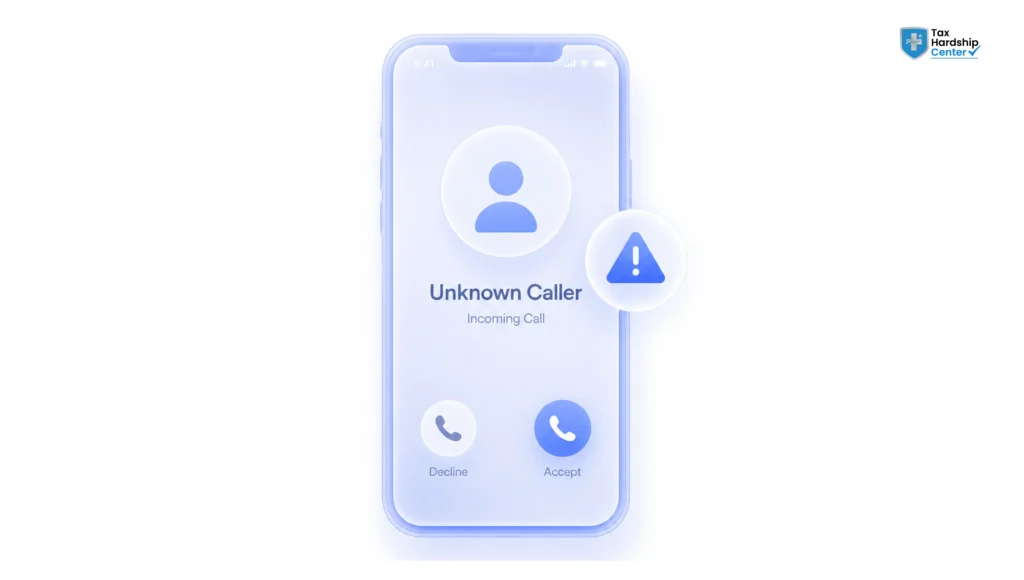
The honest answer is money. Robocall technology is cheap. A company can dial thousands of numbers an hour and only connect a live person when someone actually picks up. That math is why I am getting tax debt relief calls even if you have never owed a dollar to the IRS.
Your number often gets pulled from data broker lists, old loan applications, or public tax lien records, since a Notice of Federal Tax Lien is public information anyone can search. If your name shows up there, expect your phone to start ringing. This is one of the biggest reasons people keep asking why I am getting tax debt relief calls even after blocking multiple numbers, since new numbers spoof through instantly.
Is Tax Debt Relief Real, or Is It Always a Scam?
” Is tax debt relief real?” is one of the most-searched questions once someone starts getting these calls, and it deserves a straight answer. Yes, real tax relief exists. Installment agreements, Offers in Compromise, and Currently Not Collectible status are all legitimate paths the IRS itself confirms it offers, never through an unsolicited call.
What is not real is the version being pitched on a random robocall. Is tax debt relief real when it comes from someone claiming to be a federal agent who cold-called you? No. Real relief starts with you reaching out, filing the right paperwork, and working through a process, not answering a call that already knows your name and your balance.
How Tax Debt Relief Scams Actually Work
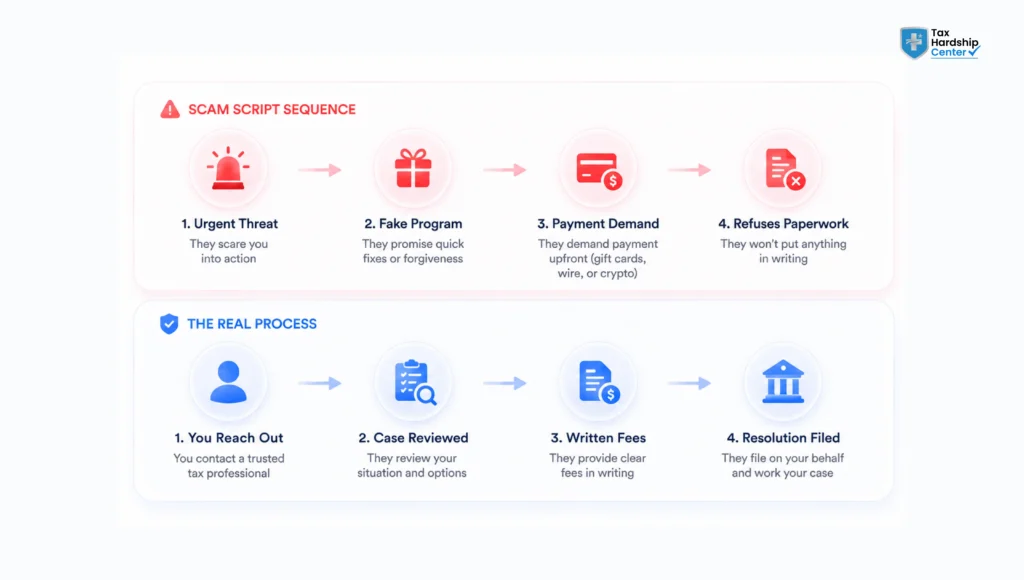
Tax debt relief scams follow a script, and once you have seen it, it gets easy to spot. The call opens with urgency. Wage garnishment. Arrest. A lawsuit filed against you today. Then comes the offer: a special forgiveness program, sometimes described as connected to a new law or a “zero tax owed” initiative that does not actually exist.
The pattern almost always includes a request for payment through wire transfer, gift cards, or cryptocurrency, since those are nearly impossible to trace or reverse. Real installment agreements never work this way. Another common thread is refusing to send anything in writing, because a document leaves a paper trail scammers do not want.
Red Flags That Separate a Legitimate Tax Relief Company From a Scam Call
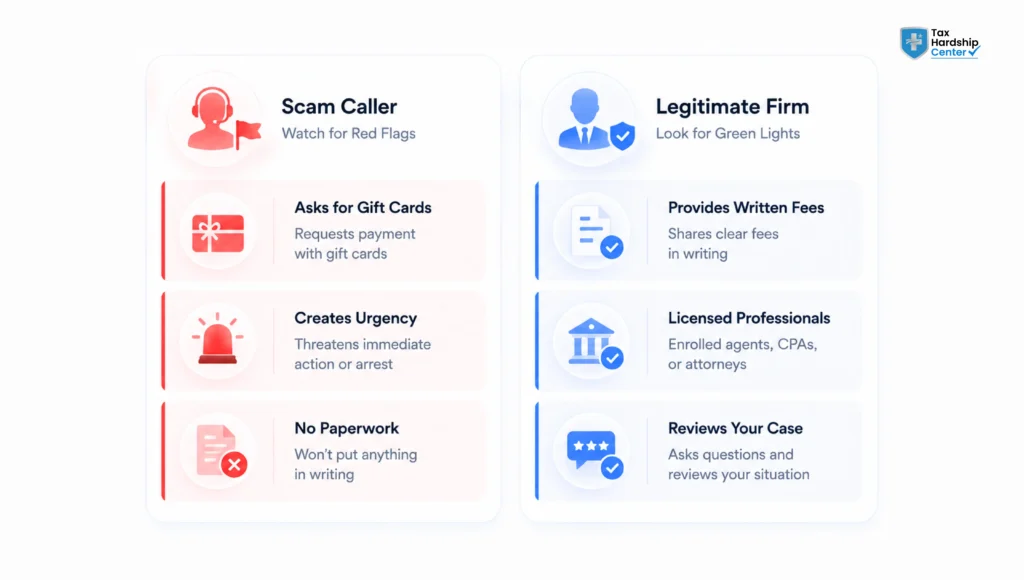
A legitimate tax relief company does not cold-call you, claiming to already know your tax problem. Here is what actually separates real help from a scam caller:
- A verified firm reviews your specific financials before quoting any number, never before.
- Real firms explain fees upfront, in writing, before any work starts.
- No real firm demands payment by gift card, wire transfer, or crypto.
- The IRS communicates by mail first, always, so any caller claiming to be the IRS on your first contact is lying.
- A verifiable business address, licensing, and a track record you can check independently, since that is what a legitimate tax relief company always has ready.
What to Do If You Are Already Getting These Calls
If you keep asking why am I getting tax debt relief calls and the volume is not slowing down, a few steps actually help. Register your number on the National Do Not Call Registry, though scammers ignore this more than legitimate telemarketers do. Report the call to the FTC at 1-877-382-4357 and to TIGTA if the caller claimed to be from the IRS. Never press a number, confirm information, or stay on the line waiting to “verify” your identity, since that alone can flag your number as active to the dialer.
If you genuinely owe back taxes and the calls have you wondering why am I getting tax debt relief calls in the first place, that instinct to deal with it is the right one, just not through the number that called you.
How Tax Hardship Center Helps You Cut Through the Noise
Tax Hardship Center never cold calls anyone. Every case starts because a taxpayer reaches out first, which is the opposite of how these scam operations run. When someone comes to THC after getting a suspicious call, the first step is pulling their actual IRS account transcript to confirm what is real and what the caller invented.
From there, THC builds a case around installment agreements, Offer in Compromise applications, or Currently Not Collectible status depending on what the numbers actually support, not what sounds good on a script. Every fee is disclosed before any paperwork gets filed, and every resolution path is explained in writing so a client can compare it against anything a scam call promised. That transparency is exactly what tax debt relief scams cannot offer, because their whole model depends on you never checking the details twice.
FAQs
Why am I getting tax debt relief calls if I do not owe the IRS anything?
Your number may still be on a purchased lead list even without any actual debt, since robocall operations dial broad ranges of numbers without first verifying who owes what.
Is tax debt relief real, or is it always a scam?
Real tax relief exists through licensed professionals and official IRS programs. It becomes a scam when it comes from an unsolicited call demanding upfront payment.
How do tax debt relief scams usually ask for payment?
Common methods include wire transfers, prepaid gift cards, and cryptocurrency, all of which are difficult to trace or reverse once sent.
What makes a legitimate tax relief company different from a scam caller?
A legitimate tax relief company reviews your financial details before quoting a number, discloses fees in writing, and never asks for payment through untraceable methods.
Should I answer if I keep getting tax debt relief calls?
You do not have to. Letting unknown callers go to voicemail and reporting persistent tax-debt relief calls to the FTC is safer than engaging directly.
Does the IRS ever call first about back taxes?
No. The IRS always initiates contact through official mail before any phone call, so a caller claiming to be the IRS the moment you ask why am I getting tax debt relief calls is not legitimate.
Conclusion
Why am I getting tax debt relief calls comes down to one simple fact. Your information is out there, and scammers know cheap robocalls occasionally land on someone scared enough to act fast. Tax debt relief scams thrive on urgency and vague promises. A legitimate tax relief company thrives on documentation, licensing, and a process you control. Is tax debt relief real? Yes, but only when you start it yourself.
Key Takeaways
- Why am I getting tax debt relief calls usually traces back to your number being sold on a lead list, sometimes tied to public tax lien records.
- Tax debt relief scams rely on urgency, fake government names, and demands for immediate payment.
- Is tax debt relief real? Yes, but only through IRS programs and licensed professionals you contact directly.
- Real firms always review your case before quoting any number.
- Payment requests through gift cards, wire transfers, or crypto are a guaranteed sign of tax debt relief scams.
- The IRS never calls first. It always starts with mail correspondence.
- Reporting persistent calls to the FTC and TIGTA helps build enforcement cases against repeat offenders.
- Real resolution paths include installment agreements, Offers in Compromise, and CNC status.
- Real firms disclose fees in writing before any work begins.
- If the calls keep coming and you are still asking why am I getting tax debt relief calls, the safest move is reaching out to a verified firm yourself, not answering the next one.
Tired of guessing which calls are real? Get a free case review from Tax Hardship Center and find out what your actual options are.