
Most people assume a payment plan means paying every dollar back eventually, just spread out. It does not always work that way. An IRS partial payment installment agreement is built for a different situation entirely, one where you genuinely cannot pay the full balance, even over time.
This guide breaks down how an IRS partial payment installment agreement actually works, who qualifies, and how it lets you settle for less than you owe in a way the standard payment plan never allows.
Quick answer:
- An IRS partial payment installment agreement lets you make monthly payments based on what you can actually afford, not what would pay off the full balance.
- Whatever remains unpaid when the collection statute expires gets discharged, so a PPIA IRS can genuinely mean you pay less than full tax debt overall.
- You need Form 433-A or 433-B financial disclosure plus Form 9465 to apply.
- The IRS reviews this arrangement every two years and can raise your payment if your finances improve.
- This is different from an Offer in Compromise, since a PPIA IRS plan runs monthly instead of settling with one lump sum.
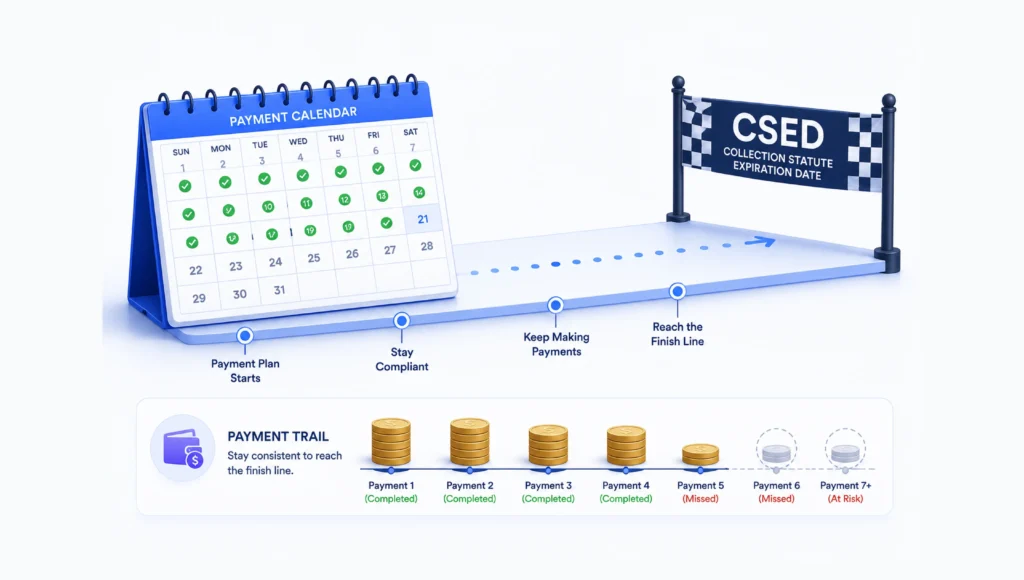
What an IRS Partial Payment Installment Agreement Actually Is
An IRS partial payment installment agreement, often shortened to PPIA IRS, is a payment plan where your monthly amount is based on what your finances can support, not on dividing the full balance into equal payments. Governed under IRM 5.14.2, if a standard installment agreement would take longer than the Collection Statute Expiration Date to pay off completely, the IRS may approve this arrangement instead.
Here is the part that surprises people. The debt does not vanish overnight, but the portion left unpaid when the ten year collection statute expires generally gets written off. That is exactly how a PPIA IRS arrangement lets someone pay less than full tax debt, legally, without an Offer in Compromise.
Who Actually Qualifies for a Partial Payment Installment Agreement
Not everyone gets approved for an IRS partial payment installment agreement. The IRS wants to see that a full installment plan genuinely will not work within the time remaining on your statute.
To qualify for this arrangement, you typically need:
- Verified income and allowable expenses showing you cannot pay off the balance before your CSED
- No significant equity in assets you could reasonably access to pay down the debt
- Full financial disclosure through Form 433-A for individuals or Form 433-B for businesses
- A completed Form 9465 requesting the installment arrangement
- Current filing compliance, since missing returns will stall any PPIA IRS request before it starts
How the Numbers Work on a PPIA IRS Plan
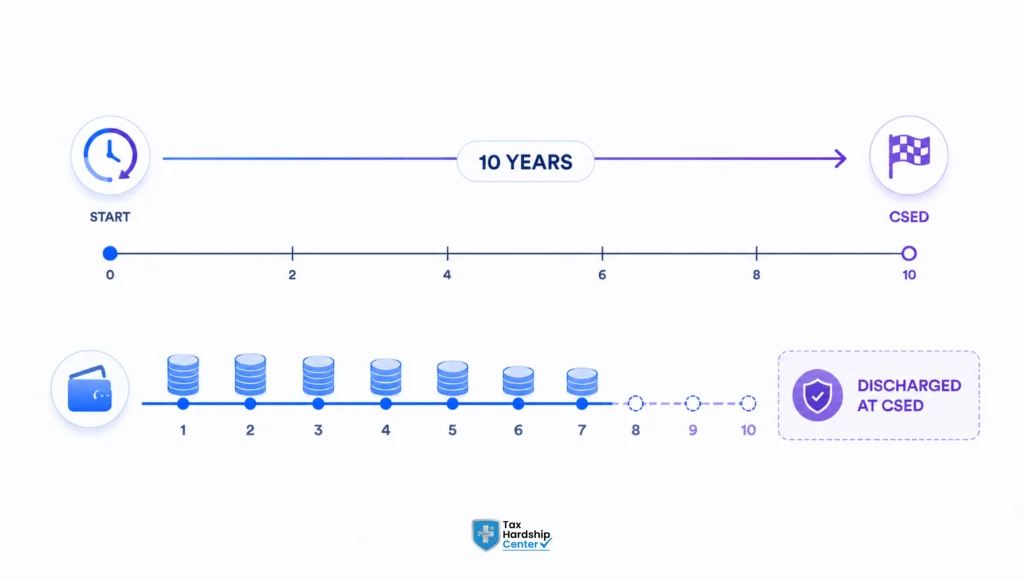
Your payment on an IRS partial payment installment agreement gets calculated the same way an Offer in Compromise calculates disposable income, using IRS Collection Financial Standards for your household size and county. Whatever is left after allowable expenses becomes your proposed monthly payment.
This is where the plan genuinely helps someone pay less than full tax debt. If your disposable income only supports $310 a month and your balance is $60,000, you are not paying that off in ten years at that rate. The math simply runs out before the debt does, and what remains at CSED gets discharged.
How a Partial Payment Installment Agreement Differs From Other Options
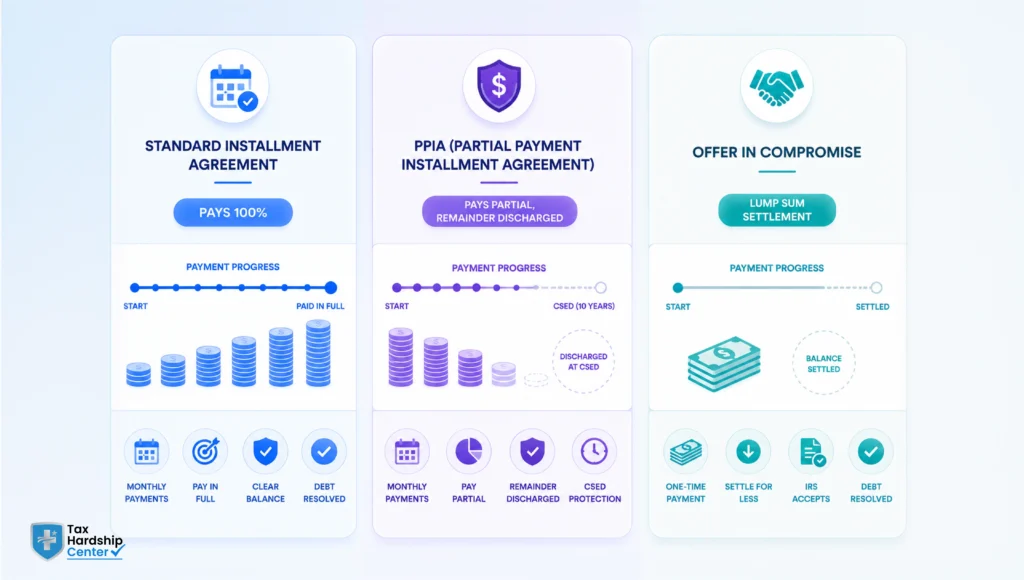
People often confuse a PPIA IRS plan with a standard installment agreement or an Offer in Compromise. They are not the same thing.
A standard installment agreement eventually pays the full balance, just over time. An IRS partial payment installment agreement does not, since payments stop covering the full debt and the remainder is written off at CSED. An Offer in Compromise settles the debt with one negotiated lump sum or short structured payment, while this arrangement runs monthly for years and stays open to review.
If you are trying to figure out which path resolves your balance with the least ongoing scrutiny, an OIC often resolves faster, but a PPIA plan can work better when your case does not meet OIC requirements or when keeping monthly cash flow matters more than a lump sum.
The Two Year Review Nobody Tells You About
An IRS partial payment installment agreement is not a set it and forget it arrangement. The IRS reviews your finances again every two years, and if your income improves, your payment can increase. This is one of the biggest differences between PPIA and an Offer in Compromise, which does not carry recurring reviews once accepted.
Staying compliant matters here too. Filing late, missing a payment, or picking up new debt can put your PPIA agreement at risk of termination, which puts you back to square one with full collection activity.
How Tax Hardship Center Structures a Partial Payment Installment Agreement
Tax Hardship Center runs the same ability to pay analysis the IRS uses before ever proposing a number, checking whether an IRS partial payment installment agreement actually fits your numbers or whether an Offer in Compromise or Currently Not Collectible status produces a better outcome. That means pulling your actual CSED dates, verifying asset equity, and calculating allowable expenses against current standards before any application goes in.
Once a PPIA plan is the right fit, THC prepares Form 433-A or 433-B alongside Form 9465, structures the payment to hold up through IRS review, and tracks the two year review cycle so a client is not blindsided by a payment increase or a compliance issue that could terminate the agreement. This is the kind of ongoing management that keeps the arrangement working the way it is supposed to, not just getting it approved once and hoping for the best.
FAQs
What makes an IRS partial payment installment agreement different from a regular payment plan?
A regular installment agreement pays off the full balance over time, while this arrangement leaves a remaining balance that gets discharged when the collection statute expires.
Can a PPIA plan really let me pay less than full tax debt?
Yes. Since only what you can afford gets collected before CSED, the unpaid remainder is generally written off, which is how you legally pay less than full tax debt.
What forms do I need for a partial payment installment agreement?
Form 433-A for individuals or Form 433-B for businesses, along with Form 9465 requesting the installment arrangement.
How often does the IRS review a PPIA agreement?
Every two years. The IRS reevaluates your income and expenses, and your payment can increase if your financial situation has improved.
Is a partial payment installment agreement better than an Offer in Compromise?
It depends on the case. An OIC settles the debt faster with one offer, while an IRS partial payment installment agreement works better when OIC requirements are not met or ongoing monthly payments fit your situation better.
What happens if I miss a payment on my PPIA plan?
Missing a payment or falling out of filing compliance can terminate the agreement, putting you back into active collection status on the full balance.
Conclusion
An IRS partial payment installment agreement exists for a specific situation, when a full installment plan will not pay off the balance before your collection statute runs out. It is one of the few legitimate ways to pay less than full tax debt without a lump sum settlement, but it comes with financial disclosure requirements and a two year review cycle that demands ongoing attention. Know where you stand before assuming a PPIA plan is automatic.
Key Takeaways
- An IRS partial payment installment agreement lets you pay based on actual ability to pay, not the full balance divided evenly.
- The remaining balance at CSED generally gets discharged, letting qualifying taxpayers close out their case for less than the assessed total.
- Form 433-A or 433-B plus Form 9465 are required to apply for a partial payment installment agreement.
- A PPIA plan is reviewed every two years, and payments can increase if your income improves.
- This differs from an Offer in Compromise, which settles with a lump sum instead of ongoing monthly payments.
- No significant accessible asset equity is typically required to qualify.
- Missing payments or filing late can terminate an IRS partial payment installment agreement.
- Verified Collection Financial Standards determine your allowable expenses and monthly payment.
- This structure can work better than an OIC when OIC eligibility is not met.
- Professional structuring helps a PPIA agreement survive the two year review process.
Wondering if a partial payment installment agreement fits your situation? Get a free case review from Tax Hardship Center and find out what your numbers actually support.