

If you’re filling out the FAFSA and wondering can you get financial aid if you owe taxes, here’s the direct answer: in most cases, yes. Owing back taxes doesn’t automatically disqualify you from financial aid, but it can complicate the process depending on your specific situation and what stage your tax debt is at. Here’s exactly how financial aid tax debt questions actually get answered and what you need to know before you submit anything.
Can You Get Financial Aid If You Owe Taxes? The Direct Answer
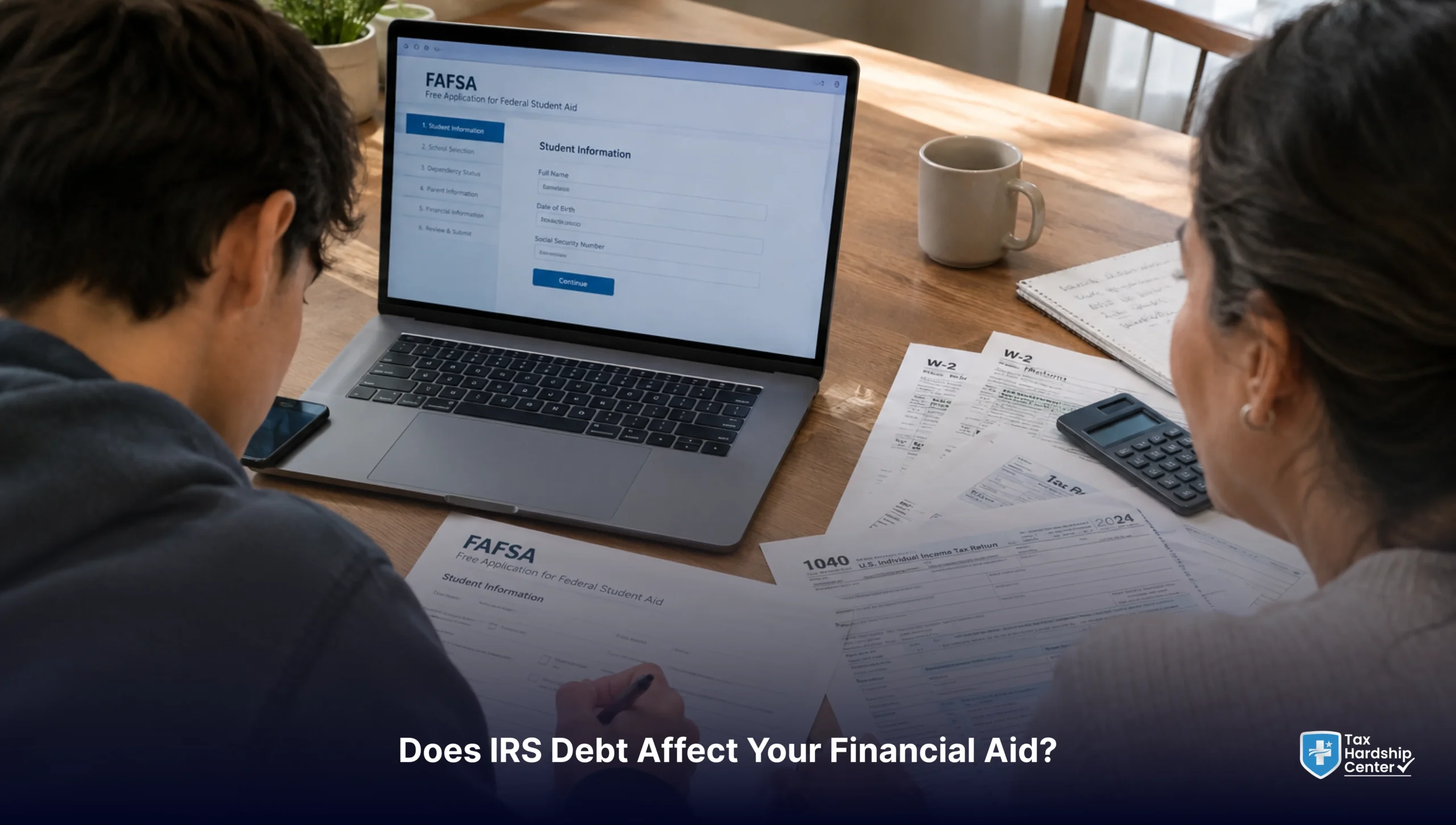
The short answer to can you get financial aid if you owe taxes is that owing the IRS money does not, by itself, disqualify you or your child from receiving federal financial aid. The FAFSA is based on income and financial need, not on whether you currently have an outstanding IRS balance. Millions of people with financial aid tax debt situations qualify for aid every single year.
Where things get more complicated is when tax debt overlaps with other issues, like unfiled returns or default on federal student loans, which are handled separately from a straightforward IRS balance. Understanding that distinction is the key to answering can you get financial aid if you owe taxes accurately for your specific situation.
How FAFSA Owe Taxes Situations Actually Get Handled
When people search FAFSA owe taxes, they’re usually worried that submitting the form will somehow flag their tax debt or block their application. It won’t. The FAFSA pulls income information, often directly from IRS data through the IRS Data Retrieval Tool, but it’s using that data to calculate financial need, not to check whether you currently owe a balance.
The FAFSA owe taxes concern usually comes from confusing two separate systems. Financial aid eligibility is based on the Expected Family Contribution, later replaced by the Student Aid Index, which is calculated from income and assets. Tax debt collection is handled entirely separately by the IRS. The two don’t interact in the way many people assume they do.
When IRS Debt Can Actually Affect Your Financial Aid
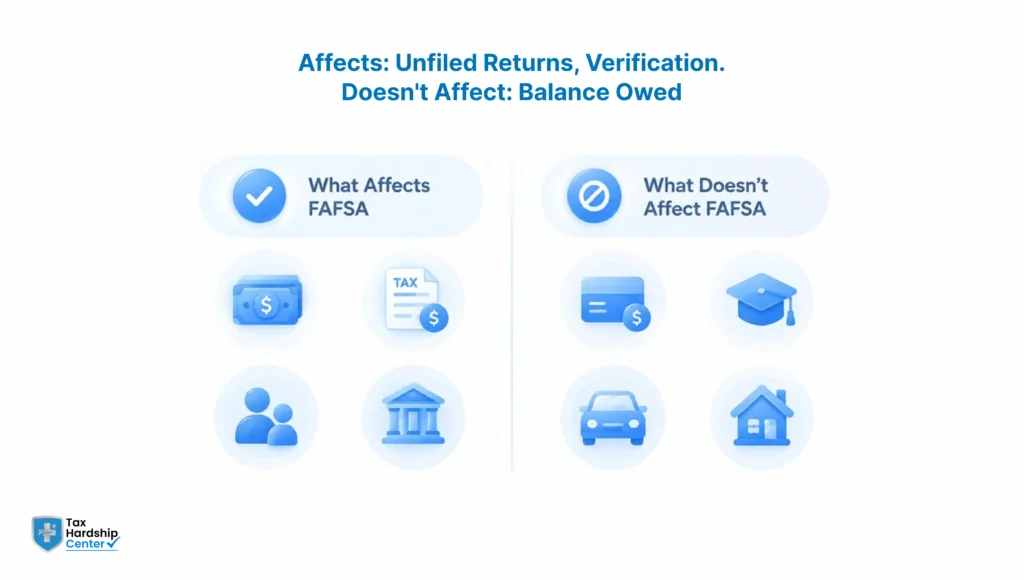
While can you get financial aid if you owe taxes is generally answered with a yes, there are a few specific situations where tax debt does intersect with the financial aid process:
- Unfiled tax returns. If you’re required to file and haven’t, this can delay your FAFSA processing since accurate income data isn’t available to verify.
- Amended returns. If your return is under review or was recently amended, the income figures used for your FAFSA might not match, which can trigger additional verification.
- Federal debt other than tax debt, like defaulted federal student loans, can affect aid eligibility, but this is a separate issue from IRS tax debt itself.
- Selected for verification. If your FAFSA is selected for verification, having accurate, filed tax returns available matters more than usual.
None of these situations are about financial aid tax debt disqualifying you outright. They’re about documentation and timing, which is very different from being denied aid because you owe money.
Tax Returns and the FAFSA: What You Actually Need to Submit
The FAFSA generally requires income information from your most recently filed tax return, and this is where filed status matters more than balance owed. If you filed your return, even if you owe a balance and haven’t paid it in full, that return can still be used to complete your FAFSA accurately.
This is an important distinction for people asking can you get financial aid if you owe taxes. Filing and paying are two different things. The IRS doesn’t require your balance to be paid in full before the return can be used for FAFSA purposes. What matters is that the return itself was filed and reflects accurate income.
If you’re behind on filing multiple years and aren’t sure where you stand, reviewing our guide on help with back taxes and IRS relief options can help you understand what needs to be filed before your FAFSA information can be verified without delay.
What Happens If You Haven’t Filed Your Taxes at All
This is where questions about financial aid tax debt get more serious. If you haven’t filed a required tax return, this can genuinely delay or complicate your FAFSA, not because you owe money, but because the income data needed to process your application doesn’t exist yet in a usable form.
If your FAFSA owe taxes concern is really about unfiled years rather than an existing balance, the priority should be getting those returns filed as soon as possible, even if you can’t pay what’s owed right away. Filing itself doesn’t require payment. You can file a return showing a balance due and address the payment separately through an IRS payment plan, while still having the return available for FAFSA purposes.
Steps to Take If You Owe Taxes and Need Financial Aid
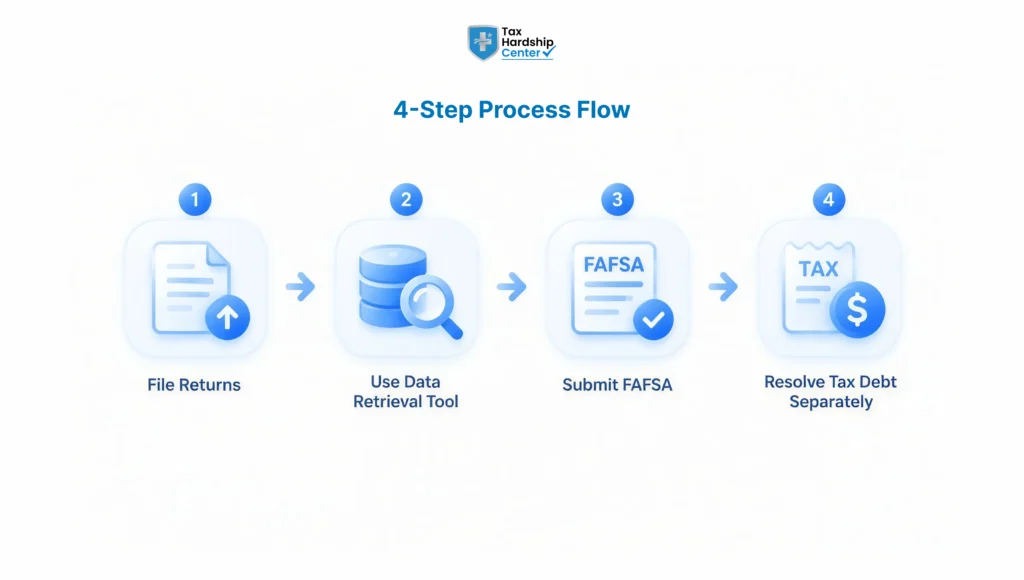
If you’re navigating can you get financial aid if you owe taxes for yourself or your child, here’s the practical order of operations:
- File any outstanding tax returns first, even if you can’t pay the full balance right now
- Use the IRS Data Retrieval Tool when completing the FAFSA to pull accurate income data directly
- Don’t wait on the balance to file your FAFSA. Owing money doesn’t require the debt to be resolved first
- Address the underlying tax debt separately through a payment plan or resolution option so it doesn’t compound while you focus on aid
- Respond promptly if selected for verification, since accurate filed returns speed this process up significantly
Following this order keeps your financial aid tax debt concerns from stalling your FAFSA while you work on resolving the actual balance owed.
How Tax Hardship Center Helps If Tax Debt Is Complicating Your Aid Process
When someone comes to us worried about whether they can get financial aid if they owe taxes, the underlying issue is almost always unfiled returns rather than the balance itself. We help get outstanding returns filed quickly and accurately so income data is available for FAFSA purposes, without requiring the balance to be paid first.
Once returns are filed, we work on resolving the actual tax debt separately, whether that means setting up an installment agreement that fits your budget, pursuing Currently Not Collectible status if your finances are genuinely strained, or evaluating an Offer in Compromise if you qualify to settle for less. If your FAFSA has already been flagged for verification because of a filing gap, we help make sure the documentation is accurate and complete so the delay doesn’t drag on longer than necessary.
Frequently Asked Questions
Can you get financial aid if you owe taxes but have filed every year?
Yes. As long as your returns are filed, an outstanding balance owed to the IRS does not disqualify you from federal financial aid.
Does FAFSA owe taxes information get shared with the IRS for collection?
No. The FAFSA uses tax return data to calculate financial need. It is not connected to IRS collection activity on any balance you owe.
What if I haven’t filed taxes and need to submit my FAFSA soon?
File as soon as possible, even without paying the balance in full. An unfiled return, not a balance owed, is what typically delays FAFSA processing.
Can financial aid tax debt situations affect my child’s eligibility if the debt is mine?
Generally no, as long as your tax returns are filed and the income data needed for the FAFAS is accurate and available.
Does defaulting on federal student loans affect financial aid the same way as owing the IRS?
No, these are different systems. Defaulted federal student loans can directly affect aid eligibility, while IRS tax debt generally does not.
Should I resolve my IRS debt before applying for financial aid?
Not necessarily. Filing your returns is the priority for FAFSA purposes. Resolving the actual debt can happen on a separate timeline.
Conclusion
Can you get financial aid if you owe taxes almost always comes back to a reassuring answer: yes, in most cases, owing the IRS doesn’t block your eligibility. What actually matters for the FAFSA is whether your returns are filed and your income data is accurate, not whether your balance is paid in full. If financial aid tax debt concerns are really about unfiled years, prioritizing those filings solves the FAFSA issue while you address the underlying balance separately.
Key Takeaways
- Can you get financial aid if you owe taxes is generally answered yes, owing the IRS doesn’t disqualify you.
- FAFSA owe taxes concerns are usually about unfiled returns, not balance owed.
- The FAFSA calculates financial need using income data, separate from IRS collection activity.
- Filing your tax return does not require your balance to be paid in full first.
- Unfiled returns, not tax debt itself, are what typically delay FAFSA verification.
- The IRS Data Retrieval Tool pulls accurate income data directly for your FAFSA.
- Defaulted federal student loans are a separate issue from owing the IRS.
- Filing outstanding returns should be the priority before your FAFSA deadline.
- Resolving the underlying tax debt can happen on a timeline separate from your FAFSA.
- Getting returns filed quickly prevents financial aid tax debt concerns from stalling your application.
Worried that unfiled returns or IRS debt could affect your financial aid? Get a free case review from Tax Hardship Center and get your filings back on track.