
If the IRS closed your audit and the result doesn’t match what actually happened, you’re not stuck with it. IRS audit reconsideration is the formal process that lets you reopen a closed audit when you have new evidence, missed the original audit appointment, or moved and never received the notices in the first place. It’s not a second appeal. It’s a fresh look, and it can genuinely change the outcome.
What Is IRS Audit Reconsideration?

IRS audit reconsideration is a process that allows taxpayers to request the IRS review a previously closed audit when new information comes to light or when the original audit result was based on incomplete records. Unlike a formal appeal, which must be filed within a strict window after the audit closes, audit reconsideration can be requested later, sometimes even after the balance has already been assessed and you’ve started receiving collection notices.
The IRS created audit reconsideration specifically for situations where the original outcome doesn’t accurately reflect the facts. Maybe you had documentation that wasn’t submitted in time. Maybe the audit was conducted without your participation because the notice was sent to an old address. Whatever the reason, IRS audit reconsideration exists to correct that, not to punish you for missing the first round.
Who Actually Qualifies for the IRS Audit Reconsideration Process
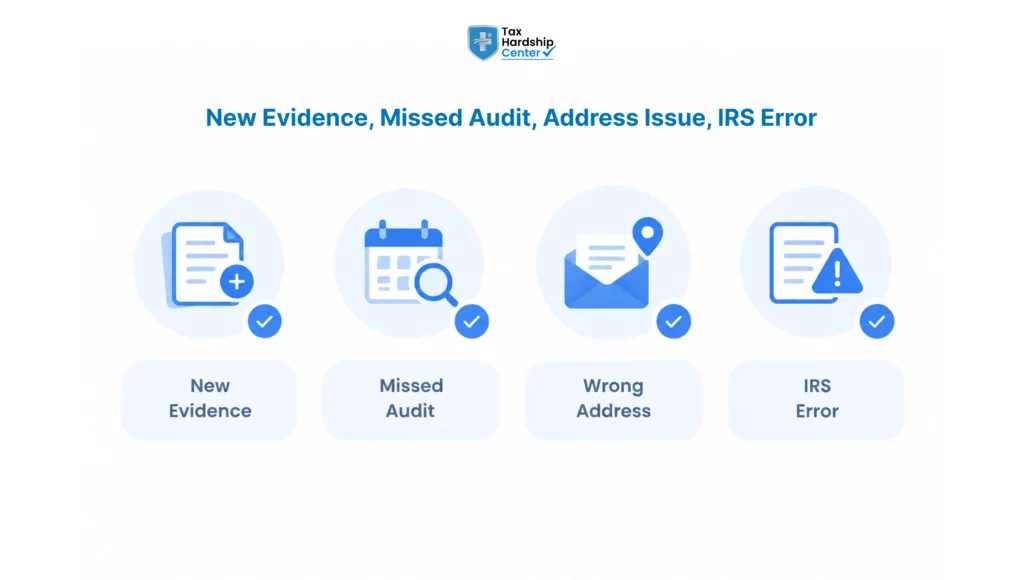
Not every closed audit is eligible for reconsideration, and understanding the IRS audit reconsideration process starts with knowing whether your situation actually fits. Generally, you qualify if one of the following applies:
- You have new documentation that wasn’t available or wasn’t submitted during the original audit
- You didn’t appear for the audit, and a decision was made without your input
- You moved and never received the audit notice or the final determination letter
- You disagree with the assessed amount and can show it was calculated incorrectly
- The IRS made a processing error unrelated to your actual tax situation
If none of these apply and you simply disagree with the outcome without new information, audit reconsideration usually isn’t the right path. In that case, reviewing our page on IRS payment plan options might be more useful than trying to reopen a case that won’t move.
When You Should Consider Trying to Reopen IRS Audit Results
The decision to reopen IRS audit results comes down to timing and evidence. If you’re already in a collection cycle, receiving notices, or seeing a lien threat, that doesn’t disqualify you from requesting reconsideration. In fact, many taxpayers first learn they have grounds to reopen an IRS audit after they’ve already fallen behind on payments and started researching relief options, such as an installment agreement.
The strongest cases to reopen an audit involve clear, verifiable new evidence. Bank statements that support a deduction the IRS disallowed. A corrected 1099 from an employer. Receipts that surface after a move. If your documentation genuinely changes the math, IRS audit reconsideration is worth pursuing even if it’s been a year or more since the audit closed.
Where it gets harder is if you’ve already paid the balance in full. The IRS can still consider a reconsideration request, but at that point you’re generally better served by filing an amended return or a formal refund claim, since the account is no longer open for collection.
Form 12661: What It Is and How to Fill It Out
Form 12661, officially called the Disputed Issue Verification, is the document the IRS uses to formally document your disagreement with the audit findings. While it’s not always mandatory, most tax professionals recommend including it because it forces a clear, itemized explanation of exactly what you’re disputing and why.
Filling out Form 12661 correctly means being specific. Vague statements like “I disagree with the amount” don’t move a reconsideration request forward. What does work is line-item detail: the specific deduction or income item in question, the correct figure based on your new documentation, and a brief explanation of why the original determination was wrong. Attach your supporting evidence directly to the form rather than referencing it separately.
If you’re unsure whether your documentation is strong enough to support what you’re claiming on Form 12661, this is often where a second set of eyes from someone who has reviewed audit files before makes a real difference in how the request lands with the examiner.
How to Write an Effective Audit Reconsideration Letter
Alongside Form 12661, most IRS audit reconsideration requests include a written audit reconsideration letter that lays out your case in plain language. This letter is your chance to explain, clearly and without emotion, why the original audit result should be revisited.
A strong audit reconsideration letter typically includes:
- Your name, tax year in question, and the original audit case or notice number
- A short, factual summary of what happened during the original audit
- A specific explanation of what’s new: new records, a missed appointment, an address change
- A clear statement of what outcome you’re requesting
- A list of the documents attached in support of your request
Keep the audit reconsideration letter focused. Examiners reviewing these requests are looking for clarity, not a full narrative of your financial history. The goal is to make it easy for them to see exactly what changed and why it matters.
What Happens After You Submit Your Request
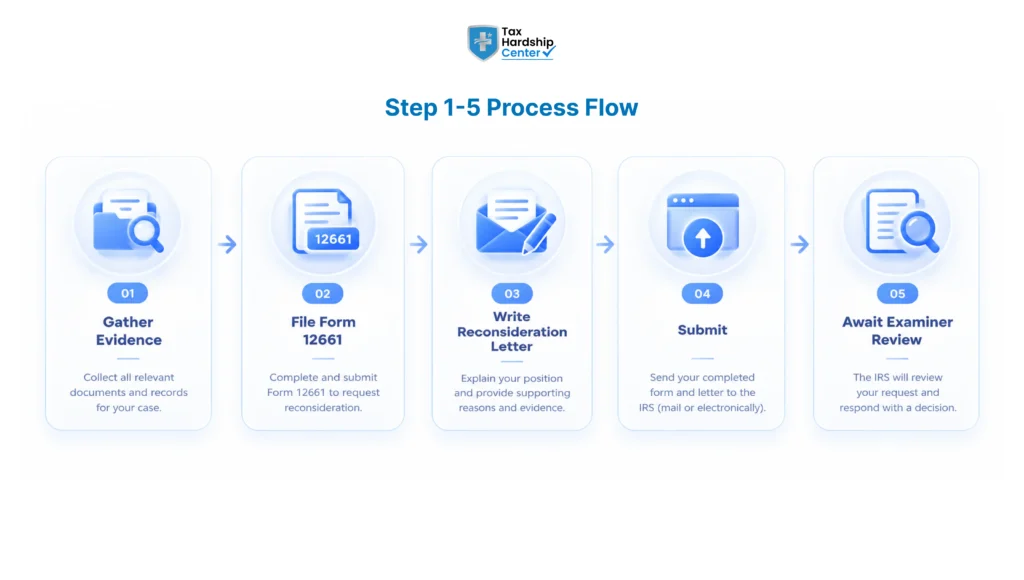
Once your IRS audit reconsideration request is submitted, along with Form 12661 and your supporting documentation, the IRS typically assigns it to an examiner for review. This isn’t an instant process. It can take anywhere from a few weeks to several months depending on the complexity of the case and current IRS processing volume.
During this time, it’s worth noting that submitting a request to reopen an IRS audit doesn’t automatically pause collection activity. If you’re facing a levy or lien risk while your reconsideration is pending, it’s important to also address that separately, since the two processes run on different tracks. Requesting Currently Not Collectible status or a temporary collection hold can buy time while the reconsideration is reviewed.
If the examiner agrees with your new evidence, the IRS will issue a revised determination and adjust your balance accordingly. If they don’t, you still generally retain the right to pursue formal appeal options, so audit reconsideration doesn’t close off other paths even if the first attempt doesn’t go your way.
Common Mistakes That Get Reconsideration Requests Denied
Most denied IRS audit reconsideration requests fail for avoidable reasons. The most common ones include:
- Submitting a request without genuinely new evidence, just restating the original disagreement
- Leaving Form 12661 vague instead of itemizing the specific disputed amounts
- Sending an audit reconsideration letter that reads emotional rather than factual
- Failing to include organized, labeled supporting documents
- Not following up when the IRS requests additional information within their timeline
Taxpayers who treat audit reconsideration the same way they’d treat a general complaint tend to get denied. The ones who treat it like what it actually is, a documentation-driven request, tend to see it move forward. If your case also touches unfiled years or broader compliance issues, our guide on help with back taxes and IRS relief options covers how those pieces fit together.
How Tax Hardship Center Helps With IRS Audit Reconsideration
When a client comes to us wanting to reopen an IRS audit, we start by pulling the original audit file and your IRS transcript to see exactly what was assessed and why. From there, we help identify which specific line items actually have a shot at being overturned based on the documentation you have, rather than guessing at what might work.
Our team prepares Form 12661 with the level of specificity examiners actually respond to, and we draft the accompanying audit reconsideration letter so it reads as a clear, evidence-backed case rather than a general objection. If collection activity is already underway while your reconsideration request is pending, we also coordinate a Currently Not Collectible request or a short-term hold so you’re not dealing with a levy threat and an active reconsideration case at the same time. For clients whose reconsideration doesn’t fully resolve the balance, we assess whether an Offer in Compromise makes sense as the next step to move the case toward resolution.
Frequently Asked Questions
How long does the IRS audit reconsideration process take?
It varies, but most requests take a few weeks to several months depending on case complexity and current IRS processing backlogs. Simple, well-documented requests tend to move faster.
Is Form 12661 required for every audit reconsideration letter?
It’s not always mandatory, but including it strengthens your request by clearly itemizing what you’re disputing and why, which makes the examiner’s review faster and more likely to favor you.
Can I reopen IRS audit results if I already paid the balance?
Sometimes, but if the balance is fully paid, a formal claim for refund or amended return may be a more direct path than standard audit reconsideration.
Does requesting IRS audit reconsideration stop collection activity?
Not automatically. Collection can continue while your request is under review unless you separately request a hold or Currently Not Collectible status.
What counts as new evidence for an audit reconsideration letter?
Records that weren’t available during the original audit, such as bank statements, corrected forms, missed receipts, or proof you never received the original audit notice.
Can I request audit reconsideration more than once?
Generally yes, if you have additional new evidence that wasn’t part of your first request. Repeating the same argument without new documentation is unlikely to succeed.
Conclusion
A closed audit doesn’t have to be the final word on your tax situation. IRS audit reconsideration exists precisely for cases where new evidence, a missed audit appointment, or an address issue led to a result that doesn’t reflect the full picture. The process rewards specificity and documentation, not frustration, and understanding how Form 12661 and a well-written audit reconsideration letter work together gives you a real shot at a different outcome.
Key Takeaways
- IRS audit reconsideration lets you reopen a closed audit when you have genuinely new evidence.
- You can qualify even if you missed the original audit or never received the notice.
- Form 12661 should itemize exact disputed amounts, not restate general disagreement.
- A strong audit reconsideration letter stays factual and specific, not emotional.
- Submitting a request to reopen IRS audit results doesn’t automatically pause IRS collection.
- Requesting Currently Not Collectible status can protect you while reconsideration is pending.
- Vague requests without new documentation are the most common reason for denial.
- The IRS audit reconsideration process can take weeks to several months to resolve.
- If reconsideration doesn’t fully resolve your balance, other relief options remain available.
- Reviewing your original audit file first is the best way to know if you have a real case.
Have new evidence that could change your audit outcome? Get a free case review from Tax Hardship Center and find out if you qualify for IRS audit reconsideration.