
If you’re out of work and worried that owing the IRS will block your benefits, here’s the direct answer: can you get unemployment if you owe taxes is almost always yes. Unemployment benefits are administered by your state, not the IRS, and eligibility is based on your work history and reason for job loss, not your tax balance. But there’s a twist worth understanding, since unemployment benefits themselves are taxable, and that can quietly add to a tax debt problem if you’re not planning for it.
Can You Get Unemployment If You Owe Taxes? The Direct Answer
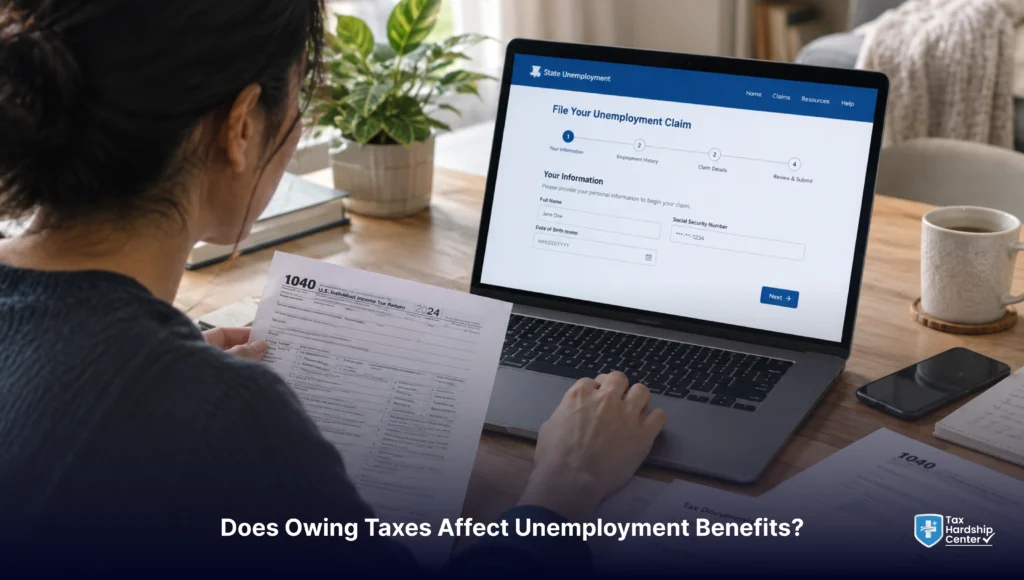
The short answer to can you get unemployment if you owe taxes is yes, in nearly every situation. Unemployment insurance is a state-run program funded through employer payroll taxes, and your eligibility is determined by factors like your recent work history, the reason you lost your job, and whether you’re actively seeking new work. Your IRS balance simply isn’t part of that equation.
This surprises a lot of people who assume that any government debt might somehow disqualify them from a government benefit. It doesn’t work that way here. Can you get unemployment if you owe taxes and haven’t paid a dime toward that balance? Still yes, because the two systems don’t check against each other for eligibility purposes.
How IRS Debt Unemployment Situations Actually Work
When people search IRS debt unemployment, they’re usually trying to understand if there’s some hidden connection between the two systems. There isn’t, at least not at the point of applying for benefits. Your state unemployment office doesn’t run a check with the IRS before approving your claim, and the IRS doesn’t have the authority to block your state unemployment benefits from being approved in the first place.
Where IRS debt unemployment questions get more relevant is after you start receiving benefits, not before. That’s because unemployment income has its own tax implications that a lot of people don’t think about until it’s too late in the year.
Why Unemployment Benefits Tax Debt Problems Often Start Here
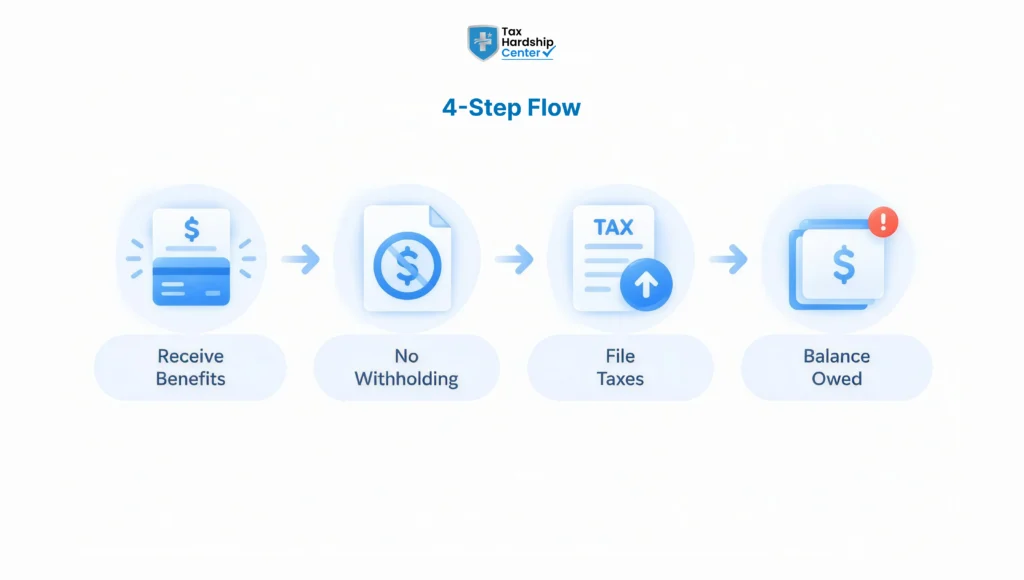
This is the part that actually matters and the part most people don’t realize until tax season arrives. Unemployment benefits tax debt situations usually don’t come from being denied benefits because you owe taxes. They come from the fact that unemployment benefits are fully taxable income at the federal level, and most people don’t have taxes withheld from those payments unless they specifically request it.
When you file your return for a year you received unemployment, that income gets added to your total taxable income, and if nothing was withheld throughout the year, you can end up owing a balance you weren’t expecting. This is one of the most common ways unemployment benefits tax debt situations start, not because unemployment caused a direct tax penalty, but because the income wasn’t planned for at filing time.
If you’re already dealing with a balance from a previous year of unemployment income, our guide on why you might owe more than expected covers how these surprise balances typically get resolved.
Can the IRS Take Your Unemployment Benefits Directly?
This is a separate and more specific question from can you get unemployment if you owe taxes. Once you’re already receiving unemployment benefits, can the IRS actually levy those payments the same way it might levy wages or a bank account?
Technically, yes, the IRS does have the legal authority to levy unemployment compensation, though it’s less common in practice than a wage garnishment or bank levy. If the IRS has exhausted other collection attempts and issued a Final Notice of Intent to Levy, unemployment benefits are not automatically protected the way certain other benefits are. This is different from Social Security, which has specific rules and limits, and unemployment doesn’t carry the same protections.
If you’ve received a notice mentioning levy language while you’re on unemployment, this is worth addressing quickly. Our page on tax levy help explains what stage of collection typically leads to this and what can still be done to stop it.
What Actually Can Affect Your Unemployment Eligibility
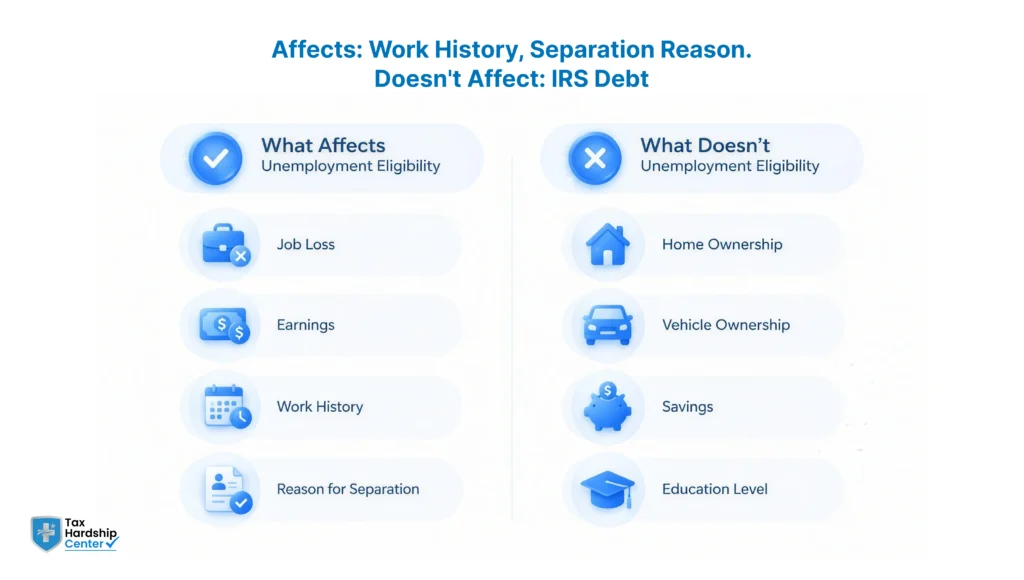
While can you get unemployment if you owe taxes is generally answered yes, there are things that genuinely can affect your unemployment eligibility, and it’s worth knowing the difference:
- Your reason for job separation. Being fired for cause or quitting voluntarily without good reason can affect eligibility, not tax debt.
- Your work search requirements. Most states require you to actively seek work and report that activity to keep receiving benefits.
- Your earnings history. States calculate benefit amounts based on wages earned during a specific base period, which has nothing to do with IRS debt.
- Fraud or misreporting. Providing false information on your unemployment application can affect eligibility, separate from any tax issue entirely.
None of these are related to owing the IRS. If you’re eligible based on work history and separation reason, IRS debt unemployment concerns simply don’t factor into that state-level decision.
Steps to Avoid a Bigger Tax Bill While on Unemployment
If you’re currently receiving unemployment or think you might be soon, a few steps can prevent unemployment benefits tax debt from becoming a problem later:
- Request voluntary withholding. You can elect to have 10% withheld from your unemployment payments for federal taxes using Form W-4V.
- Set aside funds if you skip withholding. If you choose not to withhold, plan to set aside a portion of each payment for taxes owed later.
- Check state tax treatment separately. Some states don’t tax unemployment benefits, but federal tax always applies.
- File on time even if you can’t pay. Filing avoids failure-to-file penalties even if the balance itself takes longer to pay off.
- Address any resulting balance early. A payment plan set up early is easier to manage than a balance left to accrue penalties and interest.
Taking these steps upfront is the difference between a manageable adjustment at filing time and a genuine unemployment benefits tax debt problem that catches you off guard.
How Tax Hardship Center Helps If Unemployment Added to Your Tax Debt
When someone comes to us with a balance that started during a period of unemployment, the first thing we do is pull the full IRS transcript to understand exactly how the debt built up, whether it’s from unwithheld unemployment income, a gap in filing, or a combination of both. Understanding the source matters because it shapes which resolution option actually fits.
From there, we help set up an IRS payment plan that reflects your current income, which is especially important if you’re still between jobs or recently reemployed at a lower income than before. If your finances genuinely can’t support payment right now, we pursue Currently Not Collectible status to pause collection while things stabilize. And if there’s any active levy risk on income or benefits you’re currently relying on, we work to address that directly so you’re not choosing between paying rent and paying the IRS.
Frequently Asked Questions
Can you get unemployment if you owe taxes and are currently on a payment plan?
Yes. Being on an IRS payment plan has no bearing on your unemployment eligibility, which is determined entirely by your state’s work history and separation requirements.
Does IRS debt unemployment affect the amount of benefits I receive?
No. Your benefit amount is calculated based on your prior earnings during your base period, not your outstanding tax balance.
Can unemployment benefits tax debt situations be avoided?
Largely yes, by requesting voluntary withholding on your unemployment payments or setting aside funds throughout the year to cover the tax owed at filing time.
Will the IRS automatically know I’m receiving unemployment?
Yes. Unemployment benefits are reported to the IRS via Form 1099-G, so the income is already on record when you file your return.
Can the IRS levy my unemployment benefits directly?
It’s legally possible, though less common than a wage garnishment or bank levy, and typically only happens after other collection notices have gone unanswered.
Should I file my taxes even if I can’t pay what I owe from unemployment income?
Yes. Filing on time avoids failure-to-file penalties, and any balance owed can be addressed separately through a payment plan or hardship status.
Conclusion
Can you get unemployment if you owe taxes has a reassuring answer for most people: yes, owing the IRS doesn’t affect your state unemployment eligibility. The real issue that tends to surface is unemployment benefits tax debt building quietly in the background because taxes weren’t withheld from those payments throughout the year. Planning ahead with voluntary withholding, or addressing a resulting balance early, keeps a temporary income gap from turning into a longer-term tax problem.
Key Takeaways
- Can you get unemployment if you owe taxes is almost always yes, the two systems are separate.
- IRS debt unemployment concerns don’t affect state-level eligibility decisions.
- Unemployment benefits are fully taxable at the federal level and often go unwithheld.
- Unemployment benefits tax debt usually builds from unwithheld income, not a direct penalty.
- Voluntary withholding through Form W-4V can prevent a surprise balance at filing time.
- The IRS can technically levy unemployment benefits, though it’s less common than wage garnishment.
- Eligibility for unemployment depends on work history and separation reason, not tax debt.
- Filing on time avoids penalties even if you can’t pay the full balance right away.
- Form 1099-G means the IRS already has a record of your unemployment income.
- Addressing a resulting tax balance early prevents it from growing through penalties and interest.
Did unemployment income leave you with an unexpected tax balance? Get a free case review from Tax Hardship Center and find a payment path that fits your situation.