

Nobody calls to tell you. That is the part people never expect.
A federal tax lien can sit against your name for weeks before you know it exists. No knock on the door. Just a filing sitting quietly in a public record, waiting for a lender to stumble on it before you do. If you owe back taxes and want to know whether the IRS already moved on your property, learning how to look up federal tax lien records is the fastest way to get a real answer.
Quick answer:
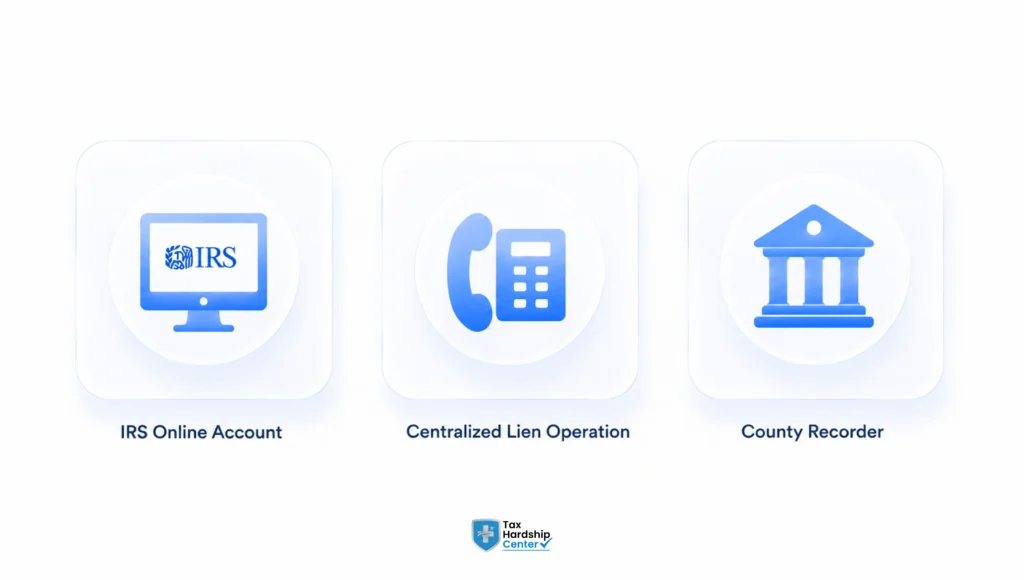
- To look up federal tax lien, check your county recorder or clerk’s office, your Secretary of State’s business filing site, or your IRS Online Account.
- A Notice of Federal Tax Lien is a public record. Anyone with your name and county can find it.
- You can also call the IRS Centralized Lien Operation directly to look up IRS tax lien tied to your account.
- Credit reports no longer show tax liens, so you cannot rely on your credit score to catch one.
- The fastest way to look up federal tax lien filings tied to your own account is your IRS tax transcript.
What Happens Before a Lien Gets Filed
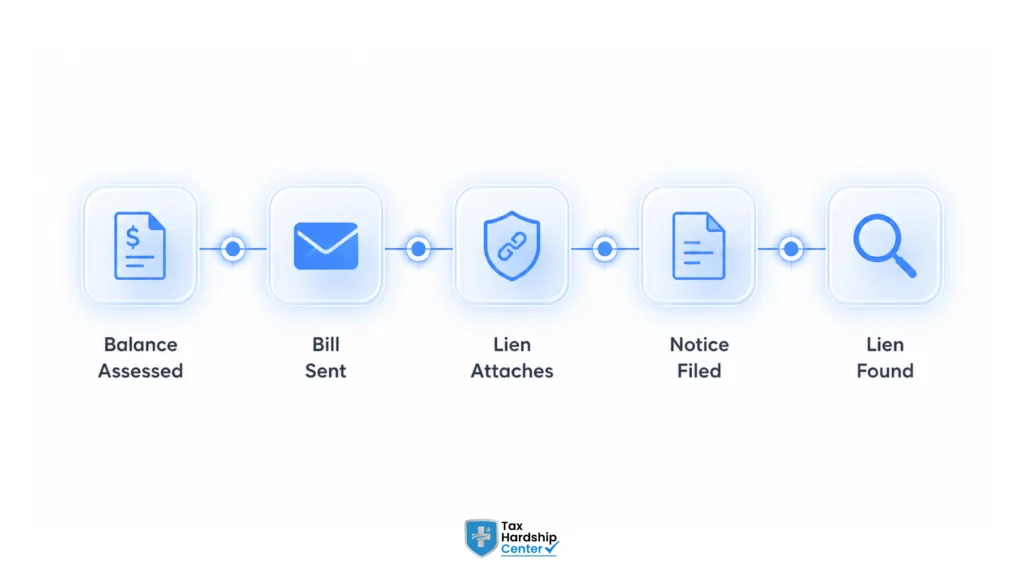
A lien does not appear out of nowhere. The IRS assesses a balance, sends a bill, and if that bill goes unpaid, a federal tax lien attaches to everything you own automatically, by law. A notice of federal tax lien is the separate, public paperwork the IRS files afterward to tell the world the government has a claim on your stuff.
That gap between the lien existing and the notice getting filed is why so many people never see it coming. By the time you go to look up federal tax lien filings, it may already have been sitting there a while.
Why You Might Not Know a Lien Exists Yet
Mail gets missed. People move. And here is the twist that surprises almost everyone: credit bureaus stopped reporting tax liens years ago. So the old advice, “just check your credit report,” does not work anymore. If you want to look up IRS tax lien activity tied to your name, your credit score will not help.
Taxpayers often discover a lien when a mortgage lender pulls a title search, or a business owner finds out during a loan application. Neither is a good time to be surprised, which is why people rush to look up IRS tax lien details the moment something feels off.
How to Look Up Federal Tax Lien Records Online
The most direct way to look up federal tax lien starts with your own IRS Online Account. It shows your current balance by tax year, a strong hint something is active even without displaying the lien filing itself.
For a full internal revenue service tax lien search, request your tax account transcript, which records assessments, penalties, and lien activity tied to your Social Security number or EIN. Pull it online or by mailing Form 4506-T. Running an internal revenue service tax lien search on someone else’s property means you will not have transcript access, so county records become your source instead.
How to Look Up Federal Tax Lien Filings Through County Records
Every notice of federal tax lien gets filed publicly, usually with the county recorder or clerk’s office where you live, and separately with the Secretary of State for business liens. It is public record, so anyone can look up federal tax lien filings under your name, not just you.
To search county records:
- Identify the county where you lived or ran your business when the lien would have been filed.
- Visit that county recorder’s site or call their office.
- Search by your full legal name, since liens are indexed that way, not by tax ID.
- For business liens, check the Secretary of State’s filing database in that state.
State systems often lag behind IRS records by a few weeks, so a fresh notice of federal tax lien might not show up right away.
Calling the IRS Directly for a Tax Lien Search
If online tools feel like a maze, the phone still works. Calling the IRS Centralized Lien Operation at (800) 913-6050 is the most reliable way to look up IRS tax lien records tied to your account. Have your Social Security number or EIN ready, plus your address history, since older liens sometimes get filed under a previous address.
This route works well if you already suspect a lien exists because of a CP504 or LT11 notice and just need to look up federal tax lien confirmation before your next move.
What You Need Before You Start Your Search
A little prep saves a lot of back and forth. Before you look up federal tax lien records or look up IRS tax lien details by phone, gather:
- Your full legal name and any name variations used on past returns
- Social Security number or EIN
- Current and past addresses for the last several years
- Approximate tax years you believe you may owe for
- Any IRS notices you have already received, even old ones
Having this ready makes an internal revenue service tax lien search go faster, whether you are doing it online, by phone, or through county records.
What to Do If You Find a Lien
Finding a notice of federal tax lien is not the end of the story, it is the start of fixing it. Full payment triggers a release within 30 days. Short of that, options like an installment agreement, an Offer in Compromise, or a lien withdrawal or subordination can reduce its impact while your case moves forward.
The worst move is doing nothing. An unresolved lien keeps affecting your credit applications, business financing, and property sales long after you find it.
How Tax Hardship Center Helps After You Find a Federal Tax Lien
Tax Hardship Center runs a full internal revenue service tax lien search against your IRS account transcript and cross-checks county and state filings to confirm which liens are active, what tax years they cover, and whether the notice was filed correctly. That step alone catches errors that sometimes get a lien reduced or withdrawn outright.
Once a lien is confirmed, THC builds the resolution path around it, whether that means structuring an installment agreement that keeps payments realistic, preparing an Offer in Compromise package that documents your ability to pay, or requesting Currently Not Collectible status when income will not support a payment plan. For taxpayers mid-transaction, like a pending home sale, THC also handles the paperwork for lien discharge or subordination requests so the deal is not held up.
This is not a generic case review. It is matching the lien situation to the fix that moves it.
FAQs
How do I look up federal tax lien on my own name?
Check your IRS Online Account for balances, request a tax account transcript, or call the IRS Centralized Lien Operation at (800) 913-6050 with your Social Security number ready.
Can I look up IRS tax lien on someone else’s property?
Yes. Since a Notice of Federal Tax Lien is public record, you can search county recorder or clerk records using the person’s full legal name to look up IRS tax lien filings tied to them.
Will my credit report show a federal tax lien?
No. Major credit bureaus stopped including tax liens on credit reports, so an internal revenue service tax lien search has to go through IRS or county sources instead.
How long does it take a Notice of Federal Tax Lien to show up in county records?
It can take a few weeks after the IRS files it, since county and state systems often lag behind federal filings.
Does looking up a federal tax lien cost anything?
No. County records, your IRS Online Account, tax transcripts, and calling the IRS are all free ways to look up federal tax lien.
What should I do immediately after I find a lien?
Confirm the tax years and amount, then look into resolution options like an installment agreement, an Offer in Compromise, or CNC status before the lien affects financing or property plans.
Conclusion
Learning how to look up federal tax lien takes away the guesswork that keeps people stuck. Between your IRS Online Account, a tax transcript request, county recorder records, and a direct call to the Centralized Lien Operation, you have four solid ways to confirm what is actually on file. Once you know, you can act. Waiting to find out rarely makes the number smaller.
Key Takeaways
- A federal tax lien can exist before you receive any notice, so knowing how to look up federal tax lien matters.
- The Notice of Federal Tax Lien is public record, filed with county recorders and state offices.
- Credit reports no longer show tax liens, so checking your credit score will not confirm one.
- An IRS Online Account shows your balance, which is often the first clue something is active.
- A tax account transcript is the most complete way to run an internal revenue service tax lien search on your own account.
- The IRS Centralized Lien Operation at (800) 913-6050 can confirm a lien over the phone.
- County and state filing systems can lag behind IRS records by a few weeks.
- Business liens get filed separately with the Secretary of State where the business is registered.
- Full payment releases a lien within 30 days, but other options exist before then.
- Finding a lien early gives you more room to resolve it before it affects financing or property sales.
Not sure where to start? Get a free case review from Tax Hardship Center and find out exactly what is on file against you.