

The IRS does not always get the collection call right. A levy hits before it should. A lien gets filed when a payment plan was already in place. An installment agreement gets terminated over a technicality. When that happens, Form 9423 is the tool that puts the brakes on and gets a second set of eyes on the decision.
This guide walks through what IRS Form 9423 actually does, when to use it, and how the timing works, since missing a deadline on this form can mean losing your shot at an appeal entirely.
Quick answer:
- IRS Form 9423 is the Collection Appeal Request, used to challenge a lien, levy, seizure, or installment agreement action under the Collection Appeals Program.
- Filing an IRS Form 9423 Collection Appeal Request generally pauses the collection action while your case is reviewed.
- Form 9423 instructions require requesting a manager conference first, except for installment agreement disputes.
- Knowing where to mail Form 9423 matters, since it goes to the Collection office that took the action, not directly to Appeals.
- The Collection Appeals Program decision is final, which makes this route faster than a CDP hearing but without judicial review afterward.
The Collection Appeals Program is described in full under IRS Publication 1660, which outlines your appeal rights alongside CDP and CAP options.
What This Collection Appeal Covers
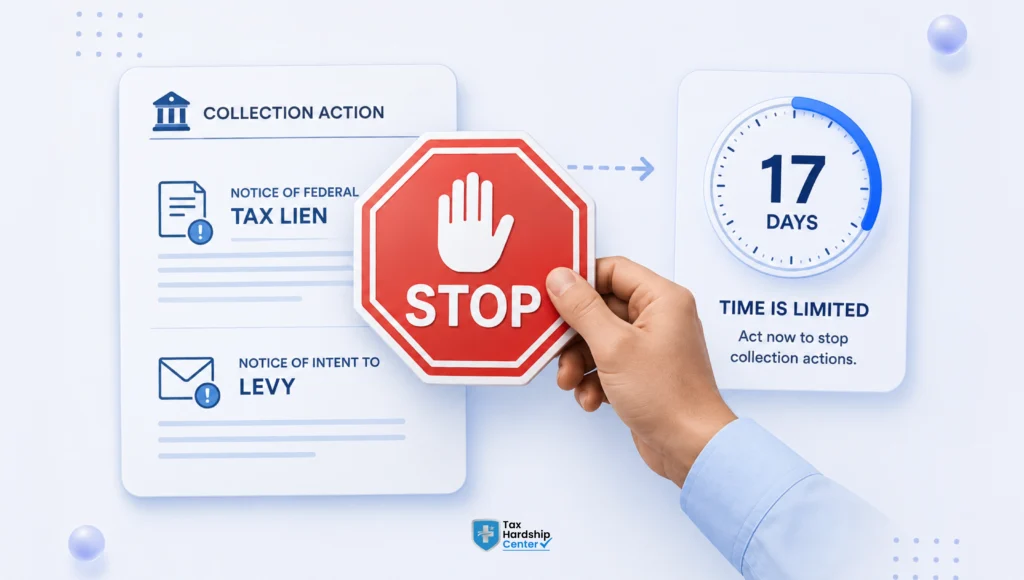
Form 9423 exists under the Collection Appeals Program, and it lets you challenge specific IRS collection actions before or shortly after they happen. This includes a federal tax lien filing, a bank or wage levy, an asset seizure, or the rejection, modification, or termination of an installment agreement.
What this form does not do is reopen the underlying tax debt itself. The appeal only looks at whether the collection action followed proper procedure, not whether you actually owe the money. If you are disputing the liability itself, Form 9423 is the wrong tool, and a different process applies.
The Timing That Makes or Breaks Your Collection Appeal Request
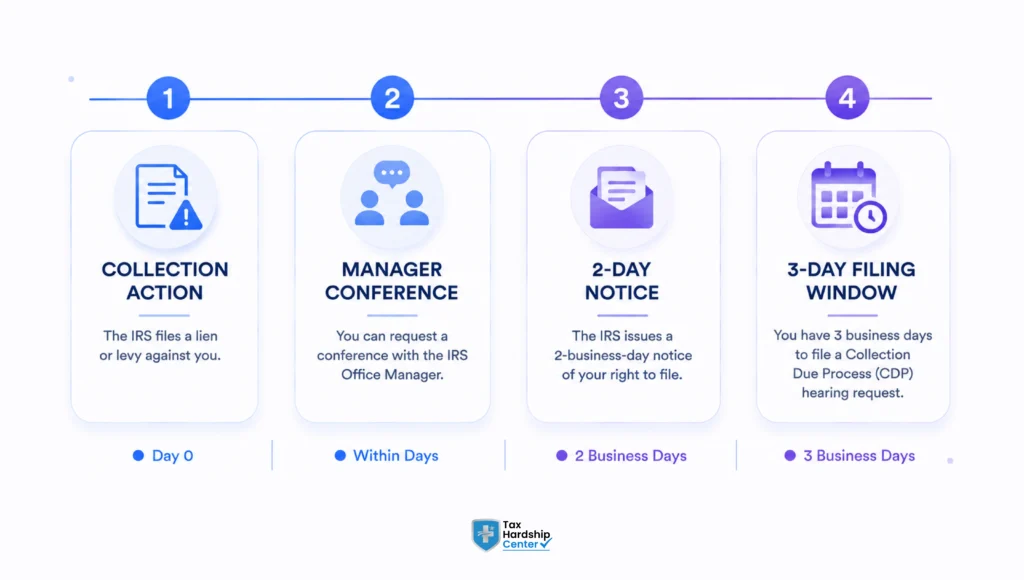
Timing is where most people trip up on an IRS Form 9423 Collection Appeal Request. For most lien, levy, and seizure disputes, you first request a conference with the Collection manager. If that conference does not resolve things, you have two business days to notify the Collection office you plan to file, and the completed form must be received or postmarked within three business days of that conference.
For seizures specifically, the clock starts differently. You must appeal to the Collection manager within ten business days after the Notice of Seizure is provided. Installment agreement disputes skip the conference requirement entirely, so you can file the appeal directly once your agreement is rejected, modified, or terminated.
Miss these windows, and the IRS can resume collection activity while you are still trying to sort out your appeal.
Form 9423 Instructions: Filling Out the Form Correctly
Form 9423 instructions keep the form itself fairly short, one page with 17 fields, but the details matter. You will need your name, Social Security number or EIN, contact information, the type of tax and tax period involved, and the specific collection action you are appealing.
The section that carries the most weight in the form 9423 instructions is your explanation. State clearly and factually why the action was wrong or premature, and attach documentation that supports your position, like proof of a payment that was not credited or evidence a payment plan was actually current. Following the instructions closely here matters more than anywhere else on the form, since vague or emotional explanations rarely move an Appeals Officer.
If someone is representing you, the form 9423 instructions require attaching Form 2848, Power of Attorney and Declaration of Representative, alongside your submission.
Where to Mail Form 9423 and Why It Matters
Knowing where to mail Form 9423 is not optional detail, it is the difference between a valid appeal and a missed deadline. Unlike some IRS forms that go directly to a central processing center, this one depends on which office took the collection action against you. It goes to that local Collection office or the revenue officer named on your notice, not to the Appeals Office directly.
If you are unsure where to mail Form 9423, check the notice that triggered the dispute, since it typically lists the office and address involved. Sending it to the wrong location can delay the pause on collection activity you are trying to secure. Whatever you do, keep a copy and use certified mail or a fax confirmation, since proving timely filing matters if a dispute arises later.
How IRS Form 9423 Compares to a CDP Hearing
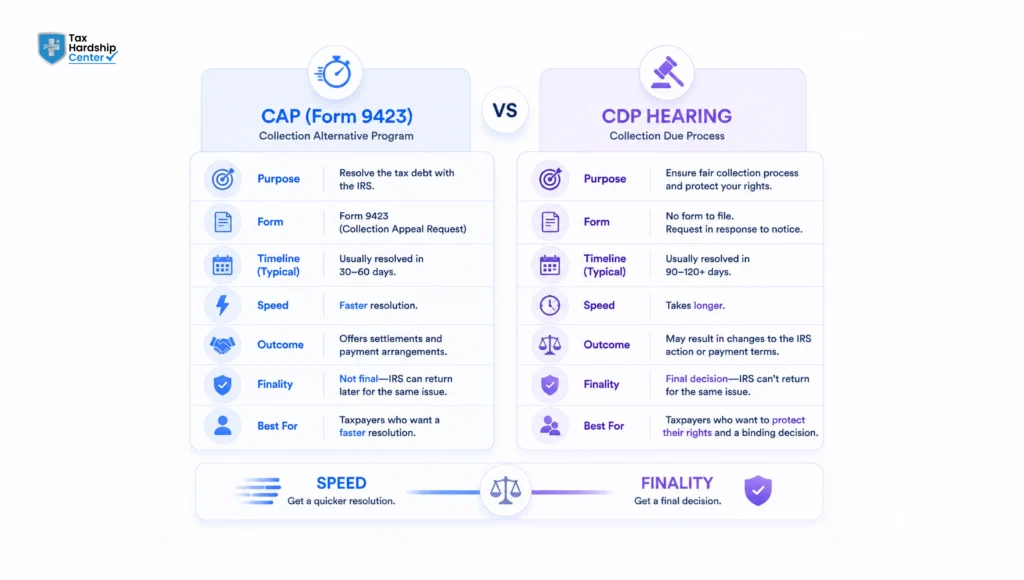
This appeal route is often faster than a Collection Due Process hearing, sometimes resolving in days instead of months. But that speed comes with a tradeoff. A CAP decision is final, with no option to take the dispute to Tax Court afterward, unlike a CDP hearing which preserves judicial review.
If your case might eventually need court review, a CDP hearing tied to a levy notice may be the better path even though it takes longer. This appeal route works best when speed matters more than preserving every future option.
How Tax Hardship Center Handles Form 9423 Appeals
Tax Hardship Center reviews the timeline first before anything else, checking exactly when the collection action occurred, when the manager conference happened, and how many days remain to file within the required window. Missing that window is one of the most common ways a valid appeal never gets heard.
From there, THC builds the factual explanation the form 9423 instructions require, pulling account transcripts and payment records to document exactly why the lien, levy, or terminated installment agreement was improper, rather than relying on a general complaint. THC also confirms where to mail Form 9423 based on the specific Collection office involved and tracks delivery so there is proof the appeal was filed on time.
This is not paperwork filed and forgotten. It is managing the appeal from the conference request through the final Appeals decision.
FAQs
What actions can I appeal with an IRS Form 9423 Collection Appeal Request?
Liens, levies, seizures, and rejected, modified, or terminated installment agreements all qualify for a Collection Appeal Request.
How long do I have to file after a seizure?
Ten business days from when the Notice of Seizure is provided, which is different from the three business day window for most other lien and levy disputes.
Where do I mail Form 9423?
To the local Collection office or revenue officer that took the action, listed on your IRS notice, not directly to the Appeals Office.
Does filing this appeal stop collection activity?
Generally yes, filing within the required window pauses further collection action while your appeal is under review.
Can I appeal the underlying tax debt using an IRS Form 9423 Collection Appeal Request?
No. This form only challenges the collection action itself, not whether the tax liability is correct.
Is a CAP appeal final?
Yes. Unlike a CDP hearing, a Collection Appeals Program decision cannot be taken to Tax Court afterward.
Conclusion
IRS Form 9423 gives taxpayers a real, fast option to challenge a lien, levy, seizure, or installment agreement action, but only if the timing and documentation hold up. Know the form 9423 instructions, understand where to mail Form 9423 for your specific situation, and file your IRS Form 9423 Collection Appeal Request within the strict deadlines involved. Miss the window, and the IRS can resume collection while you are still gathering your case.
Key Takeaways
- IRS Form 9423 lets you challenge liens, levies, seizures, and installment agreement actions through the Collection Appeals Program.
- Filing an IRS Form 9423 Collection Appeal Request generally pauses collection activity during review.
- Most disputes require a manager conference first, with a three business day filing window afterward.
- Seizure appeals follow a different ten business day window from the Notice of Seizure.
- Form 9423 instructions require a clear factual explanation and supporting documentation.
- Knowing where to mail Form 9423 correctly avoids delays that can cost your appeal window.
- CAP decisions reached this way are final, unlike CDP hearings which preserve court review.
- Installment agreement disputes can go straight to this form without a prior conference.
- Missing filing deadlines on an IRS Form 9423 Collection Appeal Request allows the IRS to resume collection while your case is unresolved.
- Documentation quality often decides whether a Collection Appeal Request succeeds.
Facing a lien, levy, or terminated payment plan? Get a free case review from Tax Hardship Center and find out if IRS Form 9423 fits your situation.