
Families ask one thing first about the fresh start program cost. What will I pay, and what will I save compared with interest and penalties if I do nothing. The IRS Fresh Start rules center on three main pathways. You can set up an installment agreement up to 72 months, settle for less through an Offering Compromise Program, or prove hardship for Currently Not Collectible status. Some taxpayers ask about bankruptcy proceedings and whether they clear tax liability, but bankruptcy does not always remove tax debts. The right pathway depends on your debt size, monthly cash flow, and equity in assets. Choose an option that avoids garnishments, protects wages, and resolves liabilities with a repayment plan you can sustain. Fix your tax filing status, review your qualifications, and seek a consultation if needed. Staying current with tax deposits prevents asset seizures and keeps you on track.

IRS Fresh Start 72-Month Installment Agreement Explained
The Fresh Start initiative created a streamlined pathway for many taxpayers to repay over time without submitting a full financial packet. This 72-month installment agreement spreads tax debt across up to six years if you meet eligibility requirements and agree to direct debit. Interest and penalties still accrue, so a long repayment term can increase total liability. You also avoid seizures and wage garnishment when you remain compliant. This section provides a breakdown of how these repayment plans function, the nuances of eligibility criteria, and what to expect when you review installment agreements.
How streamlined installment agreements work
Streamlined installment agreements create predictable payments with minimal paperwork when your balance fits IRS limits. You apply online through the IRS website, choose a draft date, and allow direct debit from your bank account. You do not submit a full financial packet for streamlined cases, which speeds approval. You must stay current with tax filings and deposits during the plan because new liabilities can cause default. If you remain compliant, you pause collections and gain breathing room to manage household needs.
Direct debit rules and the $50,000 limit
Direct debit lies at the center of streamlined approvals. Most taxpayers qualify when their assessed tax liability, penalties, and interest total $50,000 or less. Businesses with payroll tax debt face stricter qualifications and must show more accounting detail. If you exceed the limit, you can pay a lump sum to bring the balance under the cap. Once approved, the direct debit plan reduces review frequency and protects against wage garnishment.
Interest, penalties, and setup fees still apply
An installment agreement does not erase interest, penalties, or prior liabilities. The IRS charges a setup fee, with lower costs for direct debit. Interest accrues daily on the unpaid balance, and penalties add each month until full payment. Many taxpayers underestimate this breakdown of costs and later seek penalty abatement. You can reduce cost with Tax Lien Relief Options like abatement or lien withdrawal, and by sending extra payments when possible.
When a partial-pay plan makes more sense
Some taxpayers cannot pay in full before the collection statute expires even with 72 months. In these cases, a partial-pay installment agreement may prove more effective than bankruptcy or an OIC rejection. The IRS reviews your income, unemployment benefits, and assets to set a lower monthly payment. This pathway fits if you show inability to pay more without hardship. Over time, some liabilities may expire under statute while you remain protected from seizures and garnishments.
Tax Relief Costs: Is It Worth It?
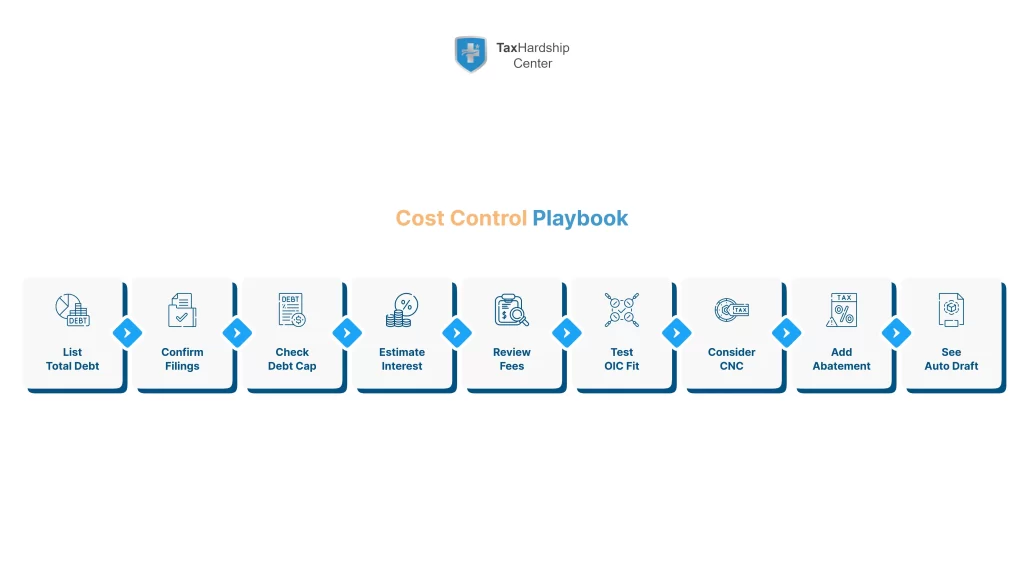
People weigh the cost of relief against the risk of asset seizures and tax liens. Relief options carry IRS fees, potential professional fees, and accruing interest and penalties. The key question is whether the relief saves more than it costs. Review installment agreements carefully and compare repayment plans against other relief pathways such as OIC or CNC. The Offering Compromise Booklet explains settlement nuances, and using pre-qualifier tools helps determine if an OIC suits you. An informed breakdown of each option’s costs simplifies your decision.
IRS fees for each relief option
The IRS charges fees for installment agreements, for OIC applications, and for lien withdrawal requests. Direct debit plans cost less to set up. OIC requires a fee unless waived under low-income rules. A Tax Lien Withdrawal Request has no fee but requires performance history. Always review the Offering Compromise Complete booklet and IRS pre-qualifier before filing. See the IRS overview for offers in compromise and payment plans for current fees and rules.
Typical professional fees
Professional help adds value when you owe back taxes, face multiple liabilities, or risk seizures. Firms may charge higher fees for OIC or bankruptcy consultations than for simple repayment plans. Request a written breakdown of services and milestones. A credible firm maintains a transparent website and answers your email questions promptly. Quality accounting ensures your filings and liabilities are accurate. For deeper reading, explore our guide on IRS payment plans, which compares options and common costs.
Interest and penalties over 24, 48, 72 months
Interest and penalties accumulate quickly, especially with payroll tax debt. A 72-month plan reduces monthly repayment but raises total liability. Some taxpayers pick shorter terms to cut interest. Others combine penalty abatement with a longer plan. Always review installment agreements and how unemployment benefits or job changes affect your repayment ability. A consultation helps clarify break-even points. Read our explainer on streamlined installment agreements for real timelines and interest effects.
When an OIC beats a payment plan
An OIC saves money when your reasonable collection potential is far below your tax liability. For specifics on payment structures and pitfalls, see our primer on OIC payments and our walkthrough of IRS Form 656. Submitting a complete Offering Compromise Program packet with all documents and eligibility criteria increases approval odds. Accepted offers end years of interest and penalties and stop seizures. If rejected, you may face renewed garnishments, so preparation matters. Use the IRS pre-qualifier tool to test eligibility and review the official OIC rules.
When CNC status saves more
CNC status pauses garnishments and levies when you prove inability to pay basic expenses. If wage issues loom, learn fast steps in our wage garnishment guide. Interest and penalties continue, but the IRS halts seizures. Some liabilities expire during CNC if the statute runs. It is a pathway for those unemployed or under ongoing financial stress. Review CNC alongside other relief to find the best match.
How Tax Hardship Center Helps You Choose the Smartest Path
Our services at Tax Hardship Center focus on clarity, speed, and protection. We assess your numbers, then match you to the right relief option so you avoid missteps that cause defaults or liens. If a settlement looks viable, we guide your Offer in Compromise using our dedicated service pages like our Offer in Compromise program and IRS repayment program. When a plan fits better, we help you set a compliant Installment Agreement and evaluate payroll tax debt risks for business owners. We also handle full tax-debt relief strategies that combine penalty relief and lien solutions so you keep your budget intact.
Explore our Offer in Compromise service, our IRS Repayment Program, the Installment Agreement service, Payroll Tax Debt Relief, and comprehensive Tax Debt Relief and Settlement Services.
Who Qualifies for the IRS Fresh Start Program
Eligibility criteria depend on the relief path. Streamlined agreements need balances under caps and direct debit repayment. OIC requires full financial disclosure, while CNC requires proof of hardship. Bankruptcy may discharge old liabilities, but many tax debts survive bankruptcy proceedings. Understanding qualifications prevents wasted time and helps avoid wage garnishment.
Who qualifies for streamlined agreements
Streamlined agreements suit taxpayers with liability under $50,000, current filings, and direct debit repayment. This pathway fits many wage earners and small businesses without payroll tax debt. Use the IRS Online Payment Agreement portal on the website for faster setup. Always review installment agreements before finalizing.
If you apply and aren’t eligible
If the IRS denies your request, fix compliance gaps. File missing returns, correct your tax filing status, and repay enough to meet eligibility criteria. If you remain ineligible, explore CNC, OIC, or bankruptcy. Always keep documents ready for appeal. Protect income from garnishments during the process.
Required tax filings and current-year compliance
You must stay current with all tax filings, deposits, and liabilities. The IRS will not approve plans if you miss filings or deposits. Businesses must meet payroll tax debt obligations to qualify. Organized accounting records improve your approval chances.
IRS hardship and ability-to-pay tests
The IRS reviews income, expenses, assets, and liabilities to gauge repayment ability. They measure deposits, unemployment benefits, and housing costs against standards. Inability to pay full liability may qualify you for CNC or OIC. Provide a complete breakdown with clean accounting to show hardship and prevent seizures.
Reality: Qualifying Isn’t Automatic
Approval is not automatic. Some applicants fail by ignoring nuances, skipping filings, or overlooking assets. IRS systems cross-check W-2s, 1099s, and bank deposits. If numbers don’t align, denial follows. Know the eligibility requirements before applying.
Why applicants miss Fresh Start criteria
Common misses include underreporting liabilities, overlooking payroll tax debt, or failing to attach required documents like the Offering Compromise Booklet. Others apply without fixing unfiled years or correcting their filing status. The IRS evaluates income, assets, and expenses closely. Careful accounting prevents denials.
How the IRS reviews income, assets, expenses
The IRS reviews pay stubs, deposits, housing costs, vehicles, and unemployment benefits. They weigh liabilities against repayment capacity. If repayment seems possible, OIC may fail. If hardship is clear, CNC may be approved. Provide thorough, accurate submissions to avoid seizures.
Why unfiled returns and past-due balances matter
Unfiled returns show noncompliance and block relief. Past-due balances add liabilities and can exceed streamlined caps. File all returns, correct your tax filing status, and attach proof of deposits. Consistent compliance improves odds of Tax Lien Relief or compromise approval.
Work With Tax Hardship Center Before You Apply
At Tax Hardship Center, we help you avoid false starts and wasted fees by matching your facts to the right relief on day one. Our specialists build precise repayment plans, prepare complete OIC packets, and map lien relief so you can refinance or sell when needed. Start with the service that fits your case, then stack support as your situation changes. Tap our core offerings to move fast and stay compliant without surprises.
Start with the right service for your case, including our Offer in Compromise service, Installment Agreement service, Tax Debt Relief and Settlement Services, and Payroll Tax Debt Relief.
In summary…
Fresh Start gives real tools to pay, settle, or pause collection in ways that match your budget. The cheapest path depends on your numbers, your equity, and your ability to stay compliant. Use direct debit to qualify faster, stack penalty relief where you can, and keep records tight for reviews. Here is a quick wrap-up you can use right away.
- Streamlined plans help most when balances sit under set limits and you can draft each month.
- Direct debit lowers setup fees and opens lien withdrawal after on-time payments.
- Pay extra when possible to shrink interest and cut months off the plan.
- Direct debit lowers setup fees and opens lien withdrawal after on-time payments.
- OIC wins when your reasonable collection potential lands far below the debt.
- Strong packets with proof beat guesses and save time on appeals.
- Stay compliant for five years after acceptance to lock the savings.
- Strong packets with proof beat guesses and save time on appeals.
- CNC protects you when you cannot pay anything without skipping essentials.
- Reviews can change your status, so keep documents and respond fast.
- Interest keeps running, but levies usually pause while you recover.
- Reviews can change your status, so keep documents and respond fast.
- Penalty abatement reduces total cost across many paths.
- First-time abatement needs a clean three-year history.
- Reasonable cause relief needs dates, documents, and a clear story.
- First-time abatement needs a clean three-year history.
In short, match the tool to your budget and your facts, not to a pitch. Keep filings current, fix withholding, and choose the path that you can sustain. Small, steady moves beat heroic swings that risk default.
FAQs
Is the IRS Fresh Start program legitimate?
Yes. Fresh Start describes real policy changes that expanded access to known relief tools such as streamlined installment agreements, lien withdrawal, and offers in compromise. It is not a magic erase button, and it does not cancel interest. It helps real taxpayers resolve debt with simpler rules when they follow compliance.
What does the 72-month plan cost?
You pay a setup fee, monthly drafts, and ongoing interest and penalties until you finish. Direct debit lowers the setup fee and reduces default risk. Total cost depends on your balance and how fast you pay down principal. You cut cost by paying extra and by winning penalty abatement.
What do tax relief firms charge?
Fees vary by case complexity, number of years, and whether you need appeals. Streamlined plans cost less than OIC or CNC cases that require full financials. Ask for a written scope, milestones, and clear deliverables. Pay for strategy and measurable results, not for broad promises.
Does Fresh Start include penalty abatement?
Fresh Start did not create abatement, but many taxpayers pair a plan or OIC with first-time or reasonable cause penalty relief. Abatement lowers total cost and can make a long plan workable. The IRS grants relief when you meet rules and present strong proof.
Can I get lien withdrawal on a plan?
Yes, in many cases. If you owe under qualifying limits, use direct debit, and make a set number of on-time payments, you can request withdrawal. You must keep filing and payment duties current. If you default, the IRS can refile the lien.