


Introduction
Tax relief service costs vary widely across the United States, mainly because each case carries a distinct financial profile, compliance history, and level of IRS involvement. Many taxpayers seeking relief face multiple years of unfiled returns, escalating penalties, and collection notices that introduce new layers of complexity. These conditions shape the amount of professional labor required, which, in turn, determines how tax relief firms set their prices. An accurate understanding of the cost structure begins with how the IRS interprets a taxpayer’s financial condition, how much information must be reconstructed, and the level of negotiation needed to reach a compliant resolution.
The tax relief industry operates within a regulated framework shaped by IRS documentation, transcript data, and legally defined resolution programs. Costs are tied to how those programs are matched with a taxpayer’s financial reality. When liabilities span several years or involve business income, investment activity, or payroll-related issues, the time required to establish compliance and build a defensible position increases. This makes pricing less about a flat formula and more about case-specific analysis.
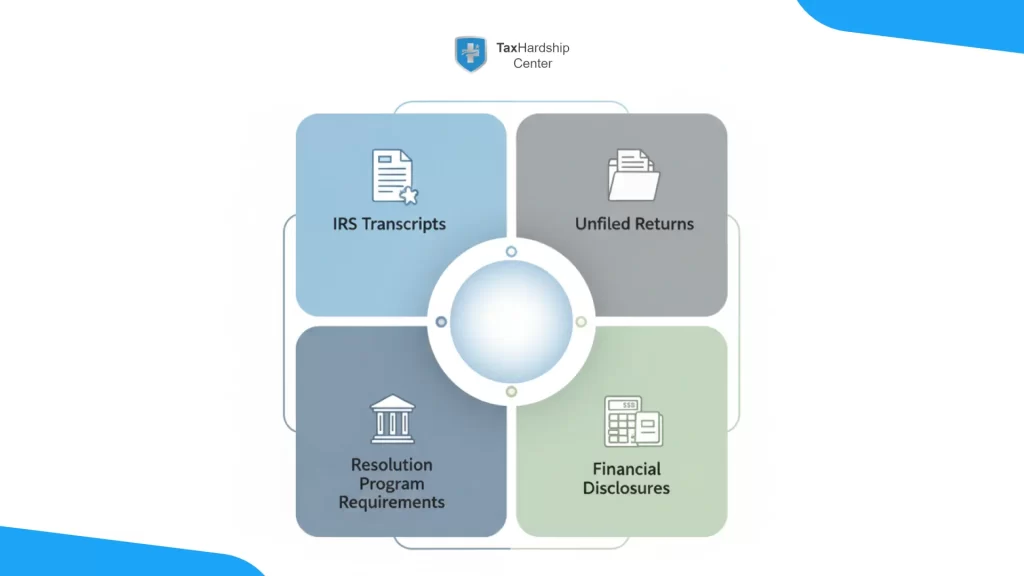
The most significant cost drivers involve a series of interconnected factors. Transcript reviews reveal the IRS’s internal codes, balances, and notices, which allow professionals to determine what the government may accept or reject. Financial disclosures establish reasonable collection potential, a foundational metric that drives nearly every resolution strategy. Document preparation, communication with IRS personnel, and the filing of missing returns contribute to additional workload. Tax relief services are built on this chain of obligations, and their cost reflects the precision and accuracy required at each stage.
Understanding how these components fit together clarifies why firms price services differently. Some cases require extensive analysis of assets, bank activity, business records, or hardship indicators. Others involve straightforward liabilities with minimal documentation. A more informed perspective helps readers evaluate how much work a provider must complete to achieve a sustainable, compliant result.
Key Takeaways
- Tax relief service costs are tied to IRS transcript data, compliance gaps, and the taxpayer’s financial condition.
- Larger and multi-year liabilities typically increase the labor required for analysis and negotiation.
- Reasonable collection potential determines which IRS programs apply and influences total service cost.
- Unfiled returns, inconsistent income, and collection notices often lead to higher professional fees.
- Accurate expectations reduce the risk of misleading quotes or incomplete service descriptions.
Core Factors That Determine the Cost of a Tax Relief Service
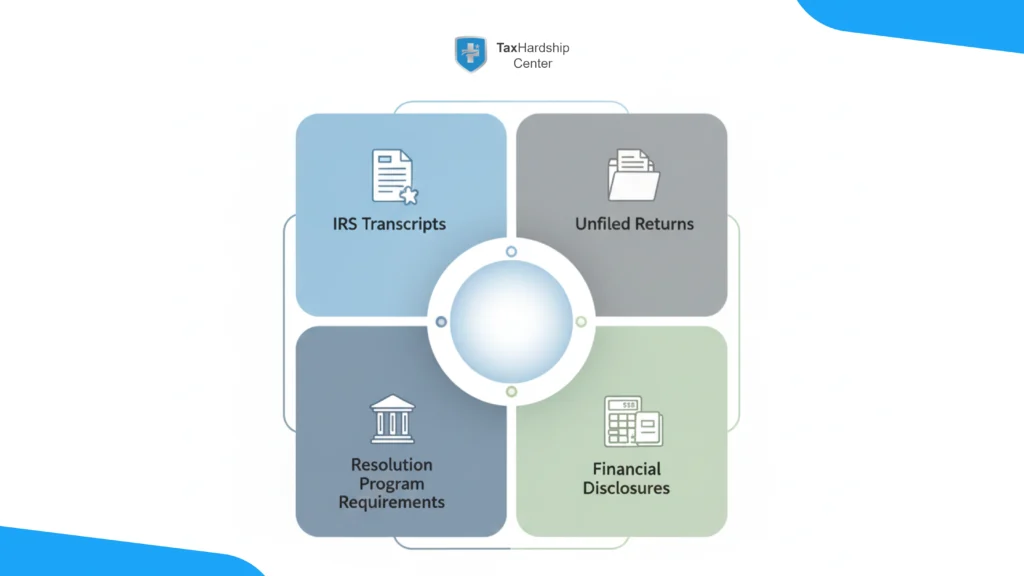
Tax relief service pricing depends on a set of predictable variables, each linked to how the IRS views the taxpayer’s financial situation, filing history, and available resources. These variables reveal the level of documentation required to support an appropriate resolution strategy and indicate the extent of advocacy or negotiation needed. While firms use different fee models, the underlying determinants remain consistent because every case must satisfy IRS procedural standards.
Liability Size and Its Influence on Case Complexity
Larger balances generally involve more notices, more potential penalties, and more years of activity. Tax relief specialists review every assessed year to determine what the IRS recorded and whether additional assessments may still be pending. The evaluation becomes more complex when penalties have accrued for years of non-filing or when a taxpayer has inconsistent income across multiple periods.
Key complexity triggers include:
- Liabilities above thresholds that prompt additional IRS scrutiny
- Multi-year balances requiring sequential transcript reconstruction
- Business-related income or payroll tax components
- Penalty layers involving failure-to-file, failure-to-pay, and accuracy charges
These elements require deeper review and increase the documentation workload, which affects service pricing.
IRS Transcript Data as a Cost Determinant
Transcript analysis reveals what the IRS already knows and what still needs correction. Specialists interpret master file codes, pending actions, and compliance gaps. Additional time is required when transcripts contain:
- Unposted returns
- Inconsistent wage or income reporting
- Substitute-for-return assessments
- Indicators of automated collection activity
Each transcript issue shapes the case plan, influencing the amount of labor required and, therefore, the fee.
Unfiled Tax Returns and Their Impact on Service Pricing
Missing returns require reconstruction of income, deductions, and credits using wage records, bank statements, or third-party data. The process increases cost because every unresolved year must be brought into compliance before any negotiation can occur. If multiple years are missing, returns must be prepared in chronological sequence, and additional communication with IRS functions becomes necessary.
Financial Condition and Reasonable Collection Potential (RCP)
RCP represents the IRS’s calculation of how much can realistically be collected. Establishing RCP requires detailed financial disclosures using forms such as 433-A or 433-F. Cases involving self-employment, fluctuating income, or significant assets require deeper analysis of equity, cash flow, and expenses. Since RCP determines eligibility for key programs such as Offer in Compromise or Currently Not Collectible status, careful preparation becomes a major contributor to cost.

Standard Price Ranges for the Most Common Tax Relief Services
Tax relief services are priced according to the type of IRS program needed and the amount of documentation the provider must produce. Each resolution option requires different interactions with the IRS and distinct forms of financial verification. While costs vary between firms, the service categories below outline the typical pricing logic within the industry.
Offer in Compromise Fee Structures
An Offer in Compromise involves a detailed evaluation of income, assets, expenses, and equity. Specialists calculate the reasonable collection potential and prepare documents that must support every claim made to the IRS. The process also requires responding to verification requests during the review period.
Standard pricing influences include:
- Number of assets requiring valuation
- Income variability or self-employment documentation
- State tax involvement
- Anticipated verification demands
Installment Agreements and Partial-Pay Agreements
Standard installment agreements are less complex than Offers in Compromise but still require transcript reviews and financial analysis. Partial-pay agreements require deeper validation because the IRS must confirm that the taxpayer cannot afford a full-payment plan. Pricing reflects:
- Whether wage records are consistent
- Whether unfiled returns exist
- Whether bank or business statements must be included
- The complexity of the agreement structure
Penalty Abatement Requests
Penalty abatement relies on narratives supported by reasonable cause, medical events, disaster records, compliance timelines, or administrative errors. Simple requests involve basic documentation. More involved cases require layered evidence and a clear chronological timeline. The depth of supporting materials influences the total fee.
Currently Not Collectible Determinations
Currently, the Not Collectible status requires proof of financial hardship. Specialists analyze bank activity, income sources, fixed expenses, and asset holdings. Cases with inconsistent revenue or shared accounts take longer to document. Costs rise when additional verification is expected from the IRS.
Audit Representation and Defense Costs
Audit representation varies widely. Entities involving business deductions, depreciation schedules, or complex investment activity require extensive analysis and communication with IRS examiners. Representation by attorneys or CPAs may cost more due to the technical nature of the defense and the documentation required.
Fee Models Used Across the Tax Relief Industry
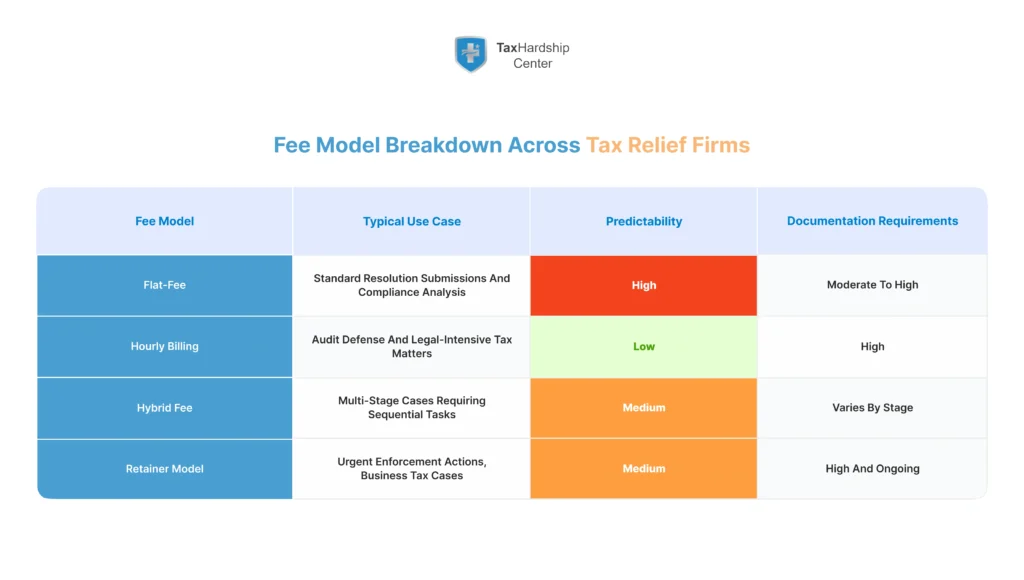
Tax relief firms rely on several pricing models that align the expected workload with a predictable structure for the client. These models vary based on the amount of case analysis required, the complexity of the taxpayer’s financial disclosures, and the anticipated number of communications with the IRS. Understanding these models helps clarify why costs differ so widely between firms, even when quoted for similar liabilities.
Flat-Fee Models and Their Common Inclusions
Flat-fee arrangements are the most prevalent in the industry because they simplify expectations. The quoted amount is based on the initial assessment of transcripts, compliance gaps, and financial conditions. The fee typically covers a defined scope of work that may include:
- Transcript pull and review
- Initial compliance analysis
- Communication with IRS representatives
- Basic return preparation is needed for eligibility
- Drafting of financial disclosures
- Submission of the recommended resolution program
Flat-fee structures may exclude advanced audit defense, multi-year bookkeeping reconstruction, or complex asset valuation, which would require separate pricing. Firms that rely exclusively on flat fees generally use a narrow definition of what the fee includes, making clarity essential.
Hourly Models With Attorney or CPA Representation
Hourly billing is more common in cases involving legal arguments, extensive audit defense, or complex financial documentation. Attorneys or CPAs may use hourly billing when a case has unpredictable demands, such as IRS requests for additional substantiation, appeals processes, or extensive review of business accounting records. Hourly billing becomes more likely when:
- Litigation risk is present.
- Audit examination includes multiple years.
- Business tax issues intersect with personal liabilities
- Asset or investment analysis requires detailed verification
Hourly arrangements typically involve a retainer and detailed time tracking for document review, communications, negotiations, and the preparation of legal correspondence.
Hybrid Models for Extended, Multi-Stage Cases
Hybrid models combine a base flat fee with additional charges tied to specific milestones. These models are used when a case may require multi-stage work, such as securing a temporary installment agreement before preparing an Offer in Compromise. Costs may increase when IRS verification requests expand the scope of the case. Hybrid pricing often applies to situations involving:
- Transitional arrangements before submitting a formal resolution
- Complex records requiring staged reconstruction
- Conditional tasks that depend on IRS responses
Retainers for Advanced Resolution Matters
Retainers signal that the case involves significant uncertainty or a high volume of documentation. This model applies to cases involving wage garnishments, business payroll tax liabilities, or active enforcement actions requiring immediate intervention. Retainers allow firms to allocate labor quickly while maintaining flexibility for unpredictable workloads.
What a Legitimate Tax Relief Service Should Include in Its Cost
A legitimate tax relief service includes a well-defined set of professional tasks that must occur regardless of the resolution strategy selected. These tasks ensure the case is compliant with IRS standards and that any submission reflects accurate, documented financial information. The total cost of service should correspond to the intensity, precision, and number of steps involved.
IRS Transcript Pull and Compliance Analysis
Transcript analysis is the foundation of any tax relief plan. A legitimate firm includes:
- Pulling account transcripts, wage and income transcripts, and return transcripts
- Reviewing master file codes for pending assessments and collection actions
- Identifying missing returns and inconsistent reporting
- Establishing the timeline of balance accruals and penalty layers
This analysis determines which IRS program is appropriate and sets the structure of the entire resolution.
Financial Statement Preparation for IRS Submission
Financial disclosures require careful documentation to support income, expenses, assets, and liabilities. Legitimate services prepare:
- IRS Form 433-A or 433-F
- Asset equity calculations
- Verification of income through bank activity, pay statements, or business ledgers
- Support for allowable versus non-allowable expenses
Accurate financial statements are essential because they directly affect eligibility for programs such as Offer in Compromise or Currently Not Collectible status.
IRS Negotiation and Power of Attorney Representation
Representation under Form 2848 allows authorized practitioners to communicate with IRS personnel, respond to verification requests, and negotiate terms. Legitimate representation involves:
- Reviewing IRS proposals or counteroffers
- Clarifying inconsistencies in financial disclosures
- Addressing questions related to lifestyle expenses or asset transfers
- Managing timelines linked to collection actions
Document Management and Deadlines
Tax relief cases require a sequence of time-sensitive submissions. Legitimate firms track all deadlines related to notices, transcript updates, and IRS correspondence. Document management includes:
- Organizing financial materials
- Maintaining copies of all IRS submissions
- Ensuring that return filings, appeal deadlines, and verification requests are completed promptly
Communication Cadence and Case Tracking Technology
Consistent communication is integral to case stability. Legitimate firms maintain structured updates tied to each case milestone. Many use case management systems that track transcript changes, document uploads, and submission timestamps, improving reliability during IRS evaluations.
Red Flags Indicating Overpriced or Illegitimate Tax Relief Services
The tax relief industry includes both reputable firms and organizations that rely on misleading sales practices or vague service descriptions. Specific patterns consistently appear among overpriced or illegitimate providers, and identifying these signals helps readers distinguish between credible services and those that present financial risk.
Ultra-Low Upfront Fees Paired With High Monthly Payments
Some firms advertise extremely low initial fees to attract clients, only to charge a series of large recurring payments. These arrangements often indicate that the initial fee covers little or no substantive work. The cost structure may be designed to prolong the engagement without completing the critical tasks needed to resolve the liability.
Promises of Guaranteed Outcomes
No provider can guarantee acceptance of an Offer in Compromise, penalty abatement, or any specific IRS decision. Firms that guarantee outcomes often rely on aggressive marketing rather than accurate assessments. Clear resolution pathways must be based on documented financial information, not promises of automatic approval.
Missing Credentials or Vague Service Lists
Legitimate representation requires enrollment as an Enrolled Agent, CPA, or tax attorney. A lack of credentials is a strong indicator of risk. Another red flag appears when service descriptions use general claims without specifying what is included. Examples include:
- Unclear explanations of which IRS forms will be filed
- No reference to transcript review
- Ambiguous timelines
- No confirmation of compliance analysis
High-Pressure Sales Tactics and Outsourced Casework
Some firms rely on scripted sales calls that discourage questions or request payment before reviewing any documents. Cases may then be outsourced to external contractors with no direct accountability. Red flags include:
- Sales representatives insisting on immediate payment
- Refusal to explain the scope of included services
- No direct access to credentialed professionals
- Frequent turnover of case managers
Fraudulent or overpriced services often follow these patterns, whereas legitimate firms rely on transparent explanations, written agreements, and documented case assessments.
How Tax Hardship Center (THC) Structures Tax Relief Service Costs
Tax Hardship Center uses a transparent cost structure shaped by the same IRS processes that define all legitimate tax relief work. Each case begins with transcript reviews and a compliance assessment to determine the scope of the required tasks. The firm’s pricing reflects the expected analytical workload, the depth of financial documentation needed, and the level of representation demanded by the IRS program involved.
THC’s Transparent Flat-Fee Model
The firm’s flat-fee approach centers on predictable, clearly defined service boundaries. The fee is based on an evaluation of transcript data, the number of affected years, unfiled returns, and the complexity of financial disclosures. Typical inclusions are:
- Transcript acquisition and review
- Compliance audits covering filing gaps and penalty layers
- Preparation of IRS forms linked to resolution eligibility
- Communication with IRS representatives
- Submission of the resolution strategy supported by documented financials
The clarity of the structure helps ensure that clients understand what tasks the fee covers and which situations may require additional work.
Services Included With THC’s IRS Tax Relief Programs
Tax Hardship Center provides a structured suite of services that align with IRS requirements. These include:
- Development of financial statements using Form 433-A or 433-F
- Preparation of missing federal returns needed for resolution eligibility
- Detailed assessment of asset equity when evaluating potential Offer in Compromise cases
- Negotiation of installment agreements or Currently Not Collectible determinations
- Handling of wage garnishment release or levy removal when applicable
The service list aligns with the procedural steps the IRS expects in reviewing any case.
THC Credentials (EA, CPA, and Practitioner Team Structure)
Tax Hardship Center assigns cases to a team of credentialed practitioners, including Enrolled Agents and CPAs. Their credentialing permits direct communication with IRS personnel and supports accurate interpretation of transcripts, master file codes, and the financial data central to eligibility determinations.
THC Case Types and Estimated Cost Ranges
The firm manages a range of case categories, including multi-year individual liabilities, self-employment cases with fluctuating income, business-related obligations, and penalty-heavy filings. Pricing aligns with factors such as:
- Number of years requiring review
- Depth of financial verification
- Anticipated IRS scrutiny during the program review process
THC Consumer Protection and No-Pressure Intake Review
Tax Hardship Center uses an intake process that evaluates case complexity before making any commitment. The assessment focuses on identifying the appropriate IRS program early to reduce the likelihood of mismatched expectations or unnecessary fees.
Tax Hardship Center vs Typical National Tax Relief Firms
The tax relief industry varies significantly in service reliability, pricing consistency, and transparency. Many national firms rely on broad marketing claims and generic intake procedures, while others specialize in complex or audit-driven cases. Comparing standard practices with the Tax Hardship Center’s approach highlights the operational differences that shape pricing accuracy and service quality.
Cost Structure Differences
Large national firms often use multi-stage pricing that begins with a low introductory fee and continues with higher charges after an initial review. Some divide the process into smaller sub-fees covering investigation, compliance review, and resolution submission. This structure may produce unclear total costs at the outset.
Tax Hardship Center, by contrast, uses a comprehensive flat-fee approach. The fee is defined after transcript analysis and includes the core components required to submit a compliant resolution. This reduces the likelihood of mid-case cost increases linked to standard IRS documentation.
Depth of Case Analysis
National firms frequently segment their staff into sales-focused and operations-focused teams. This structure can limit the granularity of early assessments. Some rely on general assumptions rather than conducting thorough transcript reviews before quoting fees.
Tax Hardship Center performs transcript-based assessments before establishing the cost. This ensures the quoted fee reflects the true complexity of the case, including penalty layers, missing returns, and asset considerations.
Customer Support Framework
National firms often route communications through call centers, resulting in delayed responses and inconsistent updates. Cases may be transferred between departments or external contractors.
Tax Hardship Center provides structured communication through credentialed practitioners. Transcript updates, documentation requests, and IRS correspondence are monitored within a case management system that helps maintain continuity and accuracy.
Documentation Preparedness
Many national providers use pre-filled templates that may not account for financial nuances such as fluctuating self-employment income or shared asset ownership. These shortcuts can lead to verification delays or denials.
Tax Hardship Center prepares financial statements based on a detailed review of income sources, expense structures, and asset and equity positions. This produces documentation that aligns more closely with IRS expectations, reducing objections during review.
When Professional Tax Relief Is Worth the Cost
Professional assistance becomes most valuable when a tax balance interacts with multiple IRS processes or when the government has initiated collection actions. Certain situations require detailed financial disclosures, strict adherence to procedural timelines, or negotiation with specialized IRS personnel. In these contexts, professional intervention can significantly influence outcomes.
Situations Where Expert Representation Alters IRS Outcomes
Experienced practitioners understand how the IRS interprets financial statements, evaluates asset equity, and applies reasonable collection potential. Representation can shift the likelihood of approval when:
- Income fluctuates throughout the year
- Property or business assets complicate equity calculations
- Medical or hardship factors affect expense allowances
- Prior compliance issues increase scrutiny
A professional’s familiarity with documentation standards helps establish a complete financial narrative.
High-Risk Cases Involving Levies or Garnishments
When a levy or wage garnishment is active, the IRS expects immediate proof of financial hardship or compliance. Delays may continue or escalate enforcement. Professional representation is particularly beneficial in cases involving:
- Bank levies requiring rapid communication
- Wage garnishments tied to unfiled years
- Business-related levies affecting operations
- Asset seizures involving property or financial accounts
Knowledge of procedural requirements influences the timing and success of release requests.
Multi-Year Back Tax Problems
Multiple years of missing returns require sequential review, transcript reconciliation, and income reconstruction. Professionals can interpret transcript gaps, identify substitute-for-return assessments, and determine the order in which filings must occur. The complexity increases when:
- Wage and income data are inconsistent
- Self-employment records require reconstruction
- Business and individual filings intersect
Correct sequencing is crucial because specific IRS programs cannot be accessed until all required returns are filed.
Complex Reasonable Cause Narratives for Penalty Relief
Penalty abatement often depends on detailed explanations supported by medical, financial, or administrative documentation. Specialist assistance helps organize timelines and evidence that demonstrate reasonable cause. Cases involving natural disasters, prolonged illness, or documentation mishandling require careful assembly of materials to increase the probability of acceptance.
Frequently Asked Questions About Tax Relief Service Costs
What determines the final price of a tax relief service?
Final pricing depends on the number of years involved, the volume of IRS transcripts requiring review, the complexity of financial disclosures, and the type of resolution program pursued. Cases involving inconsistent income, extensive penalties, or asset analysis typically require more documentation and, therefore higher fees.
Why do tax relief companies quote different prices for similar tax balances?
Different firms use different evaluation processes. Some base pricing on liability totals alone, while others rely on transcript reviews and financial assessments. Firms that analyze documentation upfront tend to produce more accurate quotes because the fee is tied to the workload required by the IRS program.
Do tax relief firms charge upfront fees?
Many firms use flat-fee or hybrid models that include an initial payment. The legitimacy of the fee depends on whether it reflects documented case requirements rather than general estimates. Upfront charges linked to a clear scope of work are common within compliant practices.
How do fees differ between Enrolled Agents, CPAs, and tax attorneys?
Enrolled Agents usually handle the majority of IRS representation work related to transcripts, disclosures, and negotiations. CPAs may charge more when cases require accounting reconstruction or audit analysis. Attorneys typically charge higher rates when legal interpretation or representation in complex disputes is required.
Are tax relief service fees refundable?
Refund policies vary by provider. Most firms structure services so that fees correspond to stages of work already completed, which limits refund eligibility. Clear refund terms should be contained in written agreements.
How much does an Offer in Compromise typically cost?
Offer in Compromise pricing reflects the depth of financial verification required to establish reasonable collection potential. Fees often increase when asset equity must be documented in detail or when the IRS is expected to request substantial supporting materials.
Why do unfiled returns increase the cost of tax relief services?
Unfiled returns require reconstruction of income and expenses using wage records, bank data, or business ledgers. Each additional year must be filed before negotiations can begin, which creates additional preparatory work and increases the total service cost.
Conclusion
Tax relief service costs arise from a structured series of tasks defined by IRS procedures, financial verification requirements, and the compliance history associated with each case. Pricing depends on transcript data, unfiled returns, asset considerations, income patterns, and the documentation needed to support a resolution. Services become more valuable when liabilities span multiple years, income is volatile, or urgent collection actions require precise advocacy. Providers such as Tax Hardship Center apply credentialed analysis and transparent pricing to align professional work with the complexity of each case, reducing uncertainty and improving the stability of the resolution process.