
An LT11 IRS notice is the moment most people realize the IRS is done asking politely. It is scary, but it is also a window of leverage if you act quickly and correctly.
LT11 is a final notice that warns the IRS intends to levy, and it also includes your right to appeal before levy proceeds.
This guide walks you through what LT11 means, how to stop a levy, and how to request a Collection Due Process hearing the right way.
What Is An LT11 IRS Notice?
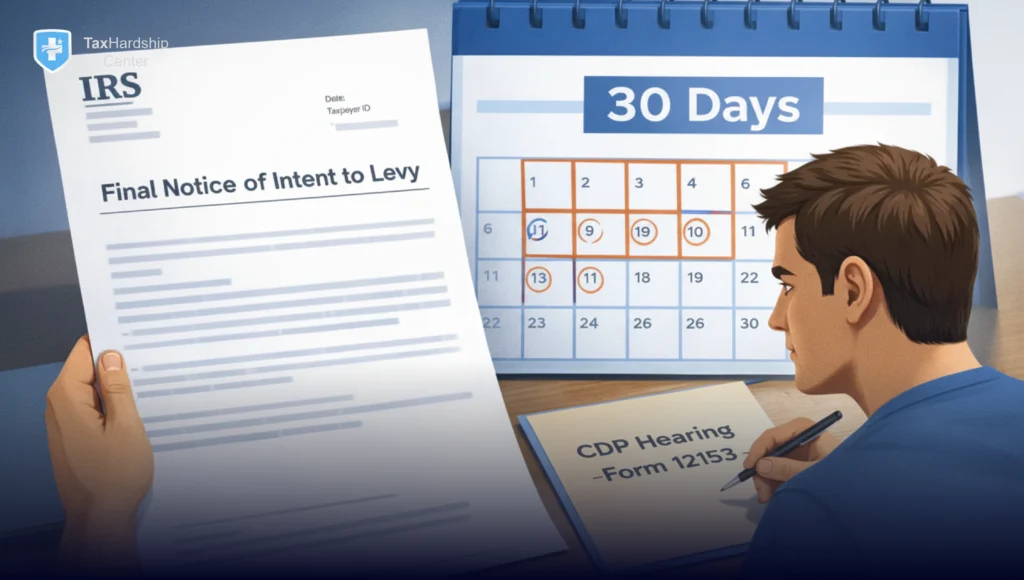
LT11 is commonly titled “Final Notice of Intent to Levy and Notice of Your Right to a Hearing.” The IRS is telling you that they have not received payment for overdue taxes and intend to seize property or the right to property.
What Can The IRS Levy?
The IRS may levy wages, bank accounts, and other property or rights to property. The IRS also notes that levies can include state tax refunds and Social Security benefits, depending on the situation.
Why The Deadline Matters
You generally have 30 days to timely request a Collection Due Process hearing after the notice, and a timely request usually suspends levy action for the period you appeal.
What To Do First (The 24 To 48 Hour Action Plan)
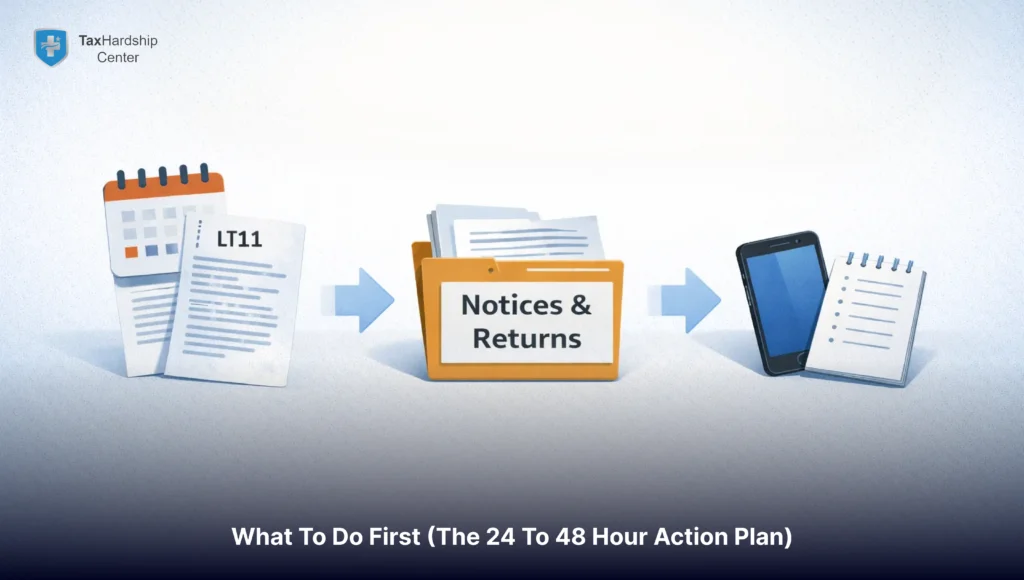
1) Find The Response Date And Mark It
Your LT11 notice will show a date and instructions. Your practical goal is to act fast enough that your hearing request is considered timely. The IRS explains that CDP requests are time-sensitive, and missing the timely window changes your rights.
2) Gather The Minimum Documents
Keep these together in one folder:
- LT11 notice (all pages)
- Any prior IRS notices related to the same tax years
- Proof of recent payments (if you made any)
- Your last filed tax return for the years involved (if available)
- A basic income and expense summary (you may need it for alternatives)
3) Call The IRS Number On The Notice And Log Everything
Call the number on the LT11 notice and take notes:
- Date and time of call
- Agent name or ID (if provided)
- What they said your balance is
- What they said your deadline is
- What they said your next step should be
4) Do Not Mail A Payment To The Wrong Address
If you are submitting an appeals request, the IRS instructs you to send Form 12153 to the address shown on the CDP notice.
How To Stop A Levy After LT11
Think in terms of outcomes. You want the levy threat paused and a sustainable resolution.
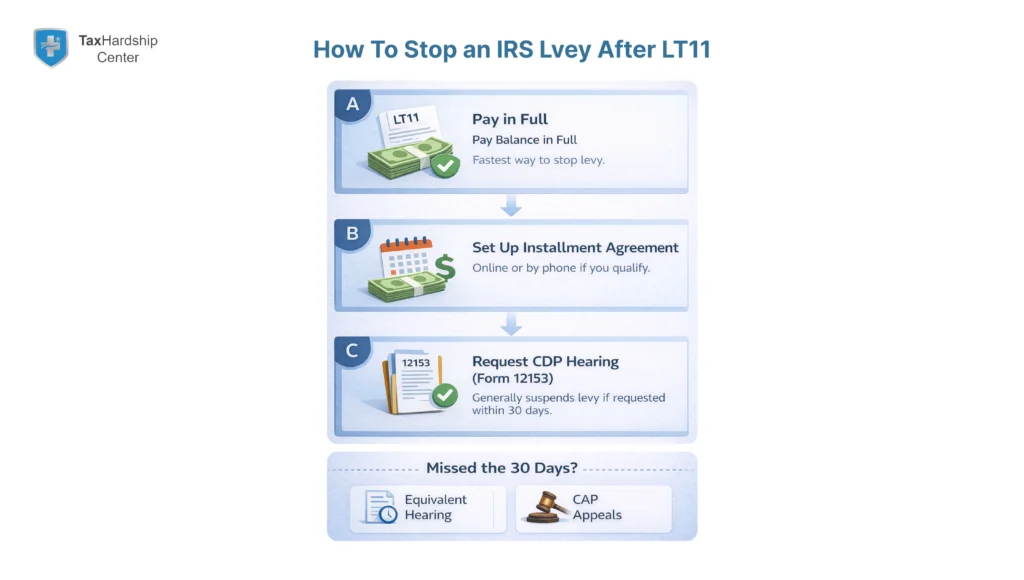
Option A: Pay In Full (Fastest If It Is Realistic)
The IRS notes that paying your balance in full stops additional interest and applicable penalties from accruing.
Option B: Set Up A Payment Plan
If you are current on filings, the IRS says you can request an installment agreement, and for many taxpayers owing under certain thresholds, the online payment agreement tool can be the fastest route.
Option C: Request A Collection Due Process Hearing (Often The Best Protection)
If you need to stop levy action while you work out a solution, a timely CDP hearing request is one of the strongest tools available. The IRS states that if your request is timely, levy action is generally suspended for the appealed periods, and you preserve Tax Court review rights after the Appeals determination.
How To Request A Collection Due Process Hearing (Step By Step)
Step 1: Confirm You Are Within The Timely Window
The IRS explains you have 30 days from receipt of an LT11 or Letter 1058 to request a CDP hearing.
Step 2: Complete Form 12153
The IRS instructs taxpayers to use Form 12153 to request a CDP hearing.
External reference:
- Form 12153 (IRS): https://www.irs.gov/forms-pubs/about-form-12153
Step 3: Send Form 12153 To The Address On Your LT11
Do not guess. The IRS says to send the completed Form 12153 to the same address shown on your CDP notice.
Practical tip: use a mailing method that gives proof of delivery, and keep a copy of everything you send.
Step 4: Write A Clear Reason For The Hearing
The IRS warns that it is important to identify all the reasons for disagreement.
Common, legitimate reasons that are easy to understand and align with CDP topics include:
- You want a collection alternative (installment agreement, Offer in Compromise, or temporary hardship status).
- You believe the levy is inappropriate due to your current financial situation.
- You believe the IRS did not follow the required procedures.
- You can dispute the underlying balance only if you did not previously have the chance to do so (this is limited).
Step 5: Include Financial Information If You Are Requesting Alternatives
The IRS notes that to consider collection alternatives, Appeals may need a financial statement, and the IRS references Forms 433-A and 433-B for individuals and businesses.
CDP Hearing Versus Other Options (Quick Comparison Table)
| Option | Best For | Levy Typically Paused? | Tax Court Review? |
| Timely CDP Hearing (Form 12153) | You need time and protection to propose a solution | You missed the timely window, but still want Appeals review | Yes, after determination |
| Equivalent Hearing | You can afford the monthly payments | Not the same protections | No |
| Payment Plan (Installment Agreement) | You missed the timely window, but still want an appeals review | Depends on setup and compliance | Not applicable |
| Offer In Compromise | You may qualify to settle for less | Depends on facts and process | Separate appeal rights may apply |
CDP Hearing Topics: What You Can and Cannot Argue
What You Can Usually Raise
A CDP hearing is an opportunity to discuss alternatives to enforced collection, and in some situations, it permits disputing the amount owed if you have not had a prior opportunity to do so.
Examples:
- Installment agreement proposal
- Offer in Compromise proposal
- Financial hardship and collection alternatives
- Procedural concerns about the levy process
When Disputing, The Balance Is Limited
The IRS notes that disputing the underlying liability in a CDP hearing is only allowed under limited circumstances. If Appeals cannot consider it, the IRS lists other avenues, such as audit reconsideration, refund claims, or specific OIC approaches.
This is one of the biggest reasons people struggle with DIY CDP requests. They focus only on “I disagree,” without matching the argument to what Appeals can consider.
Missed The 30-Day Deadline? Your Backup Options
If you are outside the timely window, do not give up, but do act fast.
Equivalent Hearing
The IRS explains that if your request is not timely, you may still request an equivalent hearing within the 1-year period described in Form 12153, but you do not have the right to judicial review in Tax Court after an equivalent hearing decision.
Collection Appeals Program (CAP)
The IRS CDP FAQ page also references CAP as another appeals path for certain collection actions, with advantages and limitations that vary depending on the facts.
When To Call A Professional For IRS Representation
Consider professional help if any of these are true:
- You have multiple years of involvement, business taxes, or payroll tax exposure.
- You need to submit financial statements and negotiate an alternative.
- A levy is imminent, and you cannot risk a mistake in timing or paperwork.
- You want to preserve Tax Court rights and keep the process clean from day one.
FAQs
Is LT11 The Same As Letter 1058?
They are both final notices of intent to levy that include the right to request a hearing, and the IRS addresses them together in its guidance.
How Long Do I Have To Request A CDP Hearing After LT11?
The IRS states you have 30 days from receipt of an LT11 to request a CDP hearing.
Does Filing Form 12153 Stop A Levy Automatically?
The IRS explains that if your request is timely, levy action is generally suspended for the periods under appeal.
Where Do I Send Form 12153?
The IRS instructs you to send the completed Form 12153 to the address shown on your CDP notice.
What If I Need A Payment Plan Instead Of A Hearing?
The IRS explains that you can request an installment agreement if you are current on filings, and the online payment agreement tool can be the fastest option for many taxpayers.
Conclusion
LT11 is serious, but it is also actionable. If you respond quickly, you can often prevent levy action, protect your rights, and move your case into a resolution path that fits your budget. The most important step is to match your response to the clock, because the timely CDP window determines which protections you have.
Key Takeaways:
- LT11 is a final notice warning of a possible levy, and you must act quickly.
- A timely CDP hearing request using Form 12153 generally suspends levy action for the appealed periods and preserves Tax Court review rights.
- Send Form 12153 to the address on your notice, and clearly state your reasons and requested alternatives.
- If you missed the deadline, an equivalent hearing may still be available, but it does not provide the same protections.