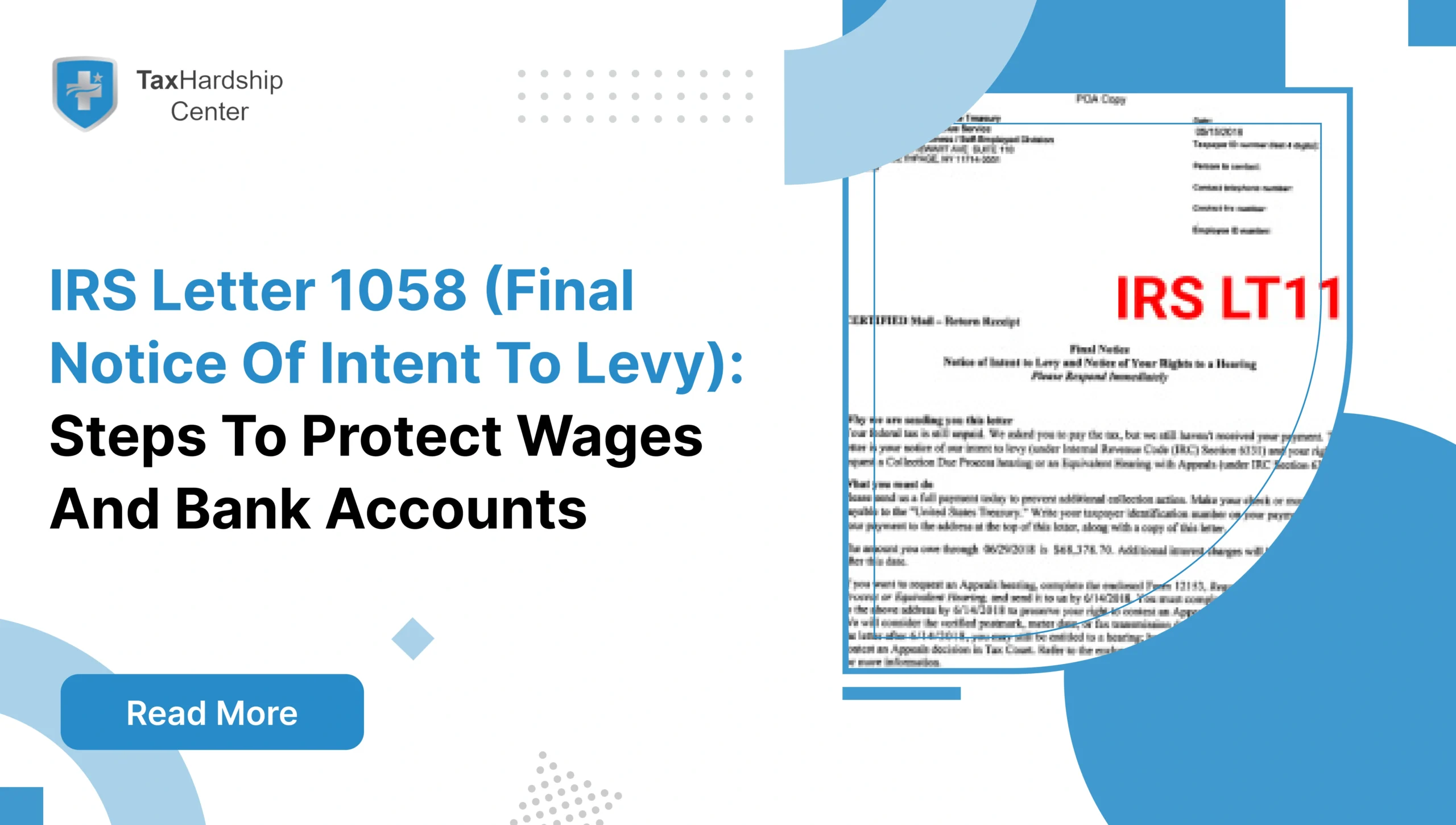

If you received IRS Letter 1058, you are no longer in the “reminder letter” phase. This is the IRS telling you, in writing, that levy action is on the table.
The upside is that Letter 1058 is also a rights letter. If you act fast, you can often stop the next step, protect your paycheck and bank funds, and move toward a structured resolution rather than a financial emergency.
What Is IRS Letter 1058
IRS Letter 1058 is commonly titled a “Final Notice of Intent to Levy and Notice of Your Right to a Hearing.” It warns that the IRS may levy property or rights to property, including wages and bank accounts, to collect unpaid taxes.
It also explains that you can request an appeal (a Collection Due Process hearing) by following the instructions in the letter.
Why Letter 1058 Is Different From Earlier IRS Notices
Earlier notices usually focus on balance reminders. Letter 1058 is different because:
- It is a final levy warning, not just a bill.
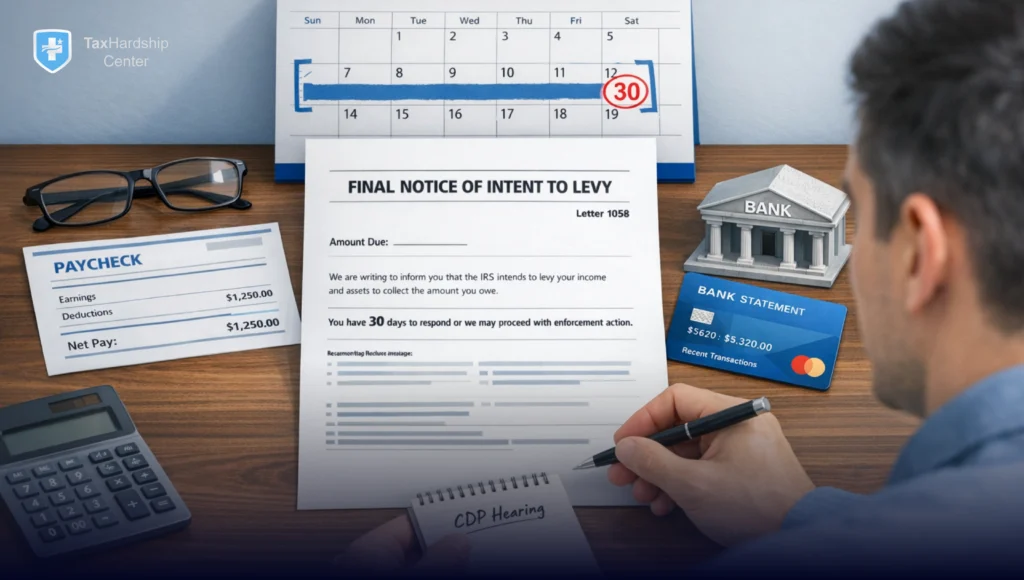
- It triggers a short window to request a CDP hearing, which can block levy action in most cases when requested on time.
The IRS describes the CDP request window as 30 days from receipt of an LT11 or L-1058. IRS internal procedures also measure timeliness from the date of the CDP levy notice, so treat the date on the letter as your practical starting point and move quickly.
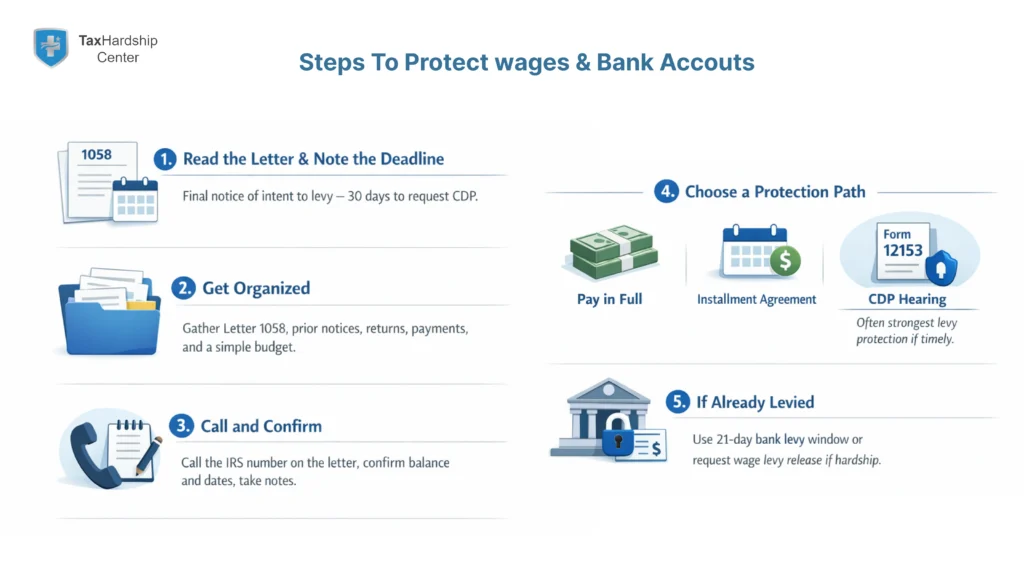
First Steps To Protect Wages And Bank Accounts
Step 1: Identify What Is At Immediate Risk
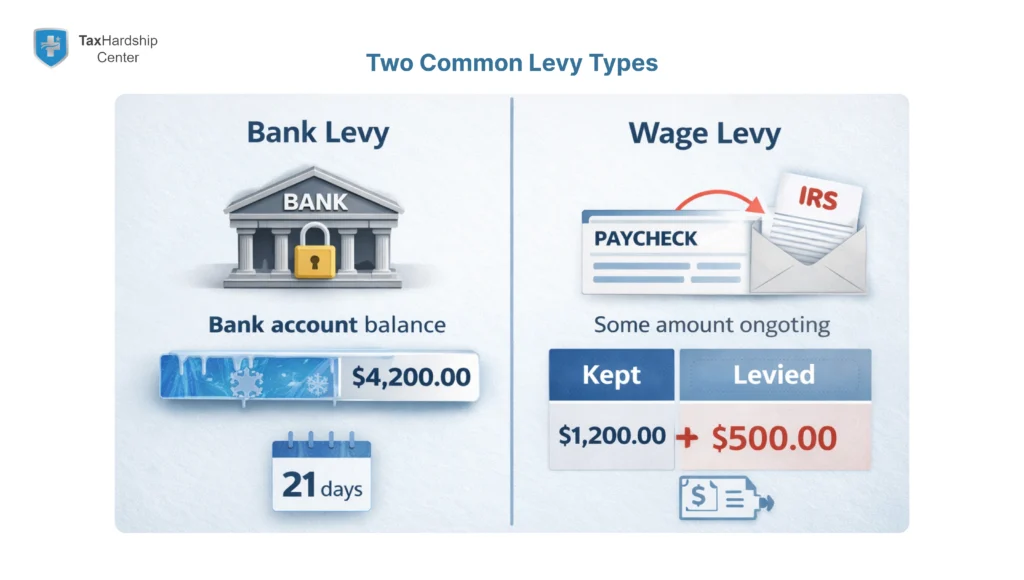
Letter 1058 can lead to levy action. Two common impacts are:
- A wage levy (ongoing withholding from paychecks).
- A bank levy (freezing funds in an account on the day the levy hits).
Step 2: Get Organized In One Sitting
Pull together:
- Letter 1058 (all pages)
- Any earlier notices for the same tax year(s)
- Proof of recent payments
- Your last filed returns for the years involved
- A simple monthly budget (income, rent, utilities, food, insurance)
Step 3: Call The Number On The Letter And Document Everything
When you call, keep notes: date, time, who you spoke with, and what they said about deadlines and next steps.
If you need more time and want to preserve appeal rights, a CDP request is usually the cleanest “stop the train” move, as long as it is timely.
Protecting Your Bank Account
Know The 21-Day Bank Levy Holding Period
If a bank levy is issued, the IRS rules provide a 21-day waiting period before the bank must send the frozen funds to the IRS. This period is intended to give you time to contact the IRS, arrange payment, or point out errors.
Two practical details matter:
- The levy generally freezes the account balance at the time the levy is received.
- Funds added after the levy is received are normally not included in that specific levy.
What To Do In The First 24 Hours If Your Bank Account Is Frozen
- Confirm the levy date and start counting the 21-day window.
- Call the IRS contact listed on the levy paperwork or recent correspondence.
- If this creates an immediate hardship, tell the IRS which bills cannot be paid and ask about a hardship levy release.
- If you are pursuing a CDP hearing, file Form 12153 quickly so your request is timely.
Protecting Your Wages
How An IRS Wage Levy Works
A wage levy is typically not a one-time event. It can continue paycheck after paycheck until the levy is released or the tax debt is resolved.
Your Paycheck Is Not Taken Down To Zero
The IRS states that part of your wages may be exempt from levy, and the exempt amount is based on factors such as standard deduction amounts and the number of dependents. The IRS mails Publication 1494 with the levy to help employers calculate the exempt amount. Check here if you want to learn How To Stop The IRS From Garnishing Wages
If A Wage Levy Would Make You Unable To Pay Basics
The IRS states that if a wage levy is causing an immediate economic hardship, the levy must be released. For bank accounts and other accounts, the levy may be released in hardship circumstances.
How To Stop A Levy With A CDP Hearing
A Collection Due Process hearing is often the strongest protection tool tied to Letter 1058, because a timely request generally stops levy action for the tax periods you are appealing while the case is reviewed.
Step By Step: Request A CDP Hearing
- Confirm you are within the 30-day CDP window.
- Complete Form 12153 (Request for a Collection Due Process or Equivalent Hearing).
- Send it to the address shown on your Letter 1058 (do not guess a different address).
- Clearly state what you want to accomplish in the hearing, such as:
- An installment agreement you can afford
- An Offer in Compromise if you qualify
- A hardship-based alternative
- A concern that the levy is inappropriate based on your situation
Other Ways To Stop Or Release A Levy
Installment Agreement
If you can make monthly payments, a payment plan can be a practical way to resolve the balance and avoid escalating collection, especially when you stay compliant going forward.
Requesting A Levy Release
The IRS explains that you can request a levy release and that levies can also be released due to immediate economic hardship. If the IRS denies a levy release request, you may appeal.
When To Call A Professional
You should consider professional IRS representation if any of these apply:
- You are close to the 30-day CDP deadline and cannot risk errors.
- You need to submit financial documentation to support a payment alternative.
- You have both wage and bank risks simultaneously.
- You have multiple tax years, business income, or payroll tax issues.
If you want help aligned with this specific notice stage:
FAQs
Is IRS Letter 1058 The Same As LT11
They are closely related versions of the final notice of intent to levy, and the IRS addresses “LT11 notice or Letter 1058” together in its guidance.
How Long Do I Have To Respond To Letter 1058
The IRS states you have 30 days from receipt of an LT11 or L-1058 to request a CDP hearing. IRS internal guidance also ties timeliness to the date of the notice, so respond immediately.
Can The IRS Take Everything In My Bank Account
A bank levy generally freezes funds available at the time the levy is received, up to the amount owed, and the bank holds funds during the 21-day waiting period before sending them to the IRS.
How Much Can The IRS Take From My Paycheck
The IRS states that part of your wages may be exempt, and the exempt amount is determined using the tables in Publication 1494 and factors such as filing status, dependents, and pay frequency.
What If A Levy Will Prevent Me From Paying Rent Or Essentials
The IRS states that if a wage levy causes an immediate economic hardship, it must be released, and a bank levy may be released if it causes an immediate economic hardship.
Conclusion
IRS Letter 1058 is urgent, but it is also a moment where the right move can protect your income and your accounts. Your best outcome usually comes from acting early, using the appeal rights built into the notice, and choosing a resolution you can actually maintain.
Inside this stage, the two biggest protections are timing and documentation. Move quickly, keep proof of what you submit, and do not rely on verbal assurances alone.
Key Takeaways:
- Letter 1058 is a final notice that may result in levies on wages and bank accounts.
- Treat the CDP deadline as urgent, and file Form 12153 fast if you need levy protection.
- If your bank account is levied, you usually have a 21-day holding period to act before funds are sent.
- If your wages are levied and it creates immediate economic hardship, the levy must be released.
- If you are close to deadlines, facing multiple levy threats, or unsure what to file, professional IRS representation can reduce risk and speed up the right resolution