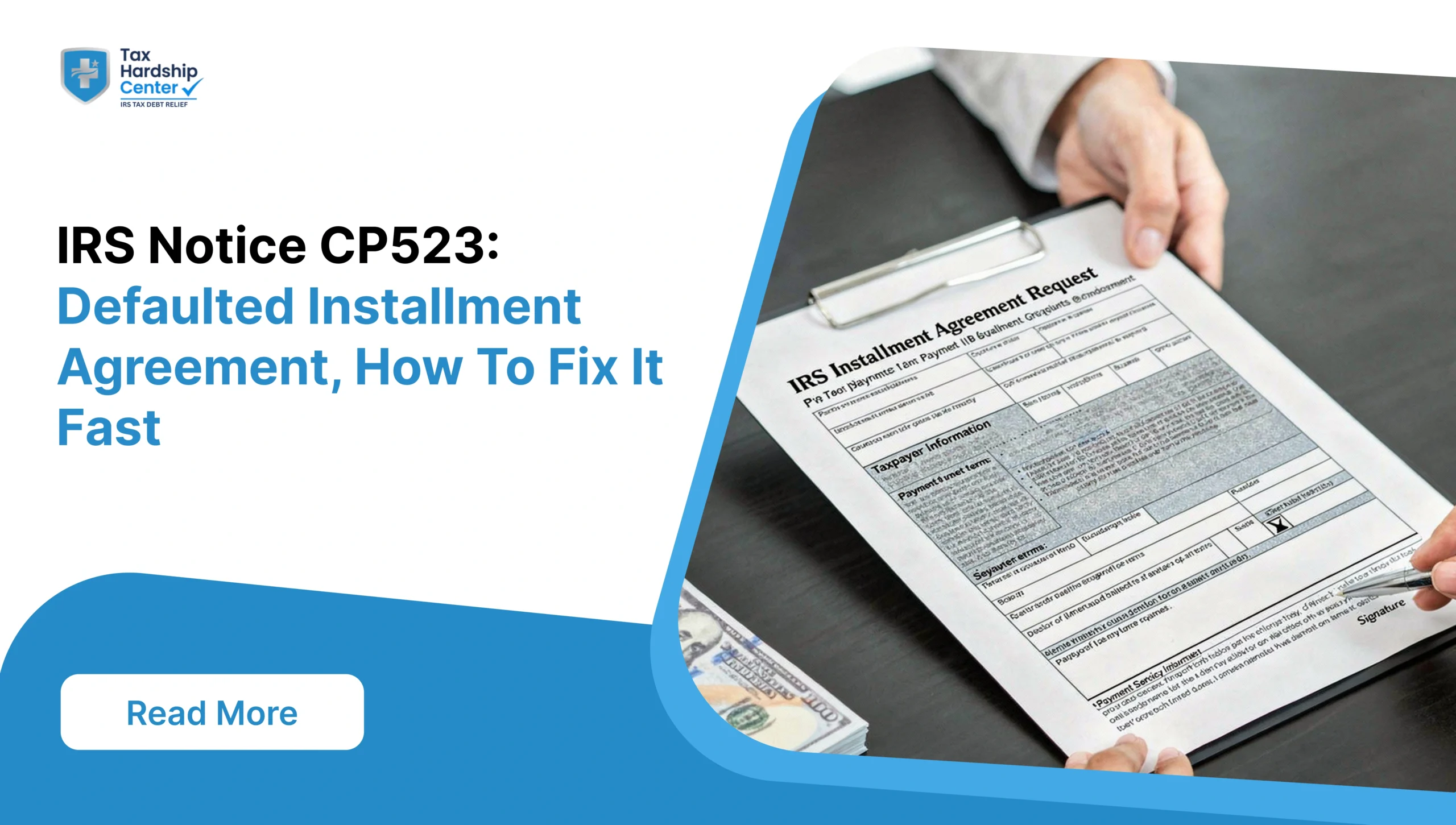

A CP523 notice usually shows up when you think you are doing the right thing, you already have a payment plan, you are making progress, and then the IRS says your agreement is in default.
The key is speed. CP523 is the IRS telling you they intend to terminate your installment agreement. If it terminates, collection action can follow, including levies on wages or bank accounts.

What Is IRS Notice CP523

CP523 is a Notice of Intent to Levy and an Intent to Terminate your installment agreement. In plain English, it means the IRS believes you defaulted on your payment plan, and you must fix the default by the deadline on the notice to keep the agreement from being terminated.
Two details from the IRS matter most:
- Timeframe, the IRS says you should contact them as soon as possible, but no later than 30 days from the date of the notice.
- Risk: if you do not respond, the IRS can terminate the agreement and begin collection actions, including filing a federal tax lien or levying wages and/or bank accounts.
You can read the IRS overview here: Understanding Your CP523 Notice.
Why You Received A CP523 Notice
CP523 is not random. It is typically triggered by one of these “agreement compliance” issues:
Missed Or Returned Payments
The CP523 sample notice explains the most common scenario: the IRS did not receive one or more required monthly payments, so the monthly payment is past due.
New Tax Debt While On A Plan
Even if your monthly payments are fine, your agreement can default if you create a new unpaid balance. The IRS has CP523 variants (such as CP523A) that address situations where you did not pay a new tax liability and the current monthly payment is not enough to cover it.
Not Staying Current On Filing And Paying
The IRS payment plan guidance is clear: to avoid default, you must file all required returns on time and pay all taxes in full and on time, or contact the IRS to change the agreement if you cannot.
Payment Posting Delays Or Confusion
Before you panic-pay again, know this: the IRS notes you can view balance and payment history in your Online Account, and that it can take one to three weeks for a recent payment to be credited, and up to three weeks for non-electronic payments.

CP523 Timeline: What Happens If You Do Nothing
Think of CP523 as a countdown.
Within About 30 Days
The CP523 notice itself says that if you do not make the required payments, the IRS will terminate your installment agreement 30 days from the date of the notice.
The IRS CP523 explainer page also emphasizes that you should contact them as soon as possible, but no later than 30 days from the notice date.
After Termination
Once the agreement terminates, the IRS may seek to collect the total unpaid liability, not just the missed installment payments.
The IRS also states that if you do not respond, collection action can include filing a federal tax lien or seizing (levying) wages and or bank accounts.
“Is A CP523 The Same As A Final Levy Letter?”
CP523 is a levy warning, but levy rules can vary depending on what notices you have already received. The IRS explains that, generally, they send a Final Notice of Intent to Levy and Notice of Your Right to a Hearing at least 30 days before a levy.
CP523 itself is labeled a Notice of Intent to Levy, and the sample notice explains the IRS may levy a state income tax refund or other property or rights to property.
If you want a deeper collection timeline, these Tax Hardship Center resources are helpful context:
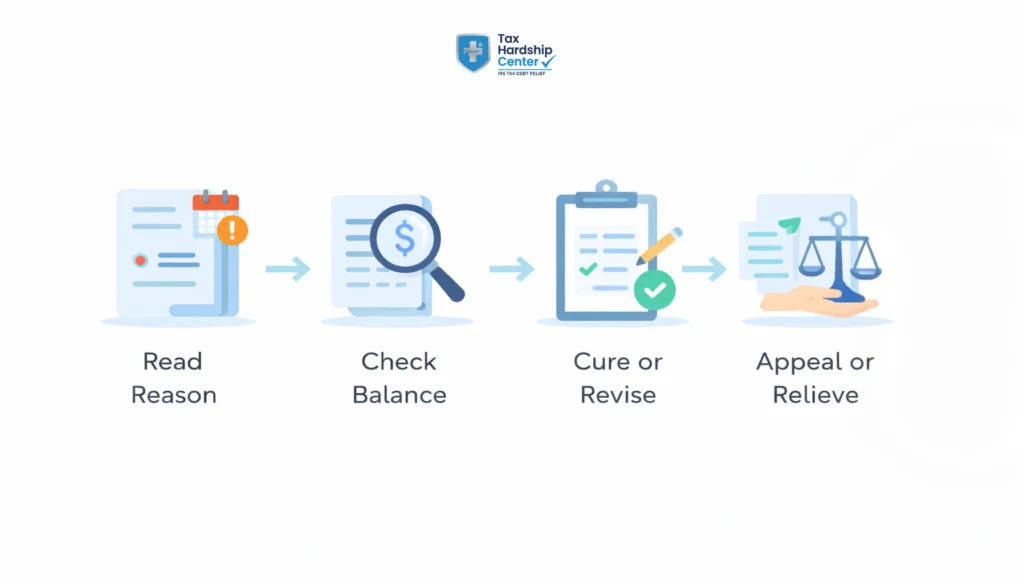
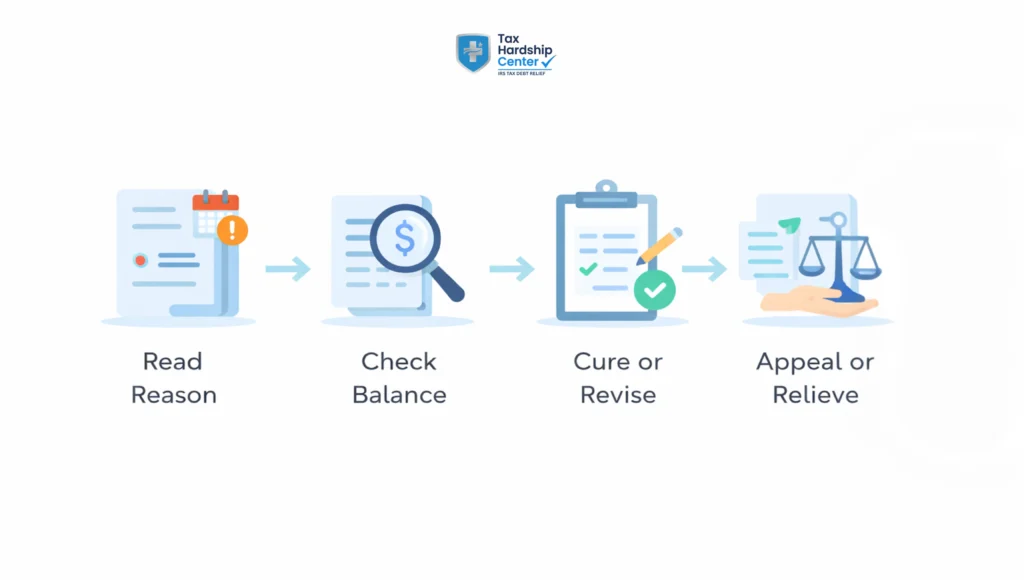
How To Fix It Fast In 7 Steps
Step 1: Read The “Why” And The Deadline On The Notice
CP523 tells you why the IRS believes you defaulted. Start there, because the fastest fix depends on the specific reason.
Step 2: Confirm Your Balance And Payment History
Log in to your IRS Online Account to check whether a recent payment is still being processed. The IRS notes it can take one to three weeks for payments to post, and longer for non-electronic payments.
Step 3: If It Is A Missed Payment, Cure The Default Immediately
If you agree with the past due amount, the CP523 sample notice instructs you to pay the past due amount to prevent default, and points to IRS payment options.
Step 4: Reinstate Or Revise The Agreement Online When Possible

The IRS payment plan guidance states you can use your Online Account to revise plan type, payment date, and amount, convert to Direct Debit, and even reinstate after default.
This is one of the cleanest ways to prevent a repeat CP523, as direct debit reduces the risk of missed payments.
Step 5: If You Cannot Catch Up, Call and Request A Restructure
If you agree but cannot pay the past due amount, the CP523 sample notice says to call and be ready to provide an updated financial statement (Form 433-F), and that the IRS may be able to restructure the agreement.
Step 6: If You Disagree, Use The Appeal Path Before Termination
CP523 includes appeal rights through the Collection Appeals Program (CAP). The sample notice explains that you can call or submit Form 9423 (Collection Appeals Request).
Publication 1660 explains the timing: you generally have 30 days from the notice of intent to terminate to request an appeal, and after termination, your right to appeal continues for an additional 30 days.
Step 7: Fix The Root Cause So You Do Not Default Again
The IRS lists practical defaults to avoid: pay at least the minimum on time, file all required returns on time, pay new taxes in full and on time, and remember that future refunds are applied to the tax debt until paid in full.
Common Default Triggers And Quick Fixes
| What Triggered CP523 | What It Usually Means | Fastest Fix |
| Missed or returned payment | IRS did not receive a required payment | Wait for the appropriate posting time, and verify in the Online Account |
| New unpaid tax balance | You created a new liability while on plan | Pay new balance or revise plan, depending on IRS instructions |
| Pay the past due amount, switch to direct debit | You paid, but it has not been credited | File required returns, then request reinstatement or revision |
| Payment not posted yet | Filing a compliance issue | Wait for the appropriate posting time, verify in the Online Account |
Options If You Cannot Reinstate the Same Payment Plan
Sometimes, reinstating is not the best solution, especially if your finances have changed.
Adjust The Payment Plan To Something You Can Maintain
If your current monthly payment no longer fits, revising the plan can be better than “barely catching up” and defaulting again. The IRS notes that if you cannot meet the minimum required payments, you may be directed to submit financial statement forms such as Form 433-F.
Request A Hardship-Based Pause if You Truly Cannot Pay
If paying anything right now would cause real hardship, a temporary collection delay or Currently Not Collectible status may be appropriate in some cases.
Explore Settlement If The Balance Is Not Realistically Payable
An Offer in Compromise can allow settlement for less than the full balance in qualifying situations.
How the Tax Hardship Center Helps With CP523 Defaults
CP523 is time-sensitive, and the “right” fix depends on why the agreement defaulted and where you are in the collections timeline.
Tax Hardship Center can help by:
- Review your CP523 and IRS account status to identify the actual default trigger.
- Advising on the fastest route to reinstate or revise the agreement, and preparing required financial documentation when needed.
- Helping you choose an alternative path when reinstatement is not realistic, such as CNC or an Offer in Compromise, based on your numbers and risk exposure.
Frequently Asked Questions
What Is A CP523 Notice?
CP523 is a Notice of Intent to Levy and an intent to terminate your installment agreement because the IRS believes you defaulted on your payment plan.
How Long Do I Have To Respond To CP523?
The IRS says you should contact them as soon as possible, but no later than 30 days from the notice date. The sample CP523 also states that the installment agreement may be terminated 30 days from the notice date if the required payments are not made.
Can I Reinstate A Defaulted Installment Agreement Online?
Often, yes. The IRS payment plan guidance says you can log into your Online Account to revise your plan, and it lists “reinstate after default” as an online change option.
Is There A Fee To Reinstate Or Restructure The Agreement?
The IRS payment plan guidance notes that you may incur a reinstatement fee if the plan lapses through default. The CP523 sample notice also notes that an additional user fee may apply during restructuring and references reduced fees for low-income taxpayers.
What if I already paid, and then I got CP523?
First, check whether the payment has posted. The IRS notes that payments can take one to three weeks to be credited, and longer for non-electronic payments. The CP523 sample notice also says that if you have already paid your balance in full within the past 21 days or made payment arrangements, you may disregard the notice.
Can I Appeal A CP523 Termination?
Yes. CP523 includes appeal rights through the Collection Appeals Program (CAP), and the IRS points to Form 9423. Publication 1660 explains the general 30-day appeal window from the intent-to-terminate notice, and an additional appeal window after termination.
Conclusion
A CP523 notice is a clear warning: your IRS payment plan is about to end unless you fix the default quickly. The fastest path is usually to confirm what triggered the default, cure the missed payment or new liability if you can, and reinstate or revise the agreement through your IRS Online Account. If the IRS is wrong, or you need more time, CAP appeal rights exist, but the clock matters.
Key takeaways:
- CP523 can terminate your installment agreement about 30 days from the notice date if not resolved.
- After termination, collection actions may include liens and levies on wages and bank accounts.
- You can often reinstate after default and revise plan details online, including switching to direct debit.
- If you cannot pay the past due amount, the IRS may restructure the agreement and may request Form 433-F.
- If you disagree, CAP appeal rights and Form 9423 can apply, with timing described in Publication 1660.