
A CP71C notice often shows up when you thought your IRS situation was quiet, or even “handled.” That is why it hits so hard.
Here’s the truth: CP71C is usually a yearly reminder that the IRS still shows a balance due. It can be a nudge to take action, or simply a yearly statement if you already have an approved arrangement.
This guide explains what CP71C means, how to decide whether you need to respond, and the best ways to resolve back taxes before the IRS account moves into more serious collection activity.
What Is A CP71C IRS Notice
CP71C is an annual reminder notice showing the amount the IRS says you still owe for a specific tax year. The IRS notice itself states it is required to send this annual reminder explaining the amount you still owe.
The IRS also explains that CP71C includes information about the State Department’s ability to deny or revoke a passport if you have seriously delinquent tax debt.
CP71C Vs CP71
Both are annual balance reminders, but CP71C includes the passport warning language tied to “seriously delinquent tax debt.”
Why You Got CP71C (Even If You’re On A Plan)
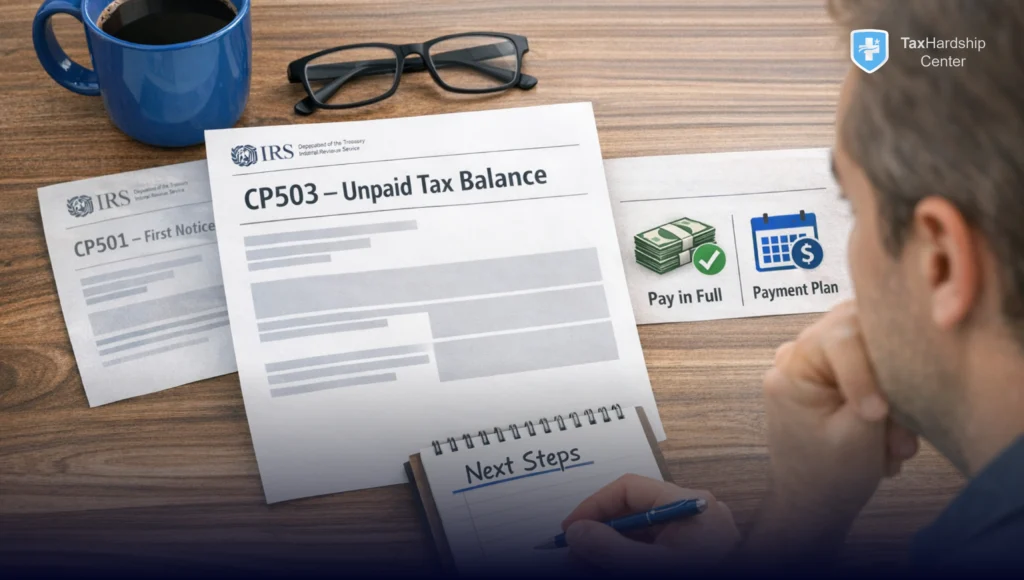
This is the part that confuses people most.
The CP71C may be sent even if you have already worked with the IRS through a payment plan, or even if the IRS has determined your balance is currently not collectible due to hardship.
The CP71C notice itself also says that if you are already working with the IRS to address the amount, have an installment agreement, or were notified that enforced collection was suspended due to hardship, you may not need to do anything.
Do You Need To Respond, or Can You Ignore It
Use this simple decision path.
If Any Of These Are True, You Should Act
- You do not have an approved payment plan (installment agreement).
- You cannot find proof that your payments are posting correctly, or the balance looks wrong.
- You recently paid, but the notice still shows the old balance (payments can take time to post to the right year).
- You have unfiled returns, which can block many resolution options.
If You Have An Active Plan Or Hardship Status
You often do not need to “re-respond” to CP71C, but you should verify your arrangement is still active, and you are compliant (new returns filed, payments drafted, no missed months).
If you want a broader notice, safety check this guide.
Best Ways To Resolve Back Taxes Before It Escalates

The IRS lays out the core options directly on its CP71C guidance, and the notice itself highlights payment and arrangement paths.
Pay In Full Or Pay What You Can
If you can pay in full, that is the cleanest way to stop additional penalties and interest from accruing. The IRS states that interest and applicable penalties stop being added as soon as you pay in full.
If you cannot pay in full, paying what you can now still helps, and you can then set up a plan for the rest.
Set Up An IRS Payment Plan (Installment Agreement)
If you need time, the IRS points taxpayers to the Online Payment Agreement application and notes that you may receive an immediate approval decision after completing it.
Request A Temporary Hardship Pause (Currently Not Collectible)
If paying anything right now would keep you from covering basic living expenses, the IRS may temporarily delay collection. The IRS has a dedicated page for requesting a temporary delay, and Topic 201 explains accounts may be reported as currently not collectible when there is financial hardship.
Consider An Offer In Compromise (Settle For Less If You Qualify)
The IRS states that, under certain circumstances, an Offer in Compromise can allow you to settle for less than the full amount owed, and it points to the Offer in Compromise Pre-Qualifier tool.
Ask About Penalty Relief When The Facts Support It
CP71C balances can grow because penalties and interest continue while a balance remains unpaid. The CP71C notice explains the failure-to-pay penalty structure and notes that penalty relief may be available in certain circumstances.
If penalties are a major part of what you owe, it is worth reviewing whether you have a reasonable-cause argument, especially if the underlying problem was outside your control.
Get Current On Unfiled Returns
Even if CP71C is “just a reminder,” you do not want to stack problems. Unfiled returns can make it harder to get approved for many resolution options.
What Happens If You Do Nothing
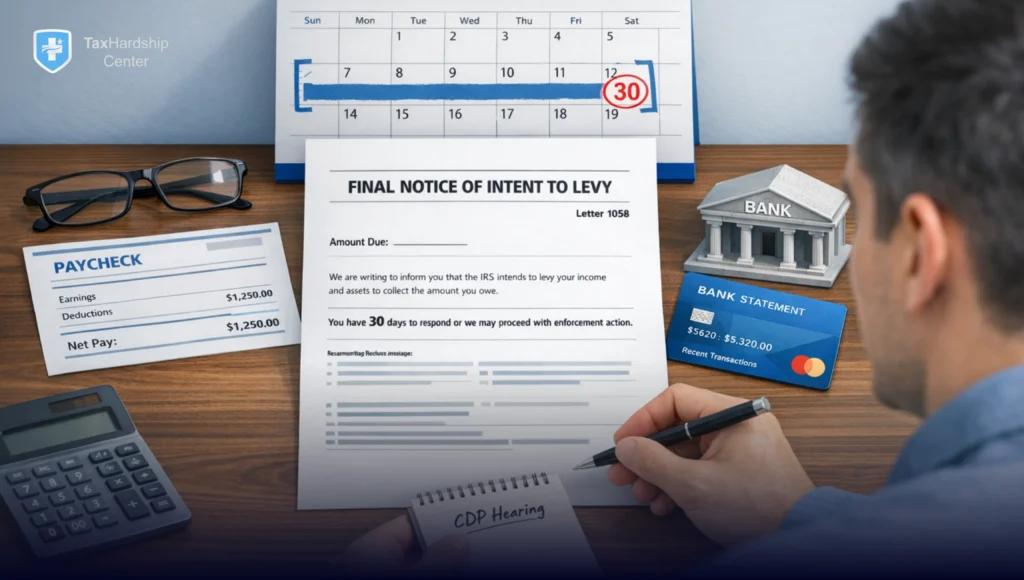
Two things are always true when a balance stays open:
- The IRS continues sending annual reminder notices until the collection statute expires.
- The account can still escalate into stronger collection actions over time if it remains unresolved.
The CP71C notice states that when you do not pay, a federal tax lien arises as a claim against your property, and the IRS can file a Notice of Federal Tax Lien and may levy (subject to applicable Collection Due Process rights).
When To Call A Professional
CP71C can be straightforward, but professional help can save money and prevent missteps when:
- You owe multiple years and need a coordinated plan (not just a quick payment setup).
- The balance looks wrong, and you need transcript-level clarity.
- You are trying to qualify for an Offer in Compromise or hardship status and need documentation done right.
- The passport language is relevant, and you need to understand “seriously delinquent tax debt” thresholds and certification conditions.
If you want help mapping your fastest path to resolution, this is the direct internal starting point.
FAQs
What Does CP71C Mean From The IRS
CP71C is an annual reminder notice that shows you still have an unpaid balance for a tax year, including taxes, penalties, and interest.
Do I Have To Respond To A CP71C Notice
Not always. If you already have an installment agreement or the IRS suspended enforced collection due to hardship, and your situation has not changed, the notice indicates you may not need to do anything. It is still smart to verify your plan is active, and payments are posting correctly.
Does CP71C Mean The IRS Is Levying Me Now
CP71C is a reminder notice, not the final intent-to-levy notice. However, if the balance remains unpaid, the IRS can file a Notice of Federal Tax Lien and may levy later, subject to required rights and notices.
Why Does CP71C Mention Passports
The IRS CP71C guidance states that the notice explains the State Department’s ability to deny or revoke a passport if you have seriously delinquent tax debt.
What Counts As Seriously Delinquent Tax Debt
The IRS explains that seriously delinquent tax debt is legally enforceable, unpaid federal tax debt over the threshold (adjusted annually for inflation), and it provides year-by-year thresholds.
Conclusion
A CP71C notice is a yearly balance reminder, but it is also a useful checkpoint. If your balance is real and unresolved, the lowest-stress move is to choose a resolution now, before the account progresses into liens, levies, or passport complications.
If you are already on a payment plan or hardship status, CP71C may not require a new response, but it is still worth confirming your plan is active and that you are staying compliant.
Key Takeaway
- CP71C is an annual IRS reminder that a balance remains due and may include passport warning language.
- If you already have an installment agreement or hardship status and nothing has changed, you may not need to respond, but you should verify your plan is active.
- The safest way to prevent escalation is to pay what you can now and lock in a resolution, such as a payment plan, hardship delay, or Offer in Compromise if you qualify.
- Ignoring the balance long enough can lead to lien filings and later levy action, so earlier is almost always cheaper and easier.