
Most people dealing with back taxes worry about wage garnishment, bank levies, or a lien on their property.
The passport angle catches them completely off guard.
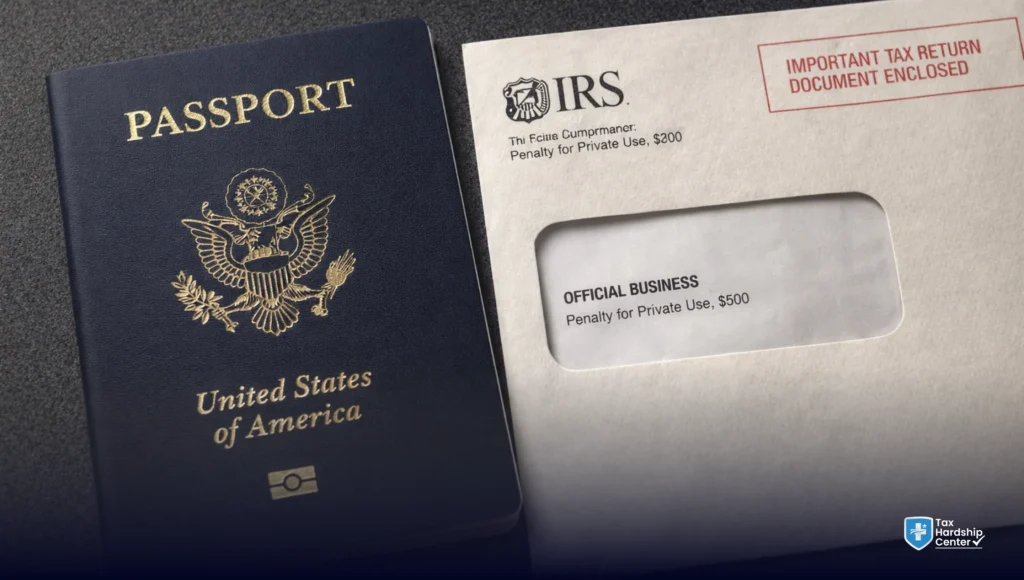
If the IRS has certified your tax debt as “seriously delinquent,” the State Department can deny your passport application or revoke the one you already have. No warning letter from the State Department. No second chance at the airport. Just a denial or worse, a revocation while you’re already abroad.
Here is exactly what the seriously delinquent tax debt designation means, how it happens, and what you can do to reverse it before your travel plans fall apart.
What Is Seriously Delinquent Tax Debt?
The IRS defines seriously delinquent tax debt as a legally enforceable federal tax debt of $62,000 or more (adjusted annually for inflation) for which a lien has been filed or a levy has been issued.
That $62,000 threshold includes the original tax owed, plus penalties and interest that have accrued on top of it. So someone who originally owed $45,000 in back taxes could cross this threshold once the IRS has added failure-to-pay penalties and compounding interest over two or three years.
The IRS does not have to give you special notice before certifying your debt to the State Department. The certification is triggered automatically once the criteria are met. For a full overview of how the IRS defines and enforces this designation, see the official IRS page on Revocation or Denial of Passport in Cases of Certain Unpaid Taxes.
How Does the IRS Certify You to the State Department?
When your tax debt meets the seriously delinquent threshold, the IRS sends your information to the State Department under Section 7345 of the Internal Revenue Code.
You will receive IRS Notice CP508C in the mail. This is the formal notification that the IRS has certified your debt, and the State Department has been alerted.
The CP508C notice is not a warning. It is a notification that the action has already been taken. By the time it arrives, the certification is done.
From that point, the State Department will either deny a new passport application or revoke a passport you currently hold. If you are overseas when revocation occurs, a limited-validity passport may be issued to allow you to return to the United States, but only for that purpose.
If you have received other escalating IRS notices leading up to this point, you may want to read about IRS CP90 Final Notice: Last-Chance Options To Stop A Levy And Secure A Resolution to understand how enforcement actions connect.
What Happens After Certification?
Once the IRS certifies your debt:
- Your new passport application will be denied if you try to apply for or renew. The State Department will not approve it until the IRS reverses the certification.
- If you already have a valid passport, the State Department can revoke it. This does not always happen immediately, but it is a real risk, especially if you attempt to renew or are flagged at a port of entry.
- If you are already outside the United States, you may be issued a limited-validity emergency passport to return home. It cannot be used for onward travel.
This matters most to people whose professional or personal lives involve regular international travel, business owners with overseas clients, investors with foreign holdings, and professionals who travel for work. The certification does not give any of them a grace period.
Debts That Do NOT Count Toward the Threshold
Not every tax debt triggers passport certification. The following are excluded from the seriously delinquent designation under IRS rules:
- Debts already in an installment agreement. If you have a payment plan in place and are current on it, your debt cannot be certified.
- Debts covered by an Offer in Compromise. If the IRS has accepted your OIC and you are meeting the terms, you are excluded.
- Debts in a Collection Due Process hearing. If you have requested a CDP hearing under Section 6330, certification is paused.
- Debts are placed in the Currently Not Collectible status. If the IRS has determined you currently have no ability to pay, the debt will not be certified.
- Debts being disputed in Tax Court. Active Tax Court cases where the underlying liability is contested exclude the debt from certification.
- Victims of tax-related identity theft. If the IRS has confirmed you are a victim of ID theft that resulted in the debt, you are excluded while the case is pending.
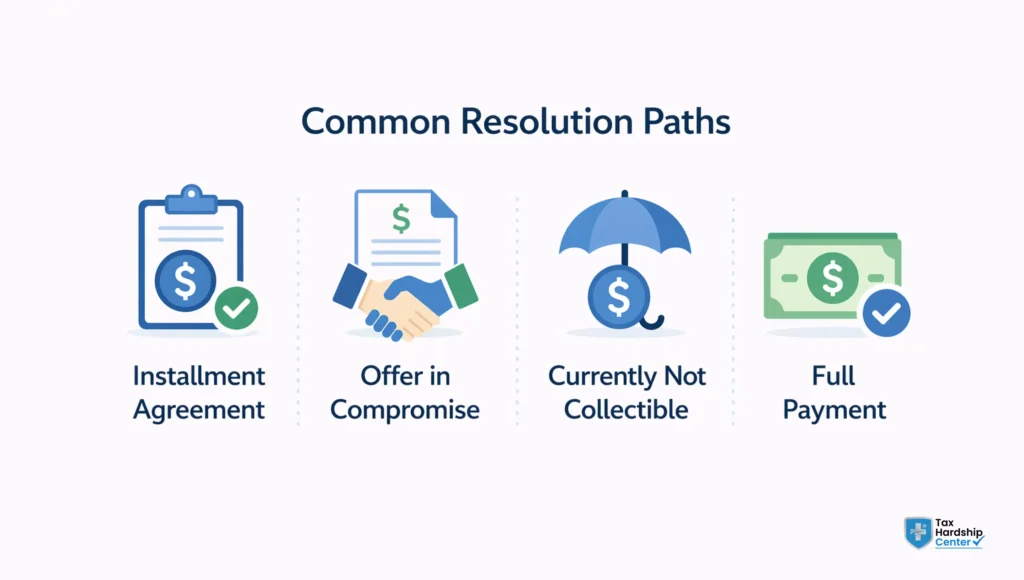
This list matters because it shows the path to avoiding or reversing certification is almost always about getting into an IRS-recognized resolution status, not about paying the debt in full overnight.
How to Get the Certification Reversed
The IRS will notify the State Department to reverse the certification once any of the following happen:
- The debt is paid in full. If you can pay the total balance, penalties, and interest, the IRS reverses the certification. The State Department typically restores passport eligibility within 30 days of receiving that notification.
- You enter into an installment agreement and make your first payment. An IRS installment agreement, whether a streamlined plan or a formally negotiated one, removes the basis for certification once it is established and in good standing. You can start the process through the IRS Online Payment Agreement Application.
- The IRS accepts your Offer in Compromise. Once your OIC is accepted and you make the initial payment in accordance with the agreement terms, the certification reversal process begins.
- The IRS places your account in Currently Not Collectible status. If a financial hardship determination is made, your account is shelved from active collection, and the certification is reversed.
- You successfully dispute the underlying debt. If the debt was assessed in error, or you challenge it through the CDP hearing process and the underlying liability is removed, the certification is reversed.
- You become a confirmed identity theft victim. IRS confirmation of the ID theft removes the debt from seriously delinquent status.
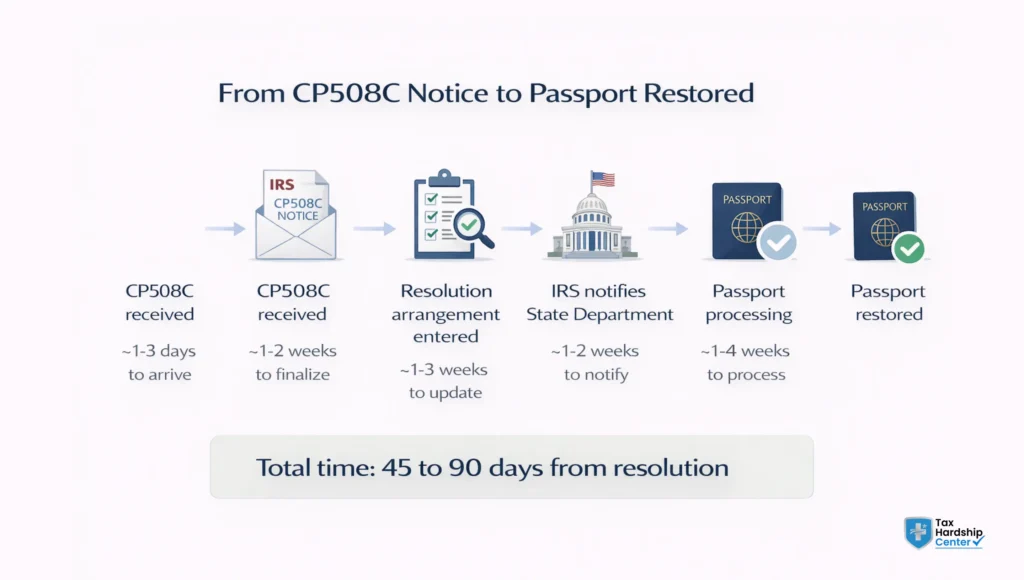
The important thing to understand: the IRS controls the reversal timeline. The State Department does not act until it receives the IRS notification. Even after the IRS sends the notification, processing at the State Department takes additional time. For most people, the full cycle from resolution to passport restoration takes 30 to 60 days. Sometimes longer.
What If You Have Imminent Travel Plans?
The IRS has an expedited reversal process for taxpayers facing certified debt who have urgent, documented travel needs, a medical emergency, a death in the family, or other documented necessity.
To request an expedited reversal, you contact the IRS directly and provide documentation of the imminent travel. The IRS can process the certification reversal and notify the State Department faster than the standard timeline, but this is not guaranteed and requires the underlying resolution criteria to be met, meaning you need a payment arrangement, OIC acceptance, or full payment in place before the expedited request is even relevant.
Planning ahead is far better than relying on the expedited process. If you know your debt is approaching the $62,000 threshold and you have international travel planned in the next six to twelve months, the time to enter a resolution arrangement is now.
If your debt has also triggered other enforcement actions, such as bank levies or balance reminders, you may also want to review CP71C IRS Notice: Balance Reminder Best Ways To Resolve Back Taxes Before It Escalates to understand how these pieces connect.
How Long Does Passport Restoration Take?
Once the IRS reverses the certification and notifies the State Department, passport processing returns to normal timelines. That typically means:
- Standard passport application: four to six weeks
- Expedited passport application: two to three weeks
These timelines run from when the State Department receives the IRS reversal notification, not from when you resolved your tax issue. Factor in the time for the IRS to process your account change, issue the notification, and for the State Department to receive and act on it, and you are looking at a realistic total of 45 to 90 days from resolution to passport in hand.
If you are planning international travel and you have a seriously delinquent certification on your account, that 45 to 90-day window is not a small number. Start now.
How the Tax Hardship Center Helps With Seriously Delinquent Tax Debt
At Tax Hardship Center, we work with taxpayers who have received IRS Notice CP508C, had a passport denied, or are approaching the seriously delinquent threshold and want to get ahead of it.
Our process is straightforward. We start by reviewing your full IRS account, what is owed, what penalties and interest have accrued, what collection actions are active, and whether any prior resolution arrangements are in place or have defaulted. We do not skip this step. The details of your account determine which resolution path is fastest and most realistic for your situation.
We then identify the appropriate resolution path. For most seriously delinquent cases, the goal is to get your account into a recognized IRS status that reverses the certification as quickly as possible. That might be an installment agreement, an Offer in Compromise, Currently Not Collectible status, or a CDP hearing, depending on your financial situation and the specifics of your debt.
We handle IRS communication on your behalf throughout the process and track the reversal and State Department notification to ensure nothing falls through the cracks between the IRS and the passport agency.
Not every case qualifies for every resolution type. We will tell you honestly what your options are and what each one realistically involves before you commit to anything. If your situation calls for something simpler than an OIC, we will say so. If it calls for something more complex, we will explain why.
If you have received a CP508C notice or had a passport application denied because of IRS debt, get a free case review at Tax Hardship Center. If you are not sure whether your debt is approaching the seriously delinquent threshold, we can also assess that with you.
If you have also received a notice related to income discrepancies, it may be worth reading CP 2000 IRS Notice: How To Respond, Dispute The Amount, And Reduce What You Owe to understand how those parallel situations are handled.
FAQ
What does the IRS consider seriously delinquent tax debt?
It refers to federal tax debt over $62,000, including penalties and interest, for which a lien has been filed or a levy issued. This threshold is adjusted each year for inflation.
What is IRS Notice CP508C?
It is the notice that confirms your tax debt has already been certified as seriously delinquent to the State Department. By the time you receive it, the process is already in motion.
Can the IRS certify my debt without first telling me?
Yes, there is no separate warning before certification. The CP508C notice is your first indication that it has already happened.
Will the State Department contact me before denying my passport?
No, they act directly on the IRS certification. If you apply, the passport request is simply denied without additional notice.
What is the fastest way to get the certification reversed?
Entering a valid IRS resolution, like an installment plan, Offer in Compromise, or Currently Not Collectible status, can reverse it. Full payment also works if that option is available to you.
How long does it take to get your passport back after resolving the issue?
Once the IRS updates your status, it typically takes four to six weeks for standard processing. In most cases, the full timeline ranges between 45 and 90 days.
What if you are already outside the U.S. when your passport is affected?
You can receive a limited-validity passport that allows you to return to the United States. For this, you should contact the nearest U.S. Embassy or Consulate.
Does an installment agreement protect you from certification?
Yes, as long as the agreement is active and payments are up to date. If it defaults, that protection is removed and needs to be restored quickly.
Conclusion
Serious tax debt can quietly grow into something that affects parts of life most people never expect, like the ability to travel freely. What feels like a financial issue on paper can quickly become a real-world disruption when it reaches the certification stage.
The important thing is that this situation is not permanent. The system may seem strict, but it also offers clear ways to move forward. Once you step into a recognized resolution, the path to restoring your passport eligibility begins.
What changes everything is taking action early. When you understand where you stand and choose a direction, the uncertainty starts to fade. The process becomes less about reacting to problems and more about regaining control over your situation.
You do not need to solve everything at once. You just need to take the first step toward resolving it.
Key Takeaways
- The IRS’s “seriously delinquent tax debt” designation is a lesser-known consequence of unresolved tax debt, but it can significantly affect anyone who relies on international travel.
- The threshold is $62,000 in total federal tax debt, including penalties and interest. Once crossed, and with a lien or levy in place, the IRS can report your debt to the State Department, putting your passport eligibility at risk.
- Reversal is possible, but it requires entering an IRS-recognized resolution. This can include paying in full, setting up an installment agreement, getting an Offer in Compromise accepted, or qualifying for Currently Not Collectible status.
- Timing is important. After resolving the issue, passport reinstatement typically takes 45 to 90 days, so early action matters if you have upcoming travel plans.
- If you have received a CP508C notice or want clarity on your situation, a professional review can help you understand your options and the most practical path forward.