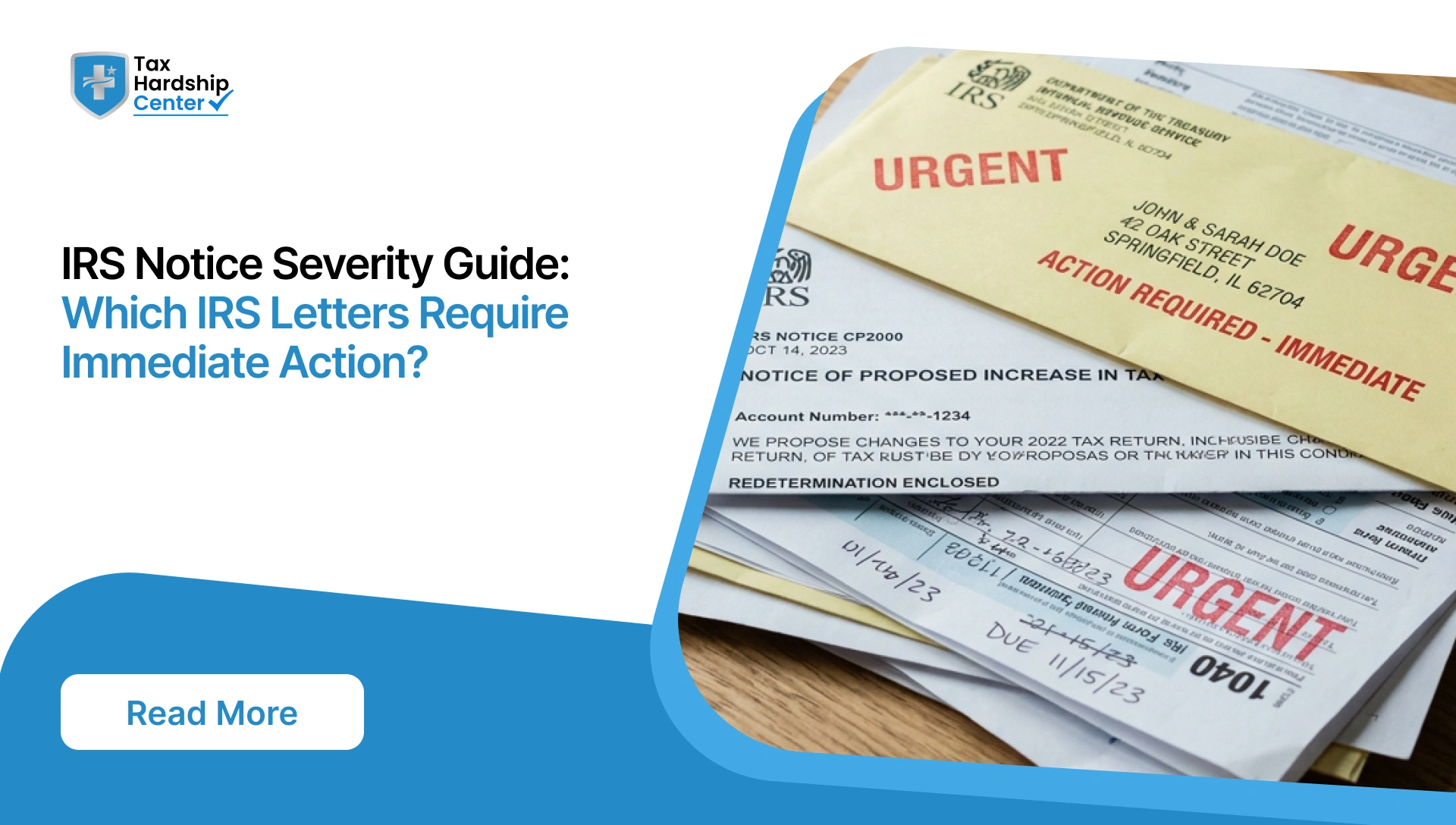

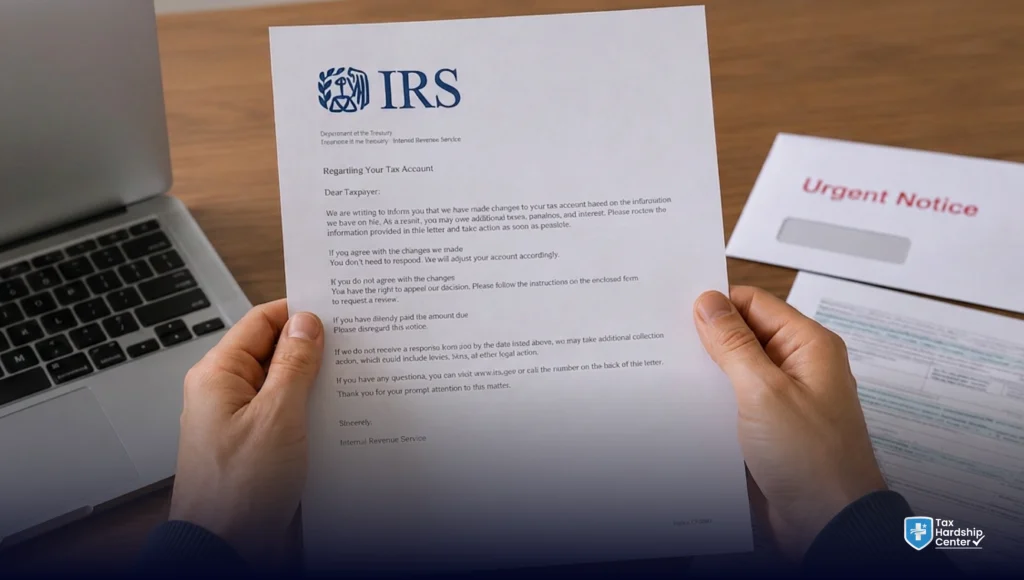
Opening an IRS letter can make anyone feel uneasy. The biggest mistake is assuming every notice means the same thing.
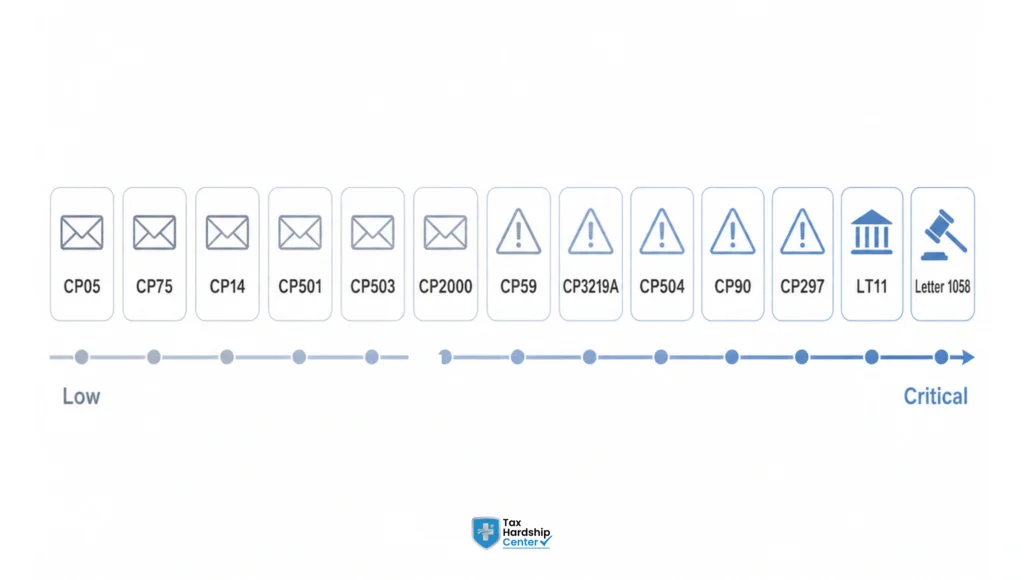
Some IRS notices are routine reminders. Others are final warnings before the IRS can move toward wage garnishment, bank levies, asset seizure, or legal deadlines that are difficult to reverse. The notice code at the top of your letter tells you where you are in the process and how quickly you need to respond.
This guide explains the most common IRS notices by severity, what each one usually means, and what you should do next.
Quick IRS Notice Severity Summary
The IRS sends notices for many reasons, including unpaid tax balances, missing returns, proposed changes, refund reviews, and collection enforcement. The table below gives you a simple way to understand the urgency.
| Severity Level | IRS Notices | What It Usually Means | Risk Level |
| Critical | LT11, Letter 1058, CP504, CP90, CP297 | The IRS is warning about levy action or final collection rights | Immediate action required |
| High | CP503, CP501, CP14 | You owe a balance, and the IRS collection process is moving forward | Important and time-sensitive |
| Audit / Adjustment Risk | CP2000, Letter 525, Letter 566, CP3219A | The IRS is questioning income, credits, deductions, or proposing changes | Depends on response and deadline |
| Filing / Compliance Risk | CP59, CP516 | The IRS believes you did not file a required return | Serious if ignored |
| Lower Severity | CP05, CP75 | Refund review or credit verification | Usually not levy-related, but still important |
Critical IRS Notices That Require Immediate Action
Critical IRS notices are the letters you should not delay. These notices often involve levy warnings, appeal rights, and strict response deadlines.
LT11 Or Letter 1058: Final Notice Of Intent To Levy
LT11 and Letter 1058 are among the most serious IRS collection notices. The IRS says this notice means it has not received payment for overdue taxes and intends to seize property or rights to property. The IRS also tells taxpayers to contact them immediately.
In plain English, this is a final warning before forced collection can move forward.
An LT11 or Letter 1058 can put your wages, bank accounts, and other property at risk if you do not respond. It also gives you an important right: the ability to request a Collection Due Process hearing.
The IRS explains that taxpayers generally have 30 days from the date they receive LT11 or Letter 1058 to request a CDP hearing using Form 12153.
What To Do Next:
- Read the deadline on the notice immediately.
- Do not ignore the 30-day CDP window.
- Confirm whether the balance is correct.
- Request a hearing if you disagree or need collection alternatives.
- Explore a payment plan, Offer in Compromise, or hardship status if you cannot pay in full.
CP504: Final Notice Before Levy Action Escalates
A CP504 notice means the IRS has not received payment for your unpaid balance. The IRS describes CP504 as a Notice of Intent to Levy under Internal Revenue Code section 6331(d). It warns that the IRS can levy income and bank accounts, seize property or rights to property, and take a state tax refund to pay the balance.
CP504 is serious because it often appears before more aggressive enforcement notices. It may also signal that a federal tax lien could be filed if the issue remains unresolved.
There is one important detail: the IRS CDP FAQ states that the IRS generally cannot levy solely on a CP504. A later formal notice with hearing rights may still be required before broader levy action. However, the IRS also says taxpayers should not wait for that final notice and should respond to CP504.
What To Do Next:
- Call the IRS or speak with a tax professional before the notice escalates.
- Review your payment options.
- Request an appeal if the notice allows it.
- Set up a formal resolution before levy action expands.
- Keep proof of every payment, call, or response.
CP90 Or CP297: Notice Of Intent To Levy
CP90 and CP297 are also serious levy-related notices. The IRS states that CP297 notifies taxpayers of its intent to levy certain assets for unpaid taxes and confirms the right to a Collection Due Process hearing.
These notices usually mean the IRS is no longer just sending reminders. It is preparing for enforced collection unless you act.
What To Do Next:
- Read the notice carefully.
- Pay the balance if you can.
- Request a payment plan if you cannot pay in full.
- Consider an Offer in Compromise if the full balance is not realistic.
- Request a CDP hearing if you disagree or need appeal protection.
High Severity IRS Collection Notices
These notices may not always mean immediate levy action, but they show that the IRS collection process is moving forward.
CP503: Urgent Reminder Notice
A CP503 notice means the IRS has not heard from you, and you still have an unpaid balance. The IRS calls it a second reminder and tells taxpayers to pay by the due date, set up a payment plan if they cannot pay in full, or contact the IRS if they disagree.
CP503 matters because it usually comes before CP504. If you ignore it, the IRS may move closer to levy warnings, lien risk, and more aggressive collection activity.
What To Do Next:
- Confirm the balance and tax year.
- Compare the notice against your records.
- Pay what you can if the balance is correct.
- Set up a payment plan if needed.
- Respond before the next notice arrives.
CP501: First Reminder After A Balance Due Notice
CP501 means the IRS believes you still owe a balance on one of your tax accounts. The IRS tells taxpayers to read the notice, pay by the due date, make a payment plan if they cannot pay in full, or call if they disagree.
This notice is not as severe as LT11 or CP504, but it should still be handled quickly. It usually means the IRS did not receive payment or a response after an earlier notice.
What To Do Next:
- Do not assume the IRS will stop sending letters.
- Check whether your payment was applied correctly.
- Review penalties and interest.
- Request an installment agreement if needed.
- Ask about penalty relief if you qualify.
CP14: Initial Balance Due Notice
CP14 is often the first IRS bill many taxpayers receive after filing or after the IRS processes a balance. The IRS says CP14 is sent because you owe money on unpaid taxes. It tells taxpayers to read the notice carefully, pay by the due date, make a payment plan if they cannot pay in full, or contact the IRS if they disagree.
CP14 is early in the process, but it is still important. If you ignore it, the account can move into reminder notices, levy warnings, and larger penalties and interest.
What To Do Next:
- Check the amount, tax year, and due date.
- Confirm whether the IRS credited all payments.
- Pay in full if possible.
- Set up a payment plan if you need more time.
- Contact the IRS or a tax professional if the balance is wrong.
Audit And Adjustment Notices
Audit and adjustment notices are different from collection notices. They may not always mean you already owe, but they can become serious if ignored.
CP2000: Underreporter Notice
A CP2000 notice means the IRS received income or payment information from third parties that does not match what you reported on your tax return. The IRS makes clear that CP2000 is not a bill, but it explains proposed changes and may require a response.
Common CP2000 triggers include missing W-2 income, 1099 income, brokerage transactions, canceled debt, or other third-party reporting discrepancies.
What To Do Next:
- Compare the CP2000 details with your tax return.
- Review W-2s, 1099s, brokerage statements, and business income records.
- Respond by the date listed.
- Agree only if the proposed change is correct.
- Send documentation if you disagree.
Letter 566 Or Letter 525: Audit Notices
Letter 566 usually means your tax return has been selected for an audit or examination. The Taxpayer Advocate Service explains that an initial contact letter identifies the specific items being questioned and requests documentation. If you do not respond, the IRS may disallow the items and send an examination report with proposed changes.
Letter 525 is commonly sent when an audit results in proposed adjustments. TAS explains that Letter 525 and similar 30-day letters give taxpayers a chance to review proposed changes and respond if they agree or disagree.
What To Do Next:
- Identify exactly what the IRS is questioning.
- Gather organized records.
- Respond by the deadline.
- Do not send incomplete or unclear documentation.
- Consider professional audit defense if the issue is complex.
CP3219A: Notice Of Deficiency
CP3219A is often called a 90-day letter. The IRS says this notice explains a proposed tax change and gives taxpayers the option to challenge the decision in U.S. Tax Court. The IRS also says the Tax Court cannot consider the case if the petition is filed late.
This notice is serious because it can affect your right to dispute the proposed tax before assessment.
What To Do Next:
- Do not miss the 90-day deadline.
- Review the proposed change carefully.
- Send supporting information if the IRS is wrong.
- File a Tax Court petition on time if you need to preserve your rights.
- Speak with a qualified tax professional before signing anything if you disagree.
Filing And Compliance Notices
These notices usually mean the IRS believes you did not file a required return.
CP59 Or CP516: Unfiled Tax Return Notices
CP59 means the IRS has no record of you filing a required personal tax return. The IRS tells taxpayers to file immediately or explain why they do not need to file. It also warns that if you do not file and owe money, penalties and interest will continue to accrue.
CP516 is another reminder notice related to missing returns. The IRS says taxpayers may receive one or more notices if they have not filed a return. If the IRS files a Substitute for Return, it is still usually in the taxpayer’s best interest to file their own return because the IRS-calculated return may not include all exemptions, credits, and deductions.
What To Do Next:
- Confirm the tax year listed on the notice.
- Check whether you already filed.
- File the missing return if required.
- Send proof if the IRS made a mistake.
- Address any balance that results from filing.
Informational Or Refund Review Notices
These notices are often less severe than levy or deficiency notices, but they still deserve attention.
CP05: Refund Review Notice
A CP05 notice usually means the IRS is holding your refund while it reviews information on your return. The IRS recommends reviewing income and withholding documents for completeness and making sure all income, credits, and business income were reported correctly.
In many cases, you may not need to act unless the IRS asks for more information. However, you should still read the notice carefully and watch for follow-up letters.
What To Do Next:
- Review the notice for any requested action.
- Check income and withholding records.
- Watch for additional IRS letters.
- Respond promptly if the IRS asks for documentation.
- Keep copies of all documents related to the refund.
CP75: EITC Review Notice
CP75 means the IRS is auditing part of your tax return and needs documentation to verify credits, such as the Earned Income Credit. The IRS states that it may withhold certain portions of refunds while it completes the audit and asks taxpayers to provide the requested documentation.
This notice is not a collection notice, but it can affect your refund and may lead to disallowed credits if you do not respond.
What To Do Next:
- Read the exact documents requested.
- Provide clear copies, not originals unless required.
- Submit all documents together when possible.
- Keep proof of submission.
- Ask for help if you are unsure which records prove eligibility.
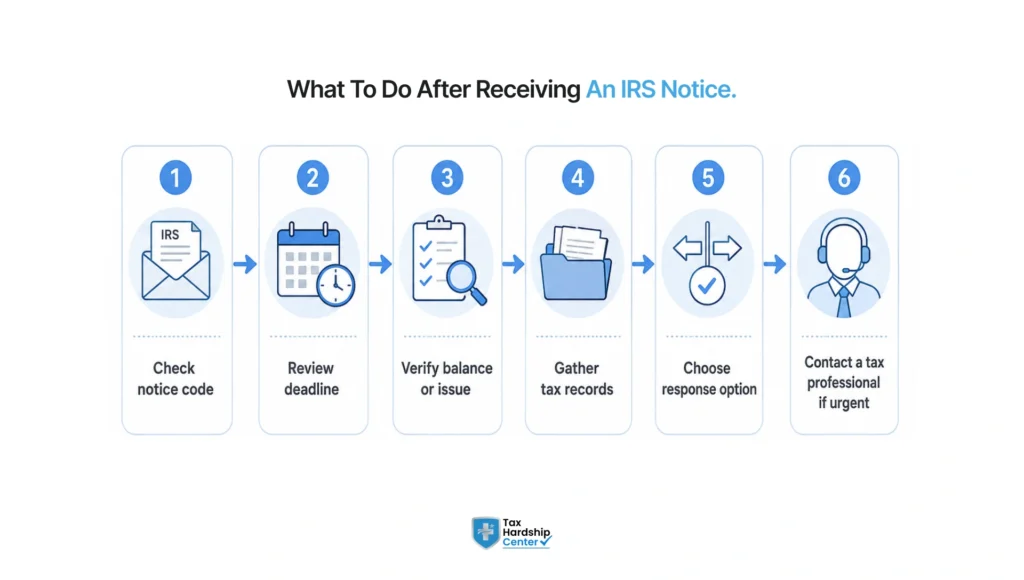
What To Do When You Receive an IRS Notice
No matter which notice you receive, the first steps are usually the same.
1. Do Not Ignore The Letter
Ignoring an IRS notice rarely makes the issue disappear. In many cases, it causes the account to move into the next stage, adds penalties and interest, or limits your appeal options.
2. Identify The Notice Code
Look for the CP number or letter number near the top or upper corner of the notice. Examples include CP14, CP501, CP504, CP2000, LT11, Letter 1058, CP59, or CP3219A.
The notice code indicates whether you are dealing with a balance due issue, a proposed tax adjustment, an audit, an unfiled return, a refund review, or a levy warning.
3. Check The Deadline
Some notices give you a short response window. Others involve appeal or Tax Court rights. Missing a deadline can make the situation harder and more expensive to fix.
4. Confirm Whether The IRS Is Correct
IRS notices can be accurate, partially accurate, or wrong. Before you agree, compare the notice with your:
- Tax return.
- IRS account transcript.
- Wage and income transcript.
- Payment records.
- Bank records.
- 1099s, W-2s, and brokerage statements.
- Prior IRS correspondence.
5. Choose The Right Resolution Path
If you agree with the balance but cannot pay in full, you may have options such as:
- Installment Agreement.
- Offer in Compromise.
- Currently Not Collectible status.
- Penalty abatement.
- Short-term payment extension.
- Audit reconsideration.
- Collection Due Process hearing.
The right option depends on your balance, income, assets, filing compliance, and hardship level.
How the Tax Hardship Center Can Help
Tax Hardship Center helps taxpayers understand IRS notices, protect important deadlines, and choose the right path before the issue becomes more expensive.
Depending on your notice, the Tax Hardship Center may help with:
- Reviewing the IRS notice and explaining what it means.
- Checking IRS transcripts and account history.
- Confirming whether the balance is accurate.
- Preparing documentation for disputes or audits.
- Setting up installment agreements.
- Evaluating Offer in Compromise eligibility.
- Requesting the Currently Not Collectible status when hardship applies.
- Responding to CP2000 or audit notices.
- Helping stop or prevent wage garnishment and bank levies.
- Communicating with the IRS so you do not have to handle it alone.
If you received LT11, Letter 1058, CP504, CP90, CP297, CP3219A, or any notice with a short deadline, it is best to act quickly.
Frequently Asked Questions
What Is The Most Serious IRS Notice?
LT11 and Letter 1058 are among the most serious IRS notices because they are final notices of intent to levy and include important appeal rights. CP90 and CP297 are also serious because they involve levy intent and Collection Due Process rights.
Is CP504 Worse Than CP503?
Yes. CP503 is a reminder that the IRS has not received payment or a response. CP504 is more serious because it warns about intent to levy and signals the account is moving closer to enforcement.
Does CP14 Mean The IRS Will Garnish My Wages?
Not immediately. CP14 is usually an early balance due notice. However, if you ignore CP14 and later notices, the IRS may eventually move toward levying on your assets, wage garnishment, or bank levies.
Is CP2000 A Bill?
No. CP2000 is a proposed adjustment notice, not a bill. It means the IRS found a mismatch between your return and third-party records. You should review it carefully and respond by the deadline.
What Happens If I Ignore A CP59 Notice?
CP59 means the IRS believes you did not file a required return. If you ignore it, the IRS may continue sending non-filer notices and may eventually calculate your tax using a Substitute for Return. That calculation may not include all deductions, credits, or filing benefits you could claim.
Can the Tax Hardship Center Help With IRS Notices?
Yes. Tax Hardship Center can review the notice, explain the risk level, verify the IRS balance, help respond to the IRS, and evaluate relief options such as installment agreements, Offer in Compromise, Currently Not Collectible status, audit defense, penalty relief, and levy protection.
Conclusion
IRS notices are not all the same. The key is to understand where your notice fits into the IRS process and to respond before the situation escalates.
Key Takeaways:
- LT11, Letter 1058, CP90, CP297, and CP504 require fast action because they involve levy risk.
- CP14, CP501, and CP503 are earlier balance-due notices, but ignoring them can lead to enforcement action.
- CP2000 is not a bill, but it can become a tax debt if you do not respond.
- CP3219A is serious because it involves Tax Court rights and a strict deadline.
- CP59 and CP516 should be handled promptly to avoid return-substitute issues.
- CP05 and CP75 are usually refund or credit review notices, but you should still follow the IRS instructions.
- The sooner you respond, the more options you usually have.
If you received an IRS notice and are unsure how serious it is, Tax Hardship Center can help you read the notice, protect your deadlines, and build a clear resolution plan before the IRS takes the next step.